Project timelines collapse when material procurement encounters rigid minimum order quantities and vague shipping dates. Sourcing engineering-grade cellular metals often forces procurement leads to balance prototype budgets against bulk mill requirements. We stock reliable cellular stock while supporting precision trials directly from factory lines. You can evaluate raw panels or finished acoustic components without committing to excessive stock upfront. Exploring verified ensures immediate testing for impact mitigation, sound baffling, and thermal dispersion.
Matching pore structure to operational stress determines structural viability. Closed-cell configurations deliver substantial energy absorption during progressive impact deformation. These rigid panels reinforce crash boxes and marine collision bulkheads effectively. They float on water due to high enclosed void fractions. Thermal insulation improves simultaneously because trapped air pockets limit internal conduction.
Open-cell variants target fluid permeability and surface contact. Acoustic waves penetrate open pathways, converting mechanical vibration into low-grade heat. Industrial silencers and HVAC duct liners benefit significantly from this continuous porous matrix. Heat sinks also utilize these open pathways for forced convection cooling.
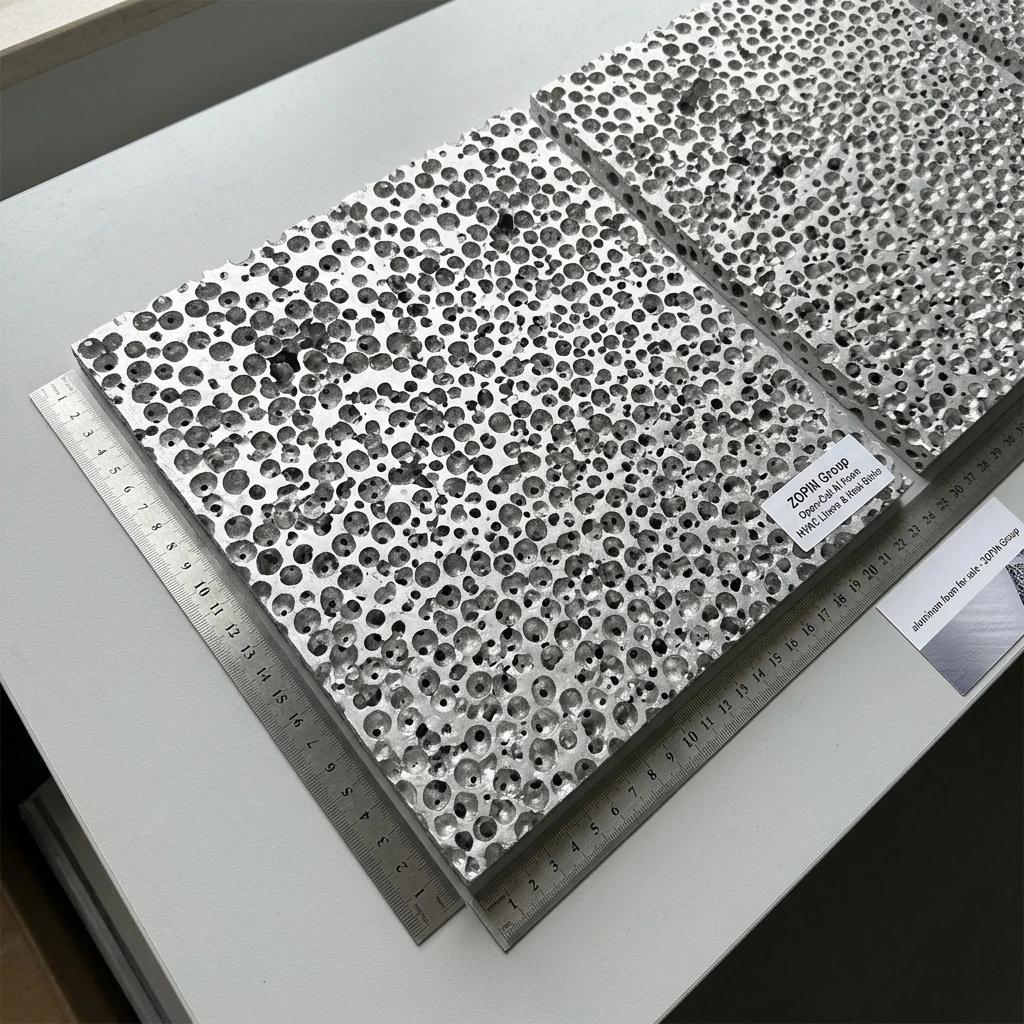
Evaluating pore density requires balancing flow resistance with mechanical stiffness. Most industrial applications operate between 10 and 40 pores per inch. Selecting the right pore morphology prevents fluid stagnation while maintaining structural integrity.
Working through layers of intermediaries complicates quality assurance and stretches lead times. Procurement teams require direct visibility into production lines to confirm material batches. Sourcing from a eliminates markups and ensures consistent compliance with ISO 9001 standards.
Standard catalog production includes continuous casting lines and foaming furnaces capable of delivering 250,000 square meters annually. Our engineering staff evaluates customer drawings to configure custom cellular aluminum blocks, cut-to-size panels, and shaped components. You can consult detailed parameters across our selection to cross-reference mechanical limits.
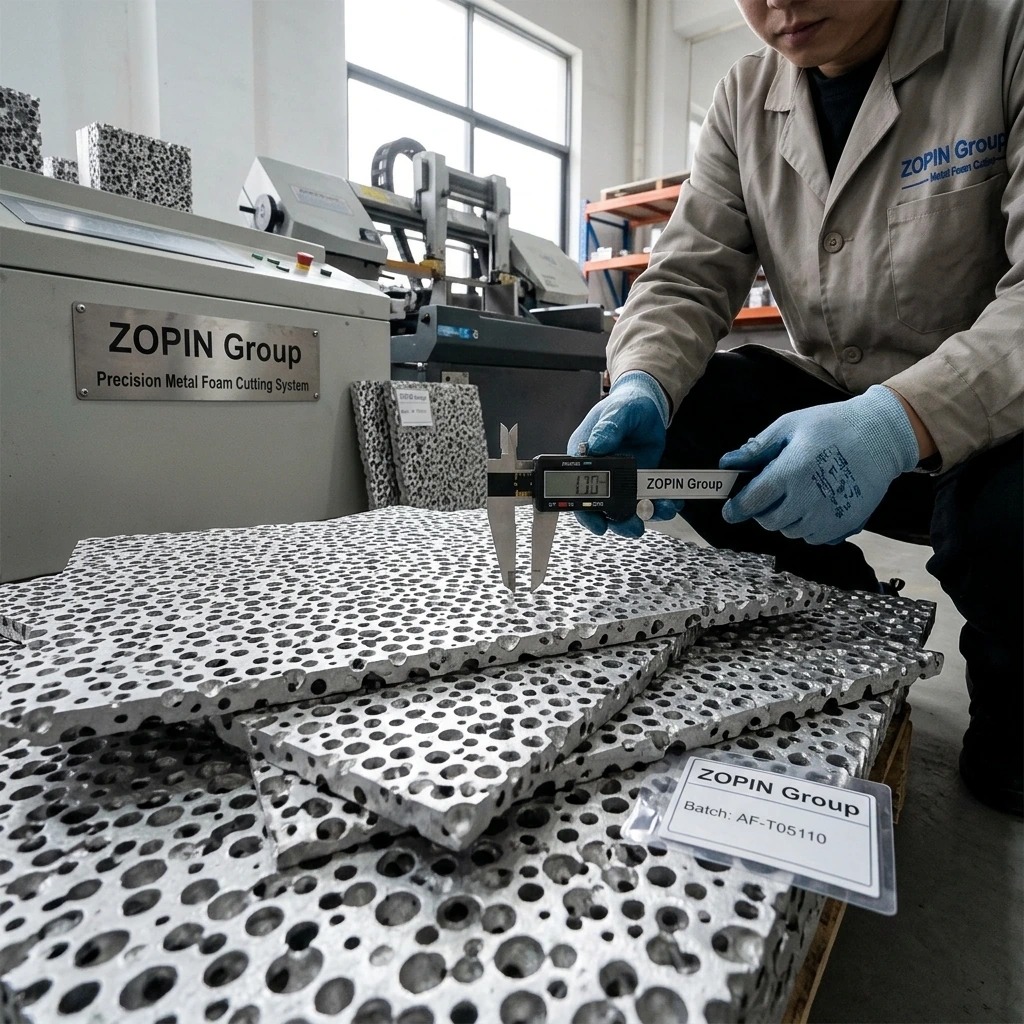
Orders move through standard packaging using reinforced export wooden crates. This handling protects delicate cell edges during multimodal shipping. Whether shipping via express air or sea freight, protective crating prevents compressive deformation during transit.
Engineers should review baseline installation requirements before finalizing procurement orders. Integrating porous metals with traditional manufacturing equipment requires proper tooling adjustments.
• Fastening and joining work best with mechanical bolts using load-spreading washers or industrial
structural epoxy bonding.
• Precision trimming requires high-speed water jet cutting or sharp carbide-tipped blades to prevent cell
collapse.
Evaluating sample lots helps verify damping and sound absorption before tooling deployment. You can buy porous aluminum panels in single-piece evaluations to validate thermal and acoustic performance. Processing small sample runs prevents costly manufacturing adjustments during full production ramp-up.
Yes, standard dimensions such as 500x500mm are kept on hand for immediate dispatch. Sample evaluation orders feature an MOQ of 1 piece to facilitate research and benchtop validation. Typical stock orders process within 12 to 24 hours to support pressing engineering schedules.
Custom cellular aluminum items are cut using multi-axis water jets and CNC equipment to match specific CAD files. Thickness profiles, varying pore densities, and composite sandwich backings can be customized upon request. Bulk manufacturing runs generally complete production within two weeks depending on geometry.

Copyright © Xiamen Zopin New Material Limited. All Rights Reserved.
the professional team to service !

 Daisy@foam-material.com