Xiamen Zopin New Material Limited Established in 2011, it is a new material industry with capabilities of independent research & development, production and sales as one. Our ISO9001:2012 factory covers an area of 6 hectares and a building area of 28,000 square meters, with annual production of high-performance metal foams of 250,000 square meters. Our R&D team is composed of academicians and experts from Tsinghua University, Polytechnic University of Hong Kong, Nanyang Technological University, and other domestic and foreign metal foam professionals. After many years’ endeavor, we now own our proprietary intellectual property rights in manufacturing high purity and high porosity metal foams.
Carbon Foam Battery Price: Factors and Considerations
The price of carbon foam batteries depends on several factors, including the manufacturing process, material costs, scalability, and applicationspecific requirements. Below is a detailed breakdown of the cost considerations and estimated pricing for carbon foam batteries.
●1. Key Factors Influencing Carbon Foam Battery Prices
A. Material Costs
Carbon Foam: The cost of producing carbon foam varies based on the manufacturing method (e.g., CVD, pyrolysis, replication).
CVD: Highcost due to precise control but produces highquality foam.
Pyrolysis: More costeffective but may require optimization of precursors.
Recycled Materials: Using renewable or wastederived precursors can reduce costs.
Other Components: Electrolytes, separators, current collectors, and packaging materials also contribute to overall costs.
B. Manufacturing Process
Advanced processes like CVD or 3D printing are expensive but offer superior performance.
Scalable methods like pyrolysis or replication are more costeffective but may result in less uniform structures.
C. Scale of Production
SmallScale Production: Higher perunit costs due to limited economies of scale.
LargeScale Production: Lower perunit costs as production becomes more efficient.
D. Application Requirements
HighPerformance Applications: Customized designs for electric vehicles (EVs) or aerospace systems increase costs.
GeneralPurpose Applications: Standardized designs for consumer electronics or grid storage reduce costs.
E. Research and Development (R&D) Costs
Developing new formulations, optimizing performance, and scaling up production require significant R&D investment, which can impact initial pricing.
●2. Estimated Pricing for Carbon Foam Batteries
While exact prices vary depending on the specific battery type and application, here are some rough estimates:
| Battery Type | Estimated Cost per kWh | Notes |
||||
| LithiumIon Batteries | $100–$300/kWh | Carbon foam electrodes enhance energy density and charging speed. |
| SodiumIon Batteries | $80–$250/kWh | Lower material costs compared to lithiumion, but performance may vary. |
| Supercapacitors | $50–$200/kWh | High power density makes them ideal for rapid charge/discharge applications.|
| Fuel Cells | $500–$1,500/kW | Carbon foam supports catalyst layers, improving efficiency and durability.|
●3. Comparison with Traditional Batteries
| Battery Type | Traditional Cost per kWh | Carbon Foam Battery Cost per kWh | Price Difference |
|||||
| LithiumIon | $150–$300/kWh | $100–$300/kWh | ±0–20% |
| SodiumIon | $100–$250/kWh | $80–$250/kWh | ±0–20% |
| Supercapacitors | $100–$300/kWh | $50–$200/kWh | 17% to +67% |
Carbon foam batteries may initially have higher upfront costs due to advanced materials and processes, but their improved performance and longer lifespan can lead to lower total cost of ownership (TCO).
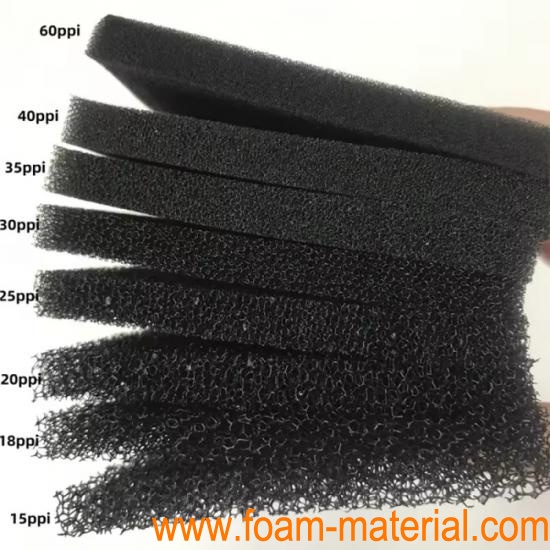
Reticulated Carbon Foam
●4. Cost Breakdown for Carbon Foam Battery Components
| Component | Cost Contribution (%) | Description |
||||
| Carbon Foam Electrodes | 30–40% | Highperformance electrodes drive much of the cost. |
| Electrolyte | 10–20% | Depending on the battery chemistry (e.g., lithiumion vs. sodiumion). |
| Separator | 5–10% | Must be compatible with the carbon foam structure. |
| Current Collectors | 5–10% | Lightweight and conductive materials are preferred. |
| Packaging and Assembly | 20–30% | Includes housing, thermal management, and integration into systems. |
●5. Strategies to Reduce Carbon Foam Battery Costs
A. Use of Renewable Precursors
Deriving carbon foam from biomass or recycled materials can significantly reduce raw material costs.
B. Optimization of Manufacturing Processes
Scaling up production using costeffective methods like pyrolysis or replication can lower perunit costs.
C. Standardization
Developing standardized designs for common applications (e.g., EVs, consumer electronics) can improve economies of scale.
D. Government Incentives
Subsidies and tax incentives for sustainable energy technologies can offset initial development and production costs.
●6. Market Trends and Future Pricing
A. Increasing Adoption
As demand for highperformance energy storage solutions grows, particularly in EVs and renewable energy systems, carbon foam battery production is expected to scale up, reducing costs.
B. Technological Advancements
Innovations in hybrid materials, sustainable production methods, and automation will further drive down costs.
C. LongTerm Cost Reduction
By 2030, carbon foam battery costs could decrease by 30–50% due to advancements in manufacturing and increased adoption.
●7. Conclusion
Carbon foam batteries represent a promising advancement in energy storage technology, offering superior performance, sustainability, and versatility. While initial costs may be higher than traditional batteries, ongoing research, scalable production, and standardization efforts are expected to make them more affordable over time.
If you're considering carbon foam batteries for your project, carefully evaluate the specific requirements, available suppliers, and potential costsaving strategies. For further details or assistance, feel free to ask!


 Daisy@foam-material.com