Xiamen Zopin New Material Limited Established in 2011, it is a new material industry with capabilities of independent research & development, production and sales as one. Our ISO9001:2012 factory covers an area of 6 hectares and a building area of 28,000 square meters, with annual production of high-performance metal foams of 250,000 square meters. Our R&D team is composed of academicians and experts from Tsinghua University, Polytechnic University of Hong Kong, Nanyang Technological University, and other domestic and foreign metal foam professionals. After many years’ endeavor, we now own our proprietary intellectual property rights in manufacturing high purity and high porosity metal foams.
Carbon Foam Sheets: Properties, Applications, and Benefits
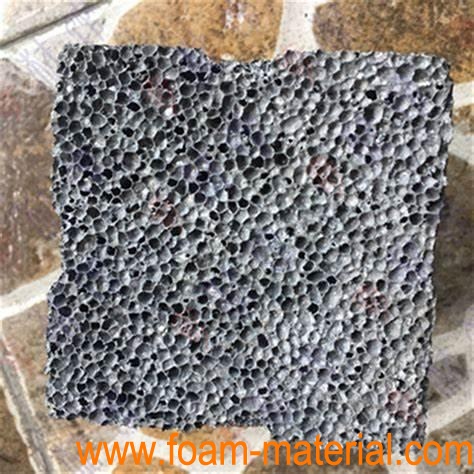
Carbon foam sheets are thin, lightweight, and highly versatile materials made from carbon or graphite. They are characterized by their porous structure, high thermal conductivity, excellent electrical properties, and low density. These sheets find applications in a wide range of industries due to their unique combination of mechanical, thermal, and electrical characteristics.
Below is a comprehensive overview of carbon foam sheets, including their properties, manufacturing processes, applications, and advantages.
---
●1. What Are Carbon Foam Sheets?
Carbon foam sheets are flat, two-dimensional forms of carbon foam, typically produced in thin layers with uniform thickness. They are engineered to have specific pore sizes, densities, and surface areas, depending on the intended application. The open-cell or closed-cell structure of these sheets allows for efficient fluid flow, heat transfer, and energy storage.
Key features of carbon foam sheets:
- Lightweight and flexible.
- High thermal and electrical conductivity.
- Excellent mechanical strength relative to weight.
- Customizable pore size and density.
---
●2. Properties of Carbon Foam Sheets
| Property | Description |
|-----------------------------------|---------------------------------------------------------------------------------|
| Density | Typically ranges from 0.1 to 0.5 g/cm³, depending on porosity. |
| Porosity | Can exceed 90%, enabling efficient fluid flow and heat dissipation. |
| Thermal Conductivity | High thermal conductivity, ranging from 100 to 1,000 W/m·K. |
| Electrical Conductivity | Excellent electrical conductivity, suitable for electronic applications. |
| Mechanical Strength | High compressive strength while maintaining flexibility. |
| Chemical Stability | Resistant to acids, bases, and organic solvents. |
| Temperature Resistance | Stable up to 3,000°C in inert atmospheres. |
---
●3. Manufacturing Processes for Carbon Foam Sheets
Carbon foam sheets can be manufactured using several techniques, each tailored to achieve specific properties:
A. Replication Method
- A sacrificial template (e.g., polymer foam) is infiltrated with a carbon precursor, by carbonization and removal of the template.
- Advantages: Precise control over pore size and structure.
B. Chemical Vapor Deposition (CVD)
- Carbon atoms are deposited onto a substrate through a chemical reaction at high temperatures.
- Advantages: Produces highly uniform and pure carbon foam sheets.
C. Pyrolysis
- Organic precursors (e.g., phenolic resin or pitch) are thermally decomposed in an inert atmosphere to form carbon foam sheets.
- Advantages: Cost-effective for large-scale production.
D. Sol-Gel Process
- Carbon precursors are mixed into a sol-gel solution, which is then dried and pyrolyzed to create foam sheets.
- Advantages: Enables customization of sheet properties.
---
●4. Types of Carbon Foam Sheets
A. Reticulated Carbon Foam Sheets
- Structure: Open-cell structure with interconnected pores.
- Applications: Heat exchangers, thermal management systems, catalyst supports.
B. Closed-Cell Carbon Foam Sheets
- Structure: Non-interconnected cells, reducing fluid permeability.
- Applications: Insulation materials, lightweight structural components.
C. Graphite Foam Sheets
- Structure: Made from pure graphite, offering superior thermal and electrical conductivity.
- Applications: Heat sinks, thermal interfaces, energy storage systems.
D. Activated Carbon Foam Sheets
- Structure: Produced by activating carbon foam to increase its surface area.
- Applications: Water and air filtration, gas separation, electrochemical capacitors.
Carbon Foam Manufacturers
●5. Applications of Carbon Foam Sheets
A. Thermal Management
- Heat Sinks: Efficiently dissipates heat in electronic devices, power systems, and industrial equipment.
- Thermal Interfaces: Provides a conductive layer between heat sources and cooling systems.
B. Energy Storage
- Battery Electrodes: Used as electrodes in lithium-ion, sodium-ion, and other advanced battery systems.
- Supercapacitors: Offers high surface area for rapid charge/discharge cycles.
C. Aerospace and Defense
- Lightweight Structures: Reduces weight in aircraft and spacecraft components.
- Radiation Shielding: Protects against ionizing radiation in space missions.
- Thermal Protection Systems: Absorbs and dissipates heat during re-entry.
D. Environmental Remediation
- Water Treatment: Adsorbs pollutants and contaminants due to its high surface area.
- Air Filtration: Captures particulate matter and harmful gases.
E. Industrial Applications
- Catalyst Supports: Enhances reaction rates in chemical processes.
- Electrodes: Used in electrochemical systems for water splitting, electrolysis, and more.
---
●6. Advantages of Carbon Foam Sheets
| Advantage | Description |
|----------------------------------|---------------------------------------------------------------------------------|
| High Surface Area | Increases active sites for chemical reactions and energy storage. |
| Excellent Conductivity | Ensures efficient electron and heat transfer. |
| Mechanical Stability | Resists deformation during operation and cycling. |
| Chemical Resistance | Maintains integrity in corrosive environments. |
| Fluid Permeability | Allows efficient flow of liquids or gases through the material. |
| Customizability | Tailored pore sizes, densities, and properties for specific applications. |
---
●7. Challenges and Limitations
A. Cost
- Advanced manufacturing techniques and high-quality materials increase production costs.
- Solution: Develop scalable and cost-effective processes, such as recycling or optimizing precursors.
B. Durability
- Repeated use or exposure to harsh environments may degrade the sheet structure over time.
- Solution: Optimize material composition and design to enhance durability.
C. Integration
- Integrating carbon foam sheets into existing systems may require significant modifications.
- Solution: Collaborate with manufacturers to standardize designs and ensure compatibility.
---
●8. Future Trends and Innovations
A. Hybrid Materials
- Combining carbon foam sheets with other advanced materials (e.g., graphene, metal oxides) to enhance performance.
B. Sustainable Production
- Developing eco-friendly methods to produce carbon foam sheets from renewable or waste-derived precursors.
C. Emerging Applications
- Exploring carbon foam sheets in fields like quantum computing, wearable electronics, and biomedical devices.
---
●9. Conclusion
Carbon foam sheets are versatile materials with a wide range of applications across industries. Their unique combination of high surface area, excellent conductivity, and lightweight properties makes them ideal for thermal management, energy storage, aerospace, and environmental remediation. While challenges remain, ongoing research and development continue to unlock new possibilities and address limitations.
If you're exploring carbon foam sheets for your project, carefully evaluate factors such as application requirements, budget, and desired performance metrics. For further details or assistance, feel free to ask!


 Daisy@foam-material.com