Procurement teams balancing battery pilot projects often face unpredictable copper foam price estimates across suppliers. Small custom runs carry high surcharges, while bulk orders trigger lead time uncertainty. You need clear technical metrics to judge what drives production costs before committing budget. This guide breaks down pricing variables, structural parameters, and lead time factors to help you secure reliable porous copper materials efficiently.
Material purity and processing complexity dictate the baseline quote for porous copper sheets. Standard electrolytic processes yield open-cell metallic networks with purities above 99 percent. Higher purity requirements raise raw metal expense, which directly shifts the initial quotation.
Pore density, measured between 10 and 150 PPI, also affects manufacturing speeds. High-density structures demand precise deposition control to preserve open-pore networks without clumping. Thin sheets below 1 mm or blocks exceeding 20 mm require tailored electroforming steps, increasing processing hours.
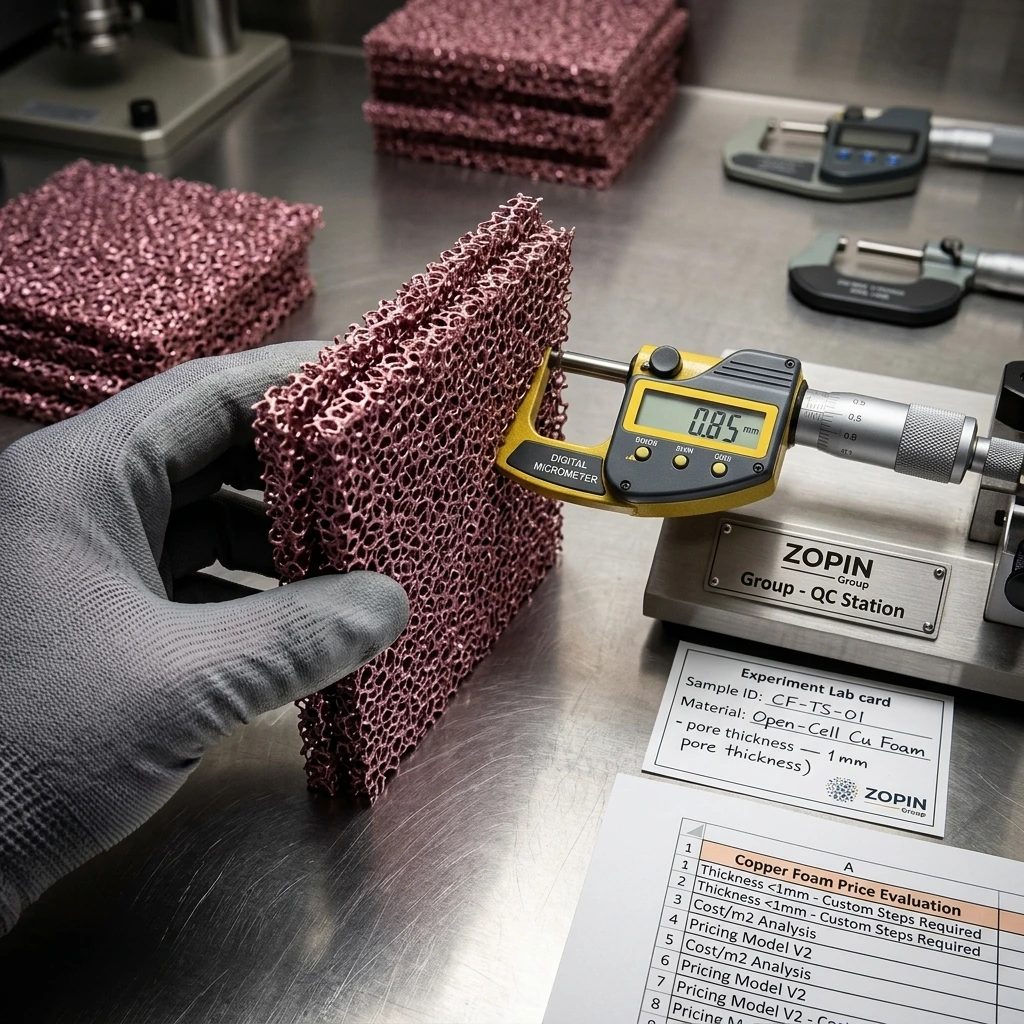
Custom cutting adds secondary finishing charges. Standard dimensions like 500x500mm or 200x300mm come directly off standard tooling. Tight geometric cuts for compact heat exchangers require specialized slitting, shifting overall upward.
Selecting thickness from 80 microns up to 20 mm must match your functional demands without inflating unit costs. Battery anode collectors require thin, uniform layers, while industrial heat sinks benefit from thicker cross-sections. Ordering unnecessary thickness quickly multiplies raw material weight.
Thermal conductivity exceeding 6 W/m.K relies on high porosity between 95% and 98%. Maintaining this permeability ensures gas diffusion and electrolyte flow in high-rate cells. When engineers demand extreme tensile strength alongside high porosity, yields drop during rolling, raising final rates.
Matching production specs to actual operational targets keeps testing budgets manageable. Specifying custom pore structures across prototype stages requires verified vendor consistency. Sourcing through an established prevents unexpected tooling surcharges during scaling.
Prototypes often require small minimum orders to validate cell performance. Suppliers maintaining an MOQ of 1 allow engineers to test dimensions without locking up capital. Regular inventory items ship within 24 to 48 hours for immediate evaluation.
Volume orders shift billing from sample tiers toward raw processing schedules. Requesting a allows purchasing managers to optimize freight and per-sheet rates across planned rollouts. Standard export wooden packaging prevents compressed cell deformation across sea and air freight.
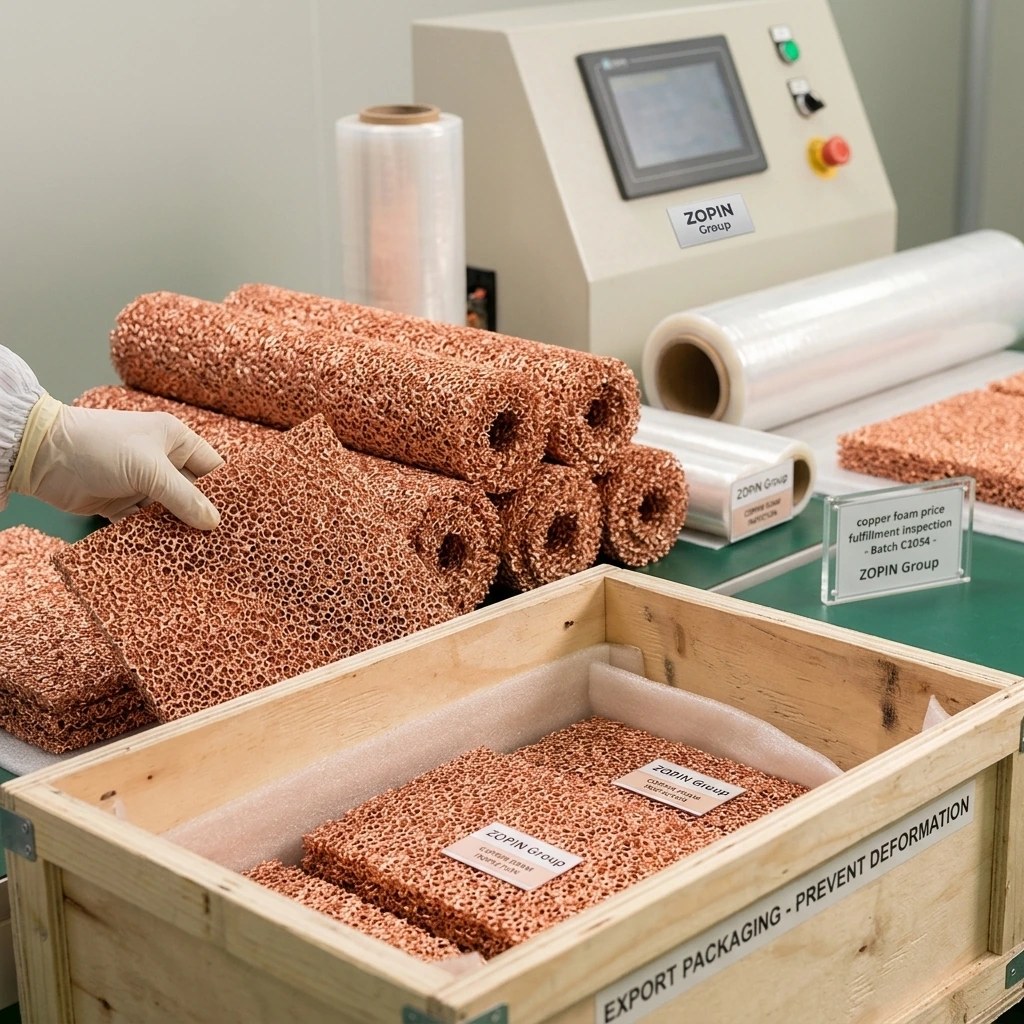
Lead times for custom porosity runs generally range within two weeks. Communicating specific substrate tolerances early avoids engineering re-runs. Clear CAD profiles and pore density requirements streamline quoting and line scheduling.
Higher pore density increases electrodeposition time and requires stricter slurry testing, slightly raising per-meter costs. For anode collectors, 80 to 110 PPI offers the best balance of conductivity, paste retention, and volume economy.
Provide required sheet dimensions, overall thickness, target porosity percentage, and estimated quarterly order volume. Indicating whether you need standard 500x500mm panels or custom die-cut parts allows technical teams to return pricing within 24 hours.
Yes, standard continuous lines support thin foils near 80 microns up to heavy blocks past 20 mm. Custom continuous rolls or panel batches adapt directly to automated cell winding and heat dissipation frames without extra conversion steps.

Copyright © Xiamen Zopin New Material Limited. All Rights Reserved.
the professional team to service !

 Daisy@foam-material.com