Xiamen Zopin New Material Limited Established in 2011, it is a new material industry with capabilities of independent research & development, production and sales as one. Our ISO9001:2012 factory covers an area of 6 hectares and a building area of 28,000 square meters, with annual production of high-performance metal foams of 250,000 square meters. Our R&D team is composed of academicians and experts from Tsinghua University, Polytechnic University of Hong Kong, Nanyang Technological University, and other domestic and foreign metal foam professionals. After many years’ endeavor, we now own our proprietary intellectual property rights in manufacturing high purity and high porosity metal foams.
Graphite Foam Price: Factors, Trends, and Considerations
The price of graphite foam depends on several factors, including the manufacturing process, material quality, application requirements, and market demand. Below is a detailed overview of the pricing landscape for graphite foam, along with key considerations for purchasing or producing it.
●1. Factors Affecting Graphite Foam Prices
A. Manufacturing Process
Chemical Vapor Deposition (CVD): Highcost method due to the need for specialized equipment and high temperatures.
Pyrolysis of Polymers: Relatively costeffective but may require additional purification steps.
Extrusion and Sintering: Economical for largescale production but may result in lowerquality foam.
TemplateAssisted Assembly: Customizable but can be expensive depending on the template material.
B. Material Quality
HighPurity Graphite Foam: More expensive due to strict purity requirements for applications like aerospace and electronics.
LowerQuality Graphite Foam: Cheaper but may not meet stringent performance criteria.
C. ApplicationSpecific Requirements
Applications requiring specific pore sizes, densities, or dopants will increase costs due to the need for customized production processes.
D. Market Demand
Emerging industries such as electric vehicles (EVs), renewable energy storage, and aerospace are driving demand for graphite foam, potentially increasing prices.
E. Geographical Location
Prices vary by region due to differences in labor costs, raw material availability, and transportation expenses.
●2. Approximate Price Range
As of 2025, the price of graphite foam typically ranges from $10 to $100 per kilogram, depending on the factors mentioned above. Here’s a breakdown:
| Type/Quality | Price Range ($/kg) | Applications |
||||
| Standard Graphite Foam | $10 $30 | General thermal management, industrial applications. |
| HighPurity Graphite Foam | $30 $70 | Aerospace, electronics, battery electrodes. |
| Customized Graphite Foam | $70 $100+ | Specialized applications requiring tailored properties (e.g., biomedical, quantum computing). |
●3. Cost Breakdown
A. Raw Materials
The primary raw material is graphite, which is relatively inexpensive compared to other advanced materials like graphene or carbon nanotubes. However, the cost of highpurity graphite can increase significantly.
B. Processing Costs
Advanced manufacturing techniques such as CVD or pyrolysis add to the overall cost due to energy consumption, equipment depreciation, and labor.
C. PostProcessing
Steps such as surface treatment, doping, or integration with other materials can further increase costs.
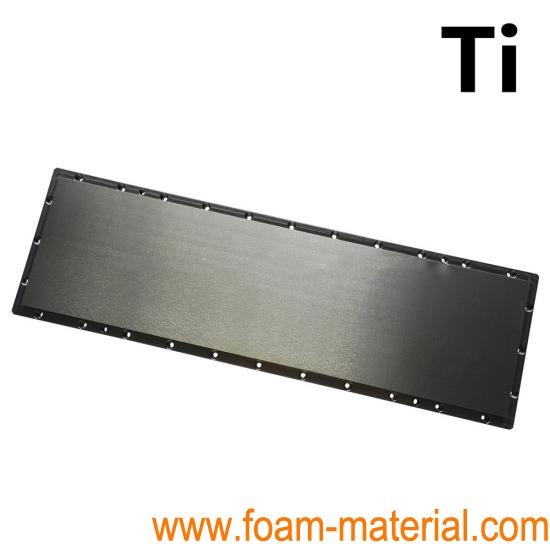
Ti Sputtering Target
●4. Strategies to Reduce Costs
A. ScaleUp Production
Mass production reduces unit costs by spreading fixed costs over a larger volume of output.
B. Recycling Waste Materials
Using recycled carbon sources (e.g., waste polymers) as precursors for graphite foam can lower raw material costs.
C. Optimization of Processes
Improving manufacturing efficiency and reducing defects can lead to cost savings.
D. Regional Sourcing
Producing graphite foam in regions with lower labor and energy costs can reduce expenses.
●5. Market Trends and Future Outlook
A. Increasing Demand
The growing adoption of electric vehicles, renewable energy systems, and advanced electronics is driving demand for graphite foam, particularly in thermal management and energy storage applications.
B. Technological Advancements
Innovations in manufacturing processes, such as scalable CVD or hybrid methods, could reduce costs and improve quality.
C. Competitive Pricing
As more companies enter the market, competition is likely to drive down prices while encouraging innovation.
●6. Conclusion
Graphite foam prices vary widely depending on the quality, manufacturing process, and intended application. While standardgrade foam is relatively affordable, highpurity or customized versions can be significantly more expensive. To optimize costs, consider factors such as scale of production, sourcing strategies, and technological advancements.
If you're evaluating graphite foam for your project, carefully assess your budget, performance requirements, and longterm needs. For further details or assistance, feel free to ask!


 Daisy@foam-material.com