Procurement teams often face inconsistent pore uniformity and trace oxidation when sourcing functional materials for electrode development. High-purity ag foam solves this by combining continuous ligaments with outstanding electrical conductivity. Selecting the right supplier requires evaluating open-cell porosity, sheet dimensions, and batch purity. This practical review examines material benchmarks, manufacturing specifications, and integration factors to streamline your vendor evaluation process.
Engineering stable electrochemical interfaces requires rigorous control over microscopic pore geometry. Traditional metal foils provide limited reaction area, forcing cells to operate at higher localized resistance. Utilizing provides an interconnected three-dimensional framework that allows electrolyte penetration with minimal pressure loss.
The skeletal structure features reticulated ligaments that distribute mechanical stress evenly across the substrate. A typical silver-white matrix achieves an open-cell porosity exceeding ninety percent, maximizing active sites while maintaining continuous electrical pathways. Pore sizes range from coarse to ultra-fine meshes, allowing researchers to calibrate fluid dynamics inside flow cells.
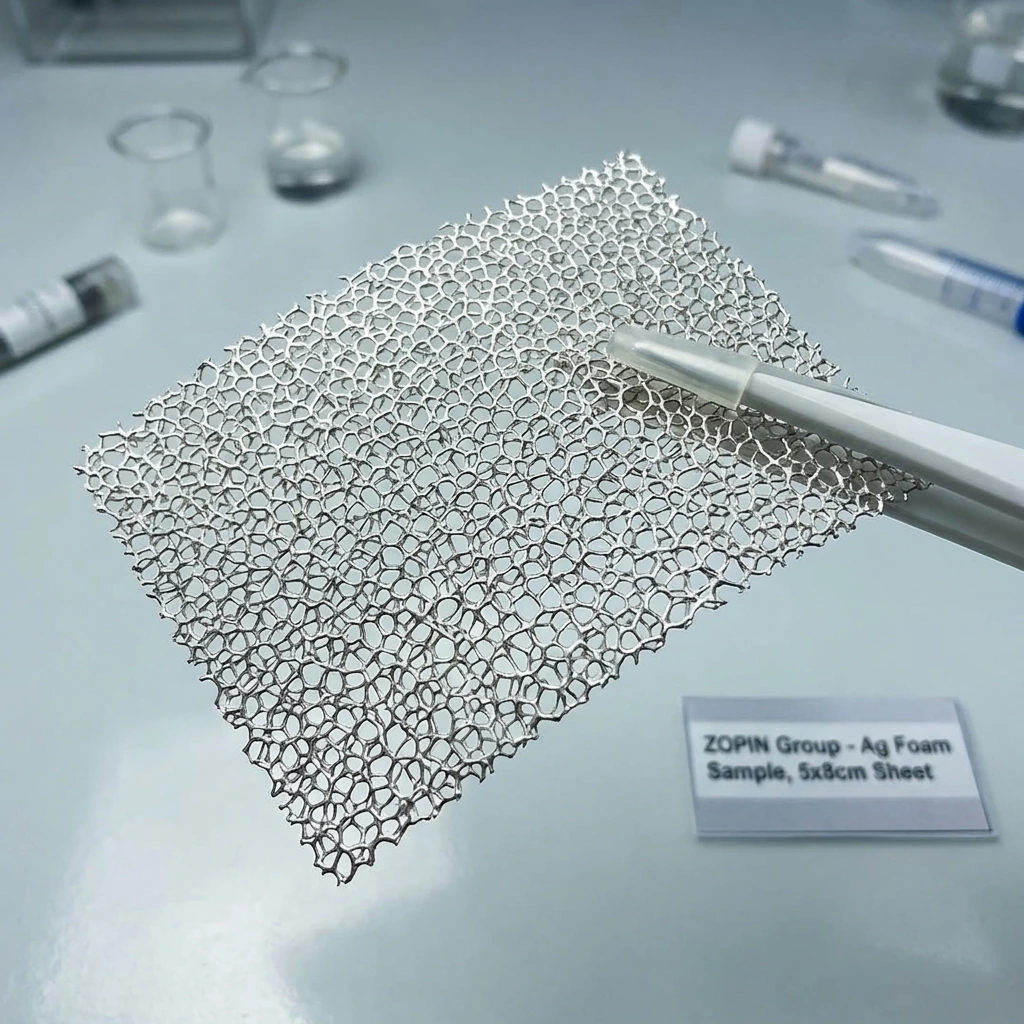
Uniform ligament thickness prevents localized current hot spots during long charge cycles. The absence of internal dead volume ensures consistent ion flux across the entire cross-section.
Evaluating raw material integrity directly impacts baseline experimental variance. Standard industrial alloys often introduce trace iron, nickel, or lead, causing parasitic reactions during cyclic voltammetry. High-grade eliminates these artifacts by maintaining a precious metal assay up to 99.99%.
High chemical purity delivers low contact resistance and elevated intrinsic thermal dissipation. In high-current applications, the three-dimensional porous structure serves as an efficient silver electrocatalyst support, facilitating gas evolution reactions without substrate dissolution.
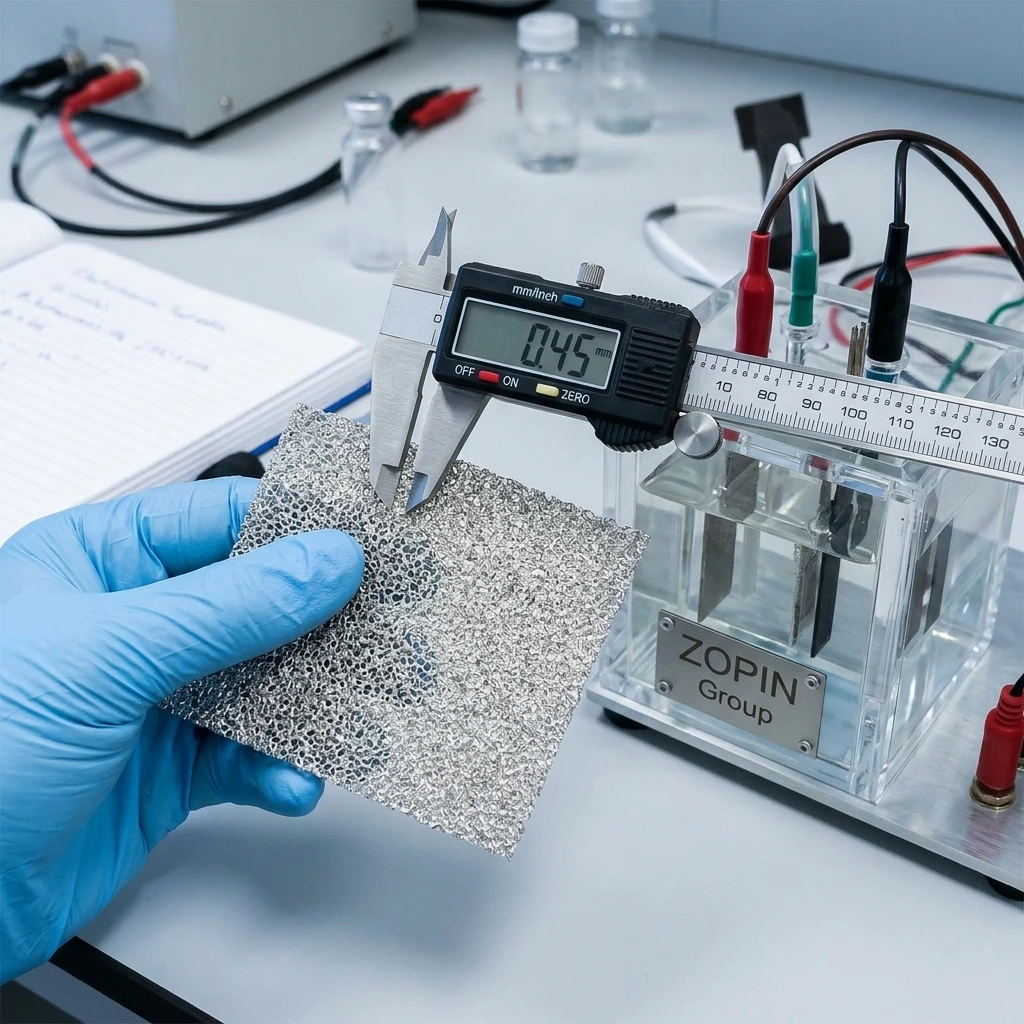
The silver surface also exhibits natural oxidation resistance compared to pure copper variants, simplifying storage protocols before assembly. Many research teams integrate custom dimensions directly from options to avoid manual shearing.
Moving from discovery to pilot production exposes real supply chain bottlenecks. Procurement officers must verify minimum order quantities, packaging safeguards, and fabrication lead times before qualifying a vendor. High-volume runs require repeatable pore density, whereas pilot batches require flexible sheet sizing without steep tooling surcharges.
Standard logistics rely on sealed moisture-barrier bags packed inside robust export wooden cases to prevent mechanical crushing. Testing facilities often inspect incoming lots using scanning electron microscopy to confirm ligand integrity. Reliable suppliers support low batch minimums, short processing windows, and clear technical documentation to keep project schedules on target.
Standard continuous sheets can be slit or stamped into round and rectangular electrode tabs. The ductile matrix withstands moderate calandering processes without structural tearing.

Copyright © Xiamen Zopin New Material Limited. All Rights Reserved.
the professional team to service !

 Daisy@foam-material.com