Engineers evaluating core materials for impact attenuation and acoustic baffling frequently face strict weight limits. Balancing mechanical absorption against overall mass requires precise control over void fraction and geometry. Standard cellular stocks often fail during prototyping because rigid density profiles limit acoustic isolation and crush stroke performance. This technical overview breaks down critical cell metrics, sizing boundaries, and baseline evaluation factors for selecting an aluminium foam sheet for pilot benches and specialized machinery setups.
Achieving targeted impact attenuation depends on the internal cell framework of the material. Specifying an open/closed cell configuration determines both fluid flow and energy crush capacity. When designing protective liners, engineers often specify a 55-70% porosity al plate to secure uniform collapse during sudden deceleration.
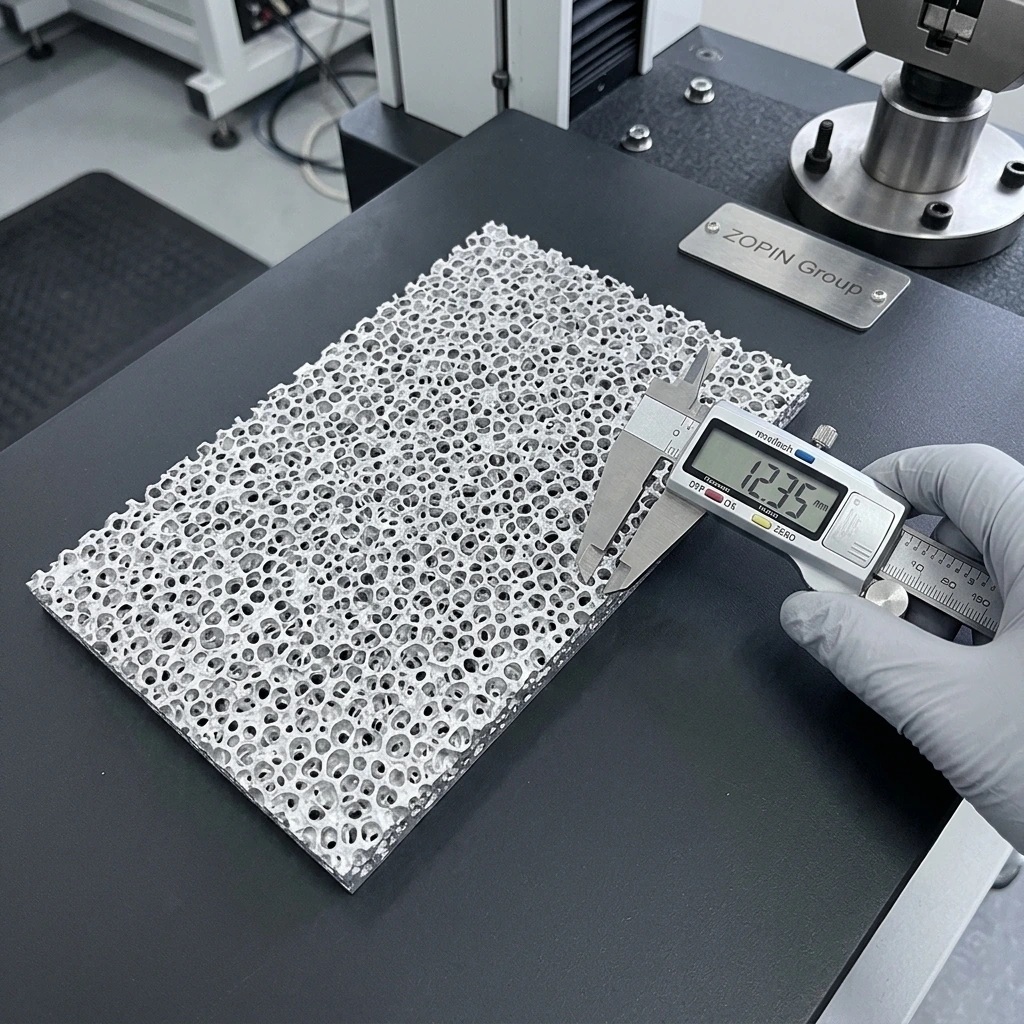
Uniform void distribution ensures predictable yield strength along standard compression axes. Materials with lower void levels provide rigid structural reinforcement, whereas higher permeability grades offer enhanced sound dampening. Teams running fluid passage or acoustic trials often transition toward to optimize internal surface contact area.
Selecting pore density involves balancing acoustic dissipation against mechanical shear resistance. A fine cellular network traps pressure waves efficiently. Larger cell windows, by contrast, yield extended plastic deformation zones under dynamic loads.
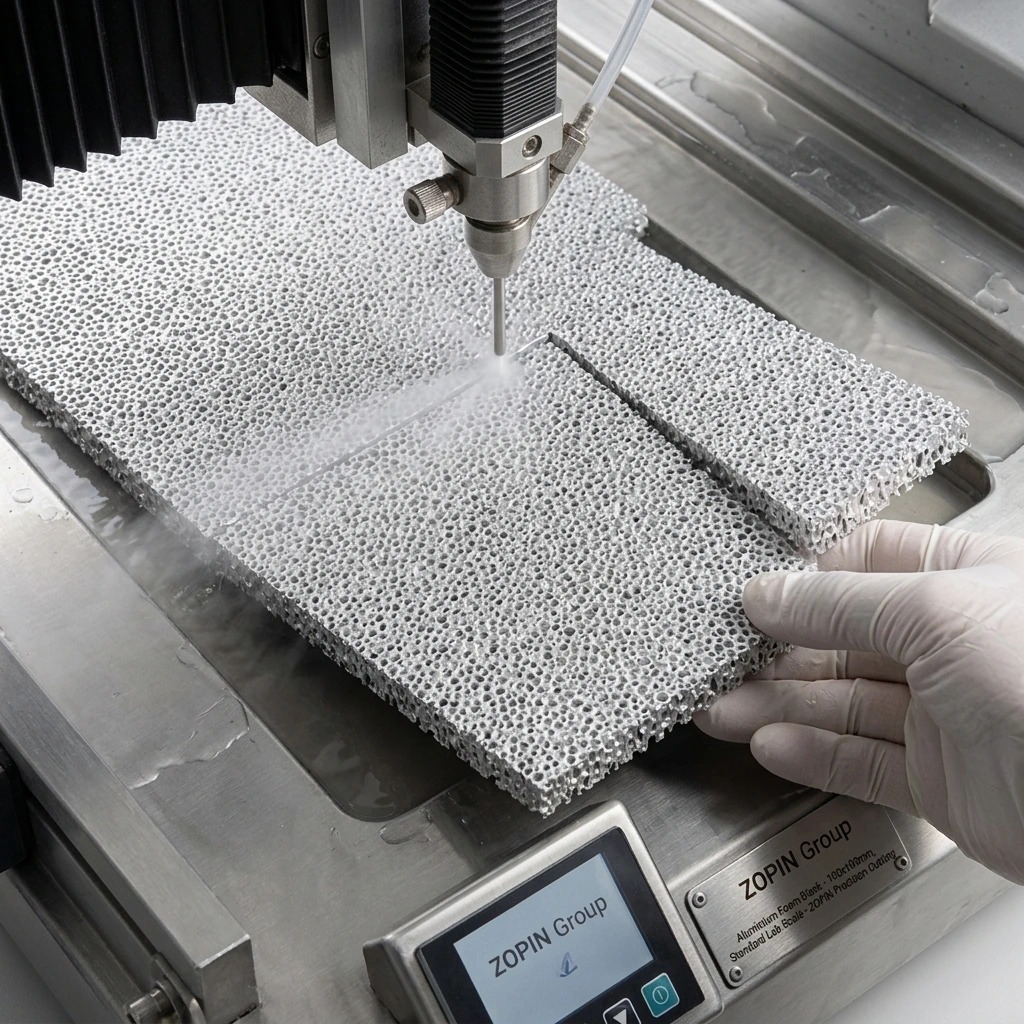
Moving from theoretical models to bench fixtures requires adaptable panel profiles. Prototype builds rarely conform to bulk foundry runs, making custom cut cellular aluminium essential for validation cycles. Precise cutting methods eliminate edge deformation that could distort mechanical test readings.
High-precision waterjet cutting or electrical discharge machining preserves delicate cell walls along sample perimeters. Rough abrasive tooling can smear adjacent pores, corrupting airflow and fluid test data. Standard laboratory blanks commonly measure 100x100mm, while custom flat dimensions scale cleanly for larger fixtures.
When standard aluminum panels do not fulfill thermal conductivity or electrocatalytic targets, development teams review adjacent platforms. Selecting proper plate thickness between 1mm and 30mm ensures accurate fitment within compact prototype frames.
Vibration control in specialized transport housings demands dependable dissipation layers. Integrating a lightweight damping sheet dampens structural resonance without creating excessive mass penalties. The internal metal struts buckle under extreme stress, flattening the deceleration curve.
This progressive crushing behavior maintains steady plateau stress, preventing localized structural failure. Thermal dissipation also benefits from the broad internal matrix, drawing heat away from delicate sensors. Utilizing a porous aluminium flat panel inside acoustic enclosures provides both thermal dissipation and high-frequency sound attenuation.
Testing facilities can review specialized compositions through manufacturing paths to match proprietary project parameters. Proper alloy chemistry and consistent void distribution ensure clean experimental validation.
Panels can be wire-cut or machined directly to custom engineering drawings. Maintaining crisp perimeter margins ensures exact drop-in fitment for bespoke test frames and dynamic crush enclosures.
This void density delivers high compressive resilience before approaching complete densification. It supports predictable plastic deformation and energy dissipation across rigorous destructive cycle trials.
Standard evaluation panels ship rapidly from active warehouse inventory. Specialized alloys, tight thickness tolerances, and tailored dimensional profiles generally finalize processing within one to two weeks.

Copyright © Xiamen Zopin New Material Limited. All Rights Reserved.
the professional team to service !

 Daisy@foam-material.com