Evaluating quotes for cellular metals often stalls when procurement teams receive wildly differing numbers for seemingly identical project specifications. A baseline aluminium foam price reflects cell morphology, target pore density, overall panel thickness, and secondary edge processing. Without transparent factory metrics, sourcing managers risk paying premium surcharges for simple acoustic liners or underestimating structural requirements. This review breaks down standard unit costs, machining variables, and export handling to help your purchasing team secure viable commercial terms.
Cellular aluminum manufacture begins with stabilized liquid metal foaming or continuous pore infiltration casting. The physical porosity directly dictates raw material consumption per square meter. A panel with 90 percent void volume uses substantially less precursor melt than a denser 65 percent energy absorber. Density tolerances determine whether batches pass dynamic drop tests or fail under compressive loads.
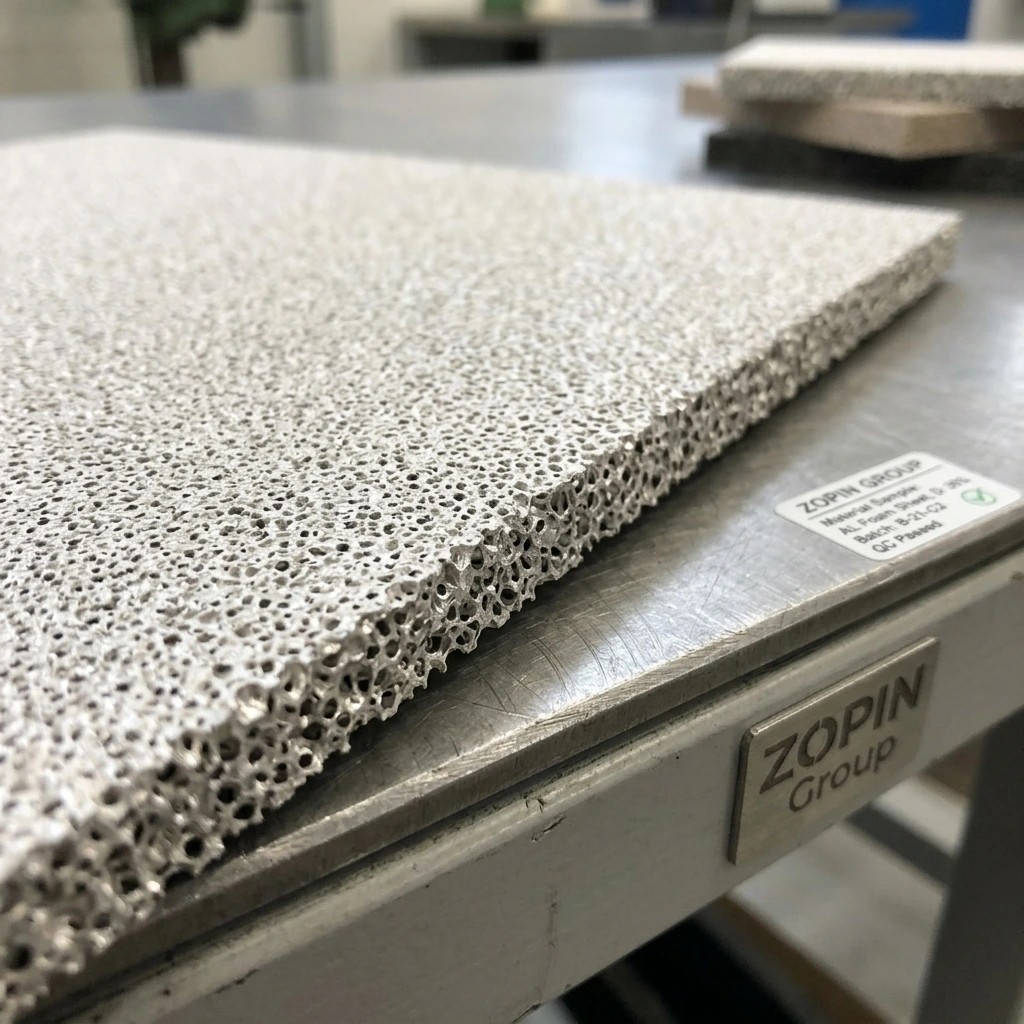
Cell structure also sets the initial price line. Closed-cell variants serve collision mitigation and stiff architectural skins, while open-cell blocks require intricate pore spacing for convective heat transfer. Sourcing engineers evaluating an batch must match the exact pore diameter to their performance threshold. Small pores need tighter thermal controls during blowing, which nudges manufacturing overhead upward.
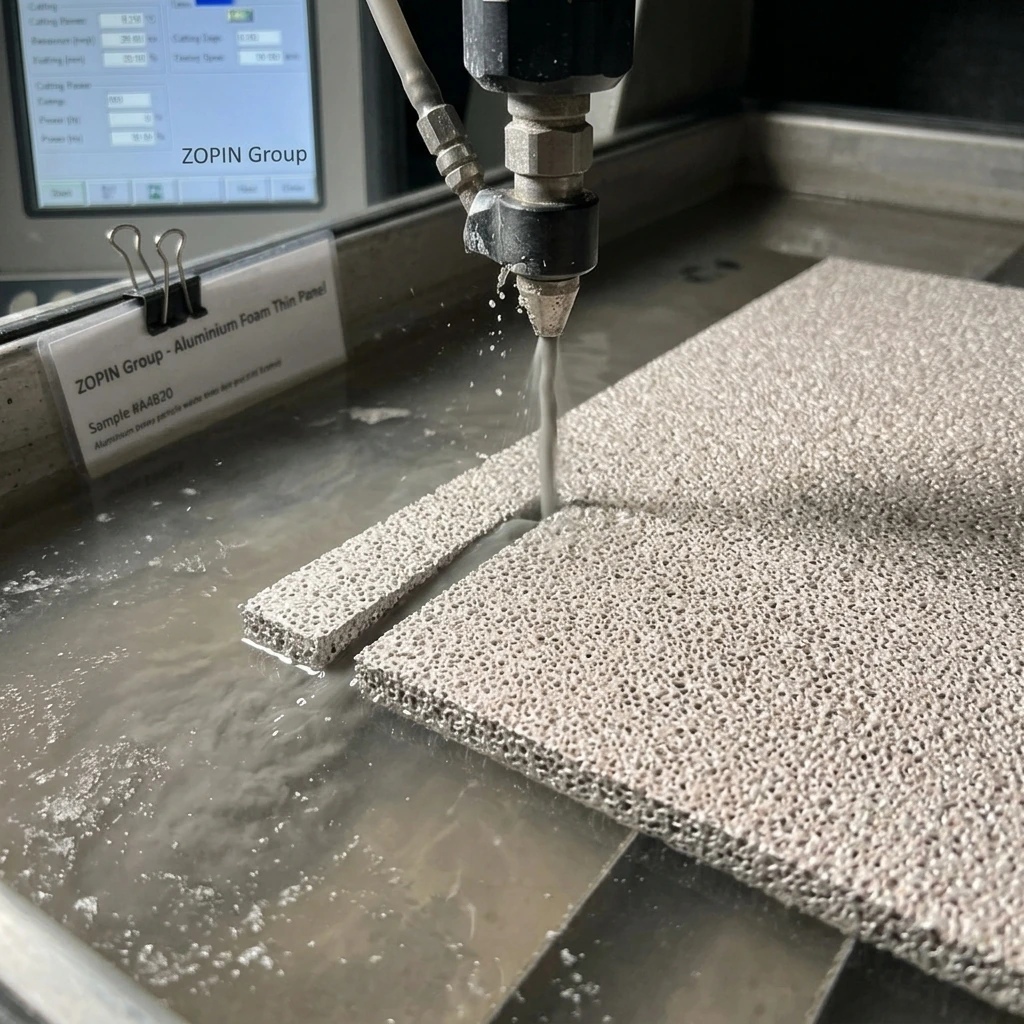
Raw slabs leave continuous molds at rough cast dimensions before entering precision cutting cells. Standard catalog formats like 500x500mm carry lower unit rates because tooling changes remain minimal. Custom cut geometries introduce secondary kerf losses, especially when designs call for tight corner radii or through-holes. These operations require CNC milling or high-pressure abrasive waterjets to prevent pore collapse along raw cut edges.
Procuring teams can request a to match sub-assembly footprints directly from the plant. Buying pre-sized inserts eliminates secondary scrap at your own manufacturing facility. While custom perimeter routing adds a marginal finishing charge, it slashes assembly labor and reduces internal waste handling. Bulk slab purchases remain best suited for operations with dedicated in-house bandsaws.
Volume scale creates considerable pricing divergence between prototype validation and production runs. A lab sample involves dedicated furnace setups, custom mold stops, and standalone packaging protocols. Industrial production lines streamline ingot loading and deliver uniform cooling runs across thousands of units. Partnering with an established grants access to ongoing melt schedules and standardized slab stocks.
Export logistics represent another decisive budget component. Light cellular structures take up significant shipping cube relative to their physical deadweight. Factory teams rely on reinforced seaworthy crates with interior edge cushioning to avoid perimeter denting during long transit voyages. Evaluating overall landed costs requires factoring in handling protections, container utilization, and ocean carrier schedules rather than focusing purely on FOB factory gate values.
Pore density between 10 and 40 PPI alters the surface contact area and cooling fluid impedance. Tighter pore configurations require strict melt fluidity management, slightly lifting base costs compared to standard crash-absorption grades.
Quotations rely on external perimeter dimensions, total slab thickness, cell type, and target density. Providing dimensional tolerances and edge sealing preferences enables the engineering desk to calculate scrap rates accurately.
Cellular metals possess low volumetric mass, meaning air cargo pricing scales on dimensions rather than weight. Selecting full sea container loads or consolidated pallet freight stabilizes landed numbers against volatile regional parcel surcharges.

Copyright © Xiamen Zopin New Material Limited. All Rights Reserved.
the professional team to service !

 Daisy@foam-material.com