Selecting the right porous metal core often leads to conflicting tradeoffs between mechanical rigidity and acoustic performance. Commercial R&D teams frequently struggle with inconsistent cell morphology across custom prototype batches. An aluminum foam sheet provides a predictable balance of ultra-low density, structural dampening, and high sound attenuation. This technical review evaluates core porosity ranges, edge-cutting tolerances, and testing parameters to simplify your commercial sourcing decisions.
Cellular geometry determines the load response of porous panels under dynamic compression. Porosity levels govern both density and acoustic absorption capacity. A flat porous aluminum plate with uniform cell walls prevents localized collapse during high-strain impacts.
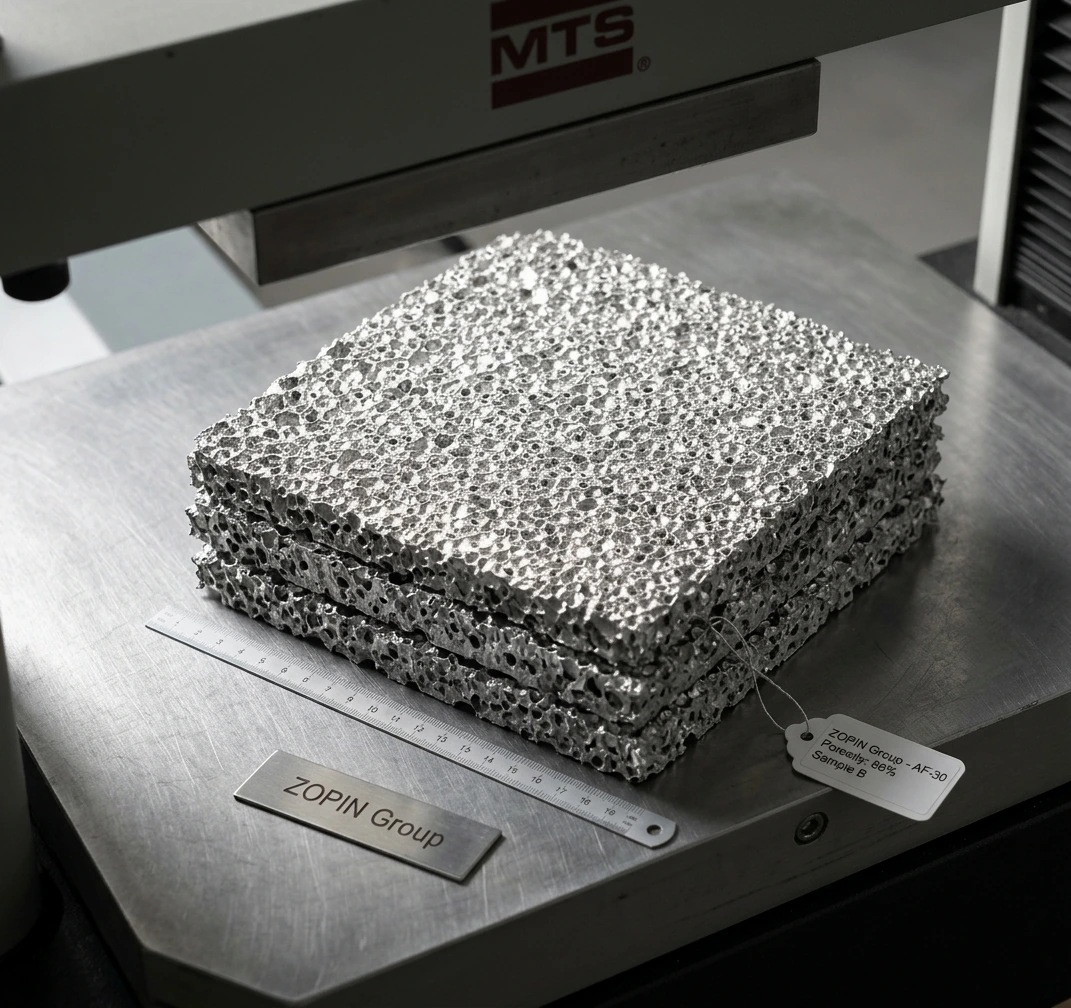
Engineers typically specify a 55-70% porosity aluminum core for dual-function barrier systems. In this range, the closed-cell or open-pore framework absorbs kinetic energy while maintaining high flexural stiffness. Standardizing pore distribution eliminates density gradients that cause premature failure in structural assemblies.
Secondary processing requires strict edge-finishing methods to avoid collapsing open cellular boundaries. Standard waterjet cutting maintains open cell channels without thermal warping. This mechanical integrity is vital when designing a lightweight core aluminum sheet for sandwich panels.
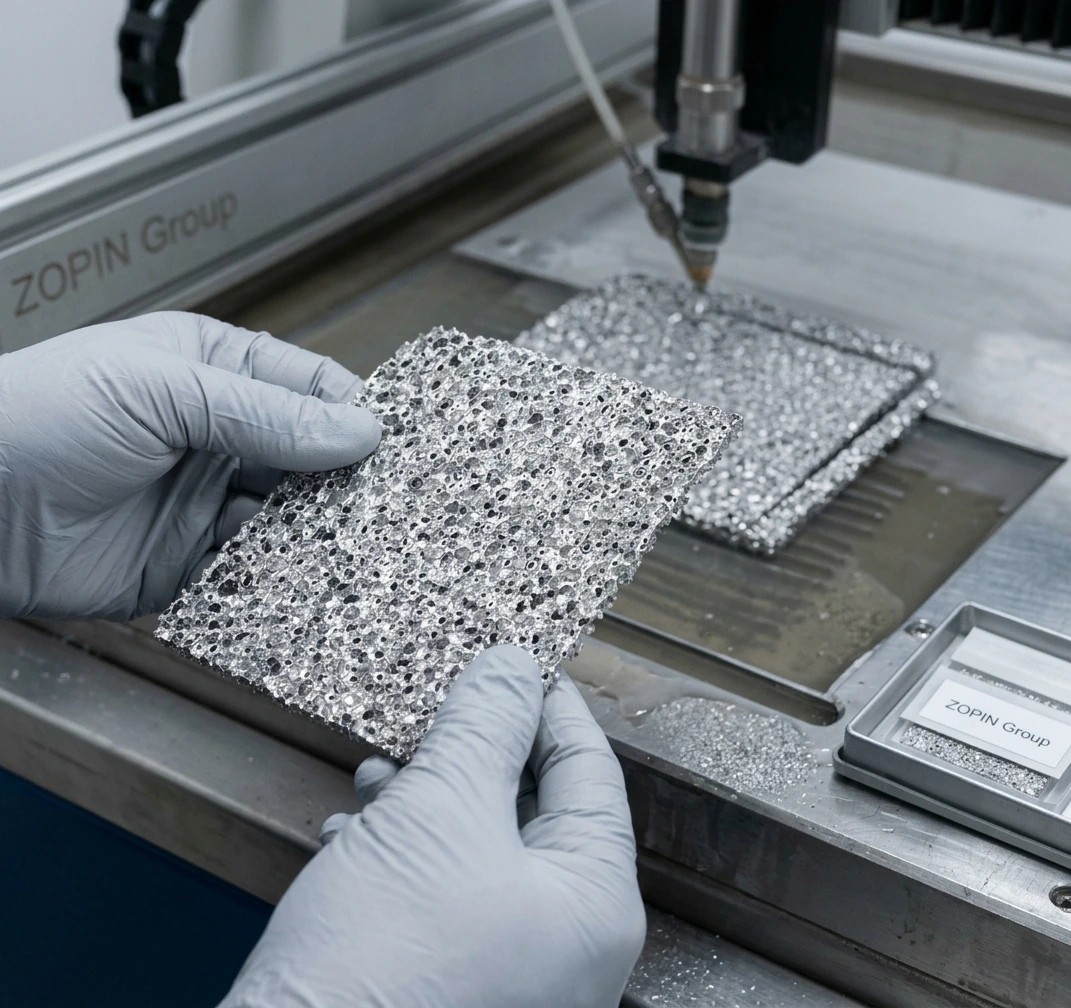
Direct bonding works well with structural epoxies, provided surface powders are cleared after slicing. For acoustic containment modules, exploring allows teams to tailor acoustic attenuation directly to targeted noise bands. Sourcing through vetted options ensures precise sheet thickness from thin layers up to structural blocks.
Validating acoustic loss factors requires strict testing inside impedance tubes or reverberation chambers. Standardizing coupon dimensions prevents air gaps that distort low-frequency transmission data. A calibrated lab acoustic test panel delivers repeatable sound absorption coefficients across the 500 to 2000 Hz spectrum.
Beyond acoustic screening, verifying structural dampening under cyclic vibration isolates resonance frequencies. Industrial buyers sourcing through specialized manufacturers avoid batch variances by requiring certified porosity and cell size reports prior to prototype scale-up.
Direct fusion welding often destroys thin cell walls, so standard practice favors structural polyurethane bonding, riveting with load-spreading washers, or brazing.
The metallic matrix retains structural integrity up to the melting point of standard aluminum alloys, providing non-combustible fire protection alongside heat dissipation.
Standard catalog sizes process within 12 to 24 hours from inventory, while custom dimensional cuts for laboratory testing take up to two weeks.

Copyright © Xiamen Zopin New Material Limited. All Rights Reserved.
the professional team to service !

 Daisy@foam-material.com