Xiamen Zopin New Material Limited Established in 2011, it is a new material industry with capabilities of independent research & development, production and sales as one. Our ISO9001:2012 factory covers an area of 6 hectares and a building area of 28,000 square meters, with annual production of high-performance metal foams of 250,000 square meters. Our R&D team is composed of academicians and experts from Tsinghua University, Polytechnic University of Hong Kong, Nanyang Technological University, and other domestic and foreign metal foam professionals. After many years’ endeavor, we now own our proprietary intellectual property rights in manufacturing high purity and high porosity metal foams.
Carbon Felt Electrodes: Overview, Properties, Fabrication, Applications, and Advantages
Overview
Carbon felt electrodes have emerged as a critical component in various electrochemical systems due to their excellent electrical conductivity, chemical stability, and high surface area. These electrodes are composed of intertwined carbon fibers, forming a three-dimensional porous network capable of supporting significant electrochemical activity. The unique combination of mechanical strength and electrochemical performance makes carbon felt electrodes suitable for applications ranging from fuel cells and redox flow batteries to wastewater treatment and electrochemical sensors. Recent research has focused on optimizing their structure and surface chemistry to enhance performance in advanced energy storage and conversion systems.
Properties
Carbon felt electrodes exhibit a series of properties that make them highly desirable for electrochemical applications:
1. High Surface Area: The porous network structure of carbon felt provides a large surface area, facilitating greater electrode–electrolyte contact and enhancing reaction kinetics.
2. Electrical Conductivity: The interconnected carbon fibers ensure efficient electron transport throughout the electrode.
3. Chemical Stability: Carbon felt can withstand harsh chemical environments, including strong acids, bases, and oxidizing agents, without significant degradation.
4. Thermal Stability: Withstanding temperatures up to 400–500°C in inert atmospheres, carbon felt is suitable for high-temperature electrochemical processes.
5. Mechanical Flexibility: Unlike rigid electrodes, carbon felt can be cut, shaped, or compressed to fit different reactor geometries without losing structural integrity.
Fabrication
The fabrication of carbon felt electrodes involves several critical steps to optimize their structural and electrochemical properties:
1. Carbon Fiber Preparation: High-quality carbon fibers are selected as the primary building blocks. These fibers typically undergo surface treatments, such as oxidation or activation, to improve wettability and electrochemical activity.
2. Felting Process: Carbon fibers are intertwined and compressed into a mat-like structure. Needle punching or other mechanical entanglement techniques can enhance the three-dimensional porosity of the felt.
3. Carbonization: The felt mat undergoes heat treatment under inert gas to convert precursor fibers (such as PAN or rayon) into pure carbon while maintaining structural integrity.
4. Activation (Optional): Chemical or physical activation can be applied to increase porosity and surface area, further enhancing electrochemical performance.
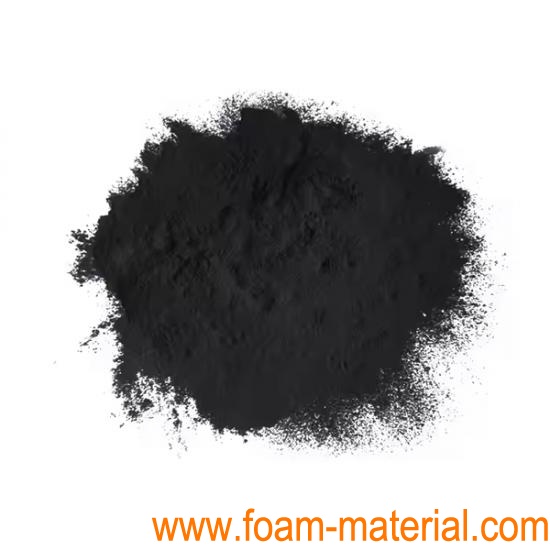
Carbon Powder
Applications
Carbon felt electrodes are highly versatile and are widely applied in numerous electrochemical systems:
1. Redox Flow Batteries: In vanadium or zinc–bromine flow batteries, carbon felt electrodes facilitate reversible redox reactions and enable high current densities.
2. Fuel Cells: Carbon felt serves as a gas diffusion layer and electrode support in fuel cells, improving mass transport and reaction efficiency.
3. Electrochemical Sensors: Due to their high surface area and conductivity, carbon felt electrodes are ideal for sensitive detection of pollutants and biomolecules.
4. Wastewater Treatment: The three-dimensional structure supports electrochemical oxidation of organic pollutants, enhancing contaminant removal efficiency.
5. Electrosynthesis: Carbon felt electrodes act as robust platforms for the production of valuable chemicals through electrochemical reactions.
Advantages
Carbon felt electrodes offer multiple advantages over traditional electrode materials:
1. Enhanced Electrochemical Performance: The combination of high surface area and conductivity allows for efficient electron and ion transport, improving reaction rates.
2. Durability and Stability: Long-term stability in harsh chemical and thermal environments ensures reliable operation over extended periods.
3. Design Flexibility: Carbon felt can be customized in thickness, density, and fiber orientation to meet specific application requirements.
4. Cost-Effectiveness: Compared to noble metal-based electrodes, carbon felt provides a more affordable yet efficient alternative for large-scale applications.
Conclusion
Carbon felt electrodes represent a highly promising material for modern electrochemical technologies. Their unique combination of high surface area, excellent conductivity, chemical and thermal stability, and mechanical flexibility make them indispensable in energy storage, environmental remediation, and electrosynthesis. Ongoing research continues to optimize the structural and surface properties of carbon felt, opening new possibilities for high-performance electrochemical systems. With its proven advantages and versatile applications, carbon felt remains a cornerstone material in the development of sustainable and efficient electrochemical technologies.


 Daisy@foam-material.com