Xiamen Zopin New Material Limited Established in 2011, it is a new material industry with capabilities of independent research & development, production and sales as one. Our ISO9001:2012 factory covers an area of 6 hectares and a building area of 28,000 square meters, with annual production of high-performance metal foams of 250,000 square meters. Our R&D team is composed of academicians and experts from Tsinghua University, Polytechnic University of Hong Kong, Nanyang Technological University, and other domestic and foreign metal foam professionals. After many years’ endeavor, we now own our proprietary intellectual property rights in manufacturing high purity and high porosity metal foams.
Copper Wire Mesh: High-Performance Experimental Material for Advanced Applications
Overview
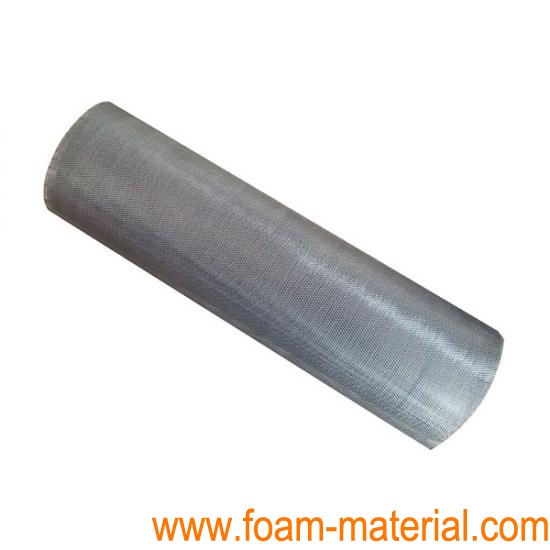
Copper wire mesh is a versatile experimental material composed of interwoven high-purity copper wires forming a uniform, porous network. It combines excellent electrical and thermal conductivity with mechanical stability and chemical resistance, making it a key material for research in electrochemistry, catalysis, energy storage, filtration, and sensor development.
The mesh structure provides a large surface area, making copper wire mesh an ideal platform for electrodes, catalytic supports, and thin film deposition. Its metallic nature ensures efficient electron transport, while its malleability and strength allow easy shaping and integration into experimental setups. Laboratory-grade copper wire mesh is typically fabricated to precise standards, allowing reproducible and reliable performance in scientific studies.
Characteristics
Copper wire mesh possesses several important physical and chemical properties that make it suitable for a wide range of experimental applications:
1. High Electrical Conductivity
Copper is renowned for its exceptional electrical conductivity, ensuring minimal resistance in electrodes, sensors, and electronic devices.
2. Thermal Conductivity
Copper wire mesh efficiently conducts heat, making it suitable for experiments involving thermal management or reactions with significant exothermic or endothermic processes.
3. Mechanical Strength and Flexibility
The mesh structure offers high mechanical stability while retaining flexibility for shaping, mounting, and integration into experimental devices.
4. Corrosion Resistance
Copper forms a protective oxide layer that provides moderate resistance to oxidation and chemical corrosion in many experimental environments.
5. Porous Structure and High Surface Area
The interconnected mesh network maximizes surface area, enhancing reactions, coating adhesion, and uniform film deposition.
6. Customizable Specifications
Wire diameter, mesh size, and overall dimensions can be tailored to specific experimental requirements, providing flexibility for a wide range of applications.
Fabrication and Preparation
Copper wire mesh can be manufactured and prepared through several processes to meet precise experimental needs:
1. Weaving or Knitting
High-purity copper wires are woven into uniform meshes with controlled pore size and wire spacing, ensuring consistent performance.
2. Cutting and Shaping
Mesh sheets can be cut to size using laser or mechanical methods for integration into electrodes, reaction chambers, or devices.
3. Surface Treatment
Copper wire mesh can undergo cleaning, acid etching, or electrochemical polishing to remove oxides and improve surface properties for coating or catalytic deposition.
4. Functionalization
Mesh surfaces can be coated with metals, oxides, polymers, or catalysts via techniques such as electroplating, sputtering, or chemical deposition to enhance experimental performance.
Metal Mesh
Applications
Copper wire mesh has broad applicability in laboratory and industrial experimental settings:
* Electrochemical Devices: Serves as electrodes in batteries, fuel cells, and supercapacitors due to high conductivity and large surface area.
* Catalysis: Acts as a support for catalysts in chemical reactions, photocatalysis, and electrocatalysis, providing enhanced reaction sites.
* Filtration and Separation: The porous structure enables its use in gas and liquid filtration for experimental or industrial purposes.
* Sensors and Electronics: Used as a conductive scaffold for chemical and biosensors, ensuring efficient electron transport and signal uniformity.
* Heat and Energy Management: Functions as a heat dissipation or distribution platform in experimental devices requiring thermal control.
* Thin Film Deposition: Provides a mechanically robust substrate for deposition of metals, oxides, or hybrid thin films.
Advantages
Copper wire mesh offers several distinct benefits for experimental research and small-scale industrial applications:
1. High Conductivity: Ensures minimal electrical resistance for electrochemical and electronic applications.
2. Enhanced Thermal Management: Conducts heat efficiently, supporting high-temperature reactions and device stability.
3. Mechanical Durability: Resistant to deformation and capable of maintaining structure during handling and experimental processes.
4. Large Surface Area: Maximizes reaction sites and coating uniformity for electrodes, catalysts, and thin films.
5. Chemical Stability: Moderately resistant to corrosion and oxidation in standard laboratory environments.
6. Customizability: Wire diameter, mesh size, and surface treatments can be tailored to meet specific research requirements.
Conclusion
Copper wire mesh is a versatile and high-performance experimental material that combines electrical and thermal conductivity, mechanical stability, chemical resistance, and a high surface area. Its unique porous structure makes it ideal for electrodes, catalyst supports, thin film deposition, filtration, and sensor development.
With customizable dimensions, surface treatments, and functionalization options, copper wire mesh provides a reliable platform for advanced experimental research across energy, materials science, chemistry, and electronics. Its combination of durability, conductivity, and adaptability ensures that it remains an indispensable material for laboratories and research institutions aiming to develop innovative devices and functional materials.


 Daisy@foam-material.com