Battery design teams face severe bottlenecks with electrode degradation and dead weight during aggressive cycling. Traditional planar metallic foils often suffer from passivation, poor interfacial kinetics, or corrosion in harsh chemical electrolytes. Integrating advanced carbon foam batteries resolves these issues by delivering an interconnected conductive skeleton with exceptional chemical stability. This review explores commercial performance benchmarks, pore morphology selection, and cell integration metrics across next-generation lithium and stationary storage architectures.
Planar metallic foils restrict active ion migration to a two-dimensional boundary. In contrast, 3D porous carbon foam provides an open architecture that significantly reduces local current density. The continuous carbon skeleton lowers internal resistance while preventing localized thermal spikes.
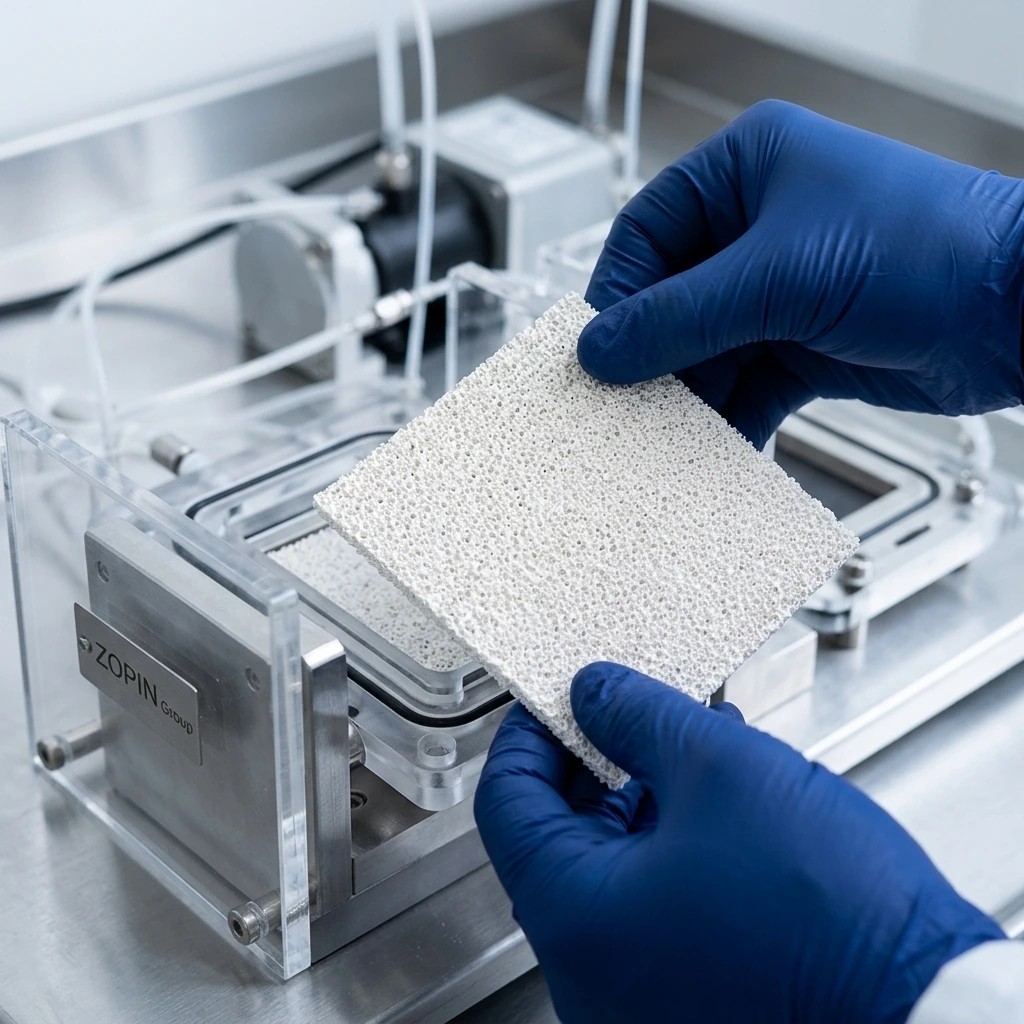
Uniform pore interconnectivity accelerates ion transport through the matrix. For lithium metal systems, porous carbon battery anodes mitigate uneven dendritic growth by guiding uniform nucleation across deep ligaments. The high electroactive area accommodates higher active mass loadings without causing mechanical delamination during repeated cycling.
Selecting porous substrates requires matching the skeleton architecture to specific battery chemistries. Flow systems demand permeability and chemical resistance, whereas closed lithium cells prioritize lightweight conductivity.
Replacing heavy metallic foil with lightweight battery current collectors directly improves pack-level gravimetric energy density. The porous matrix provides mechanical compliance to buffer the volumetric expansion of alloying anodes like silicon. You can explore our catalog of high-purity to compare cell sizes and electrical conductivities.
Vanadium flow cells require structural stability in strongly acidic environments. Utilizing corrosion proof battery carbon substrates eliminates the risk of metallic dissolution and electrochemical degradation. These networks function as durable redox flow battery carbon substrates, ensuring long electrolyte service life. Engineers can also examine related materials such as for alternate flow field configurations.
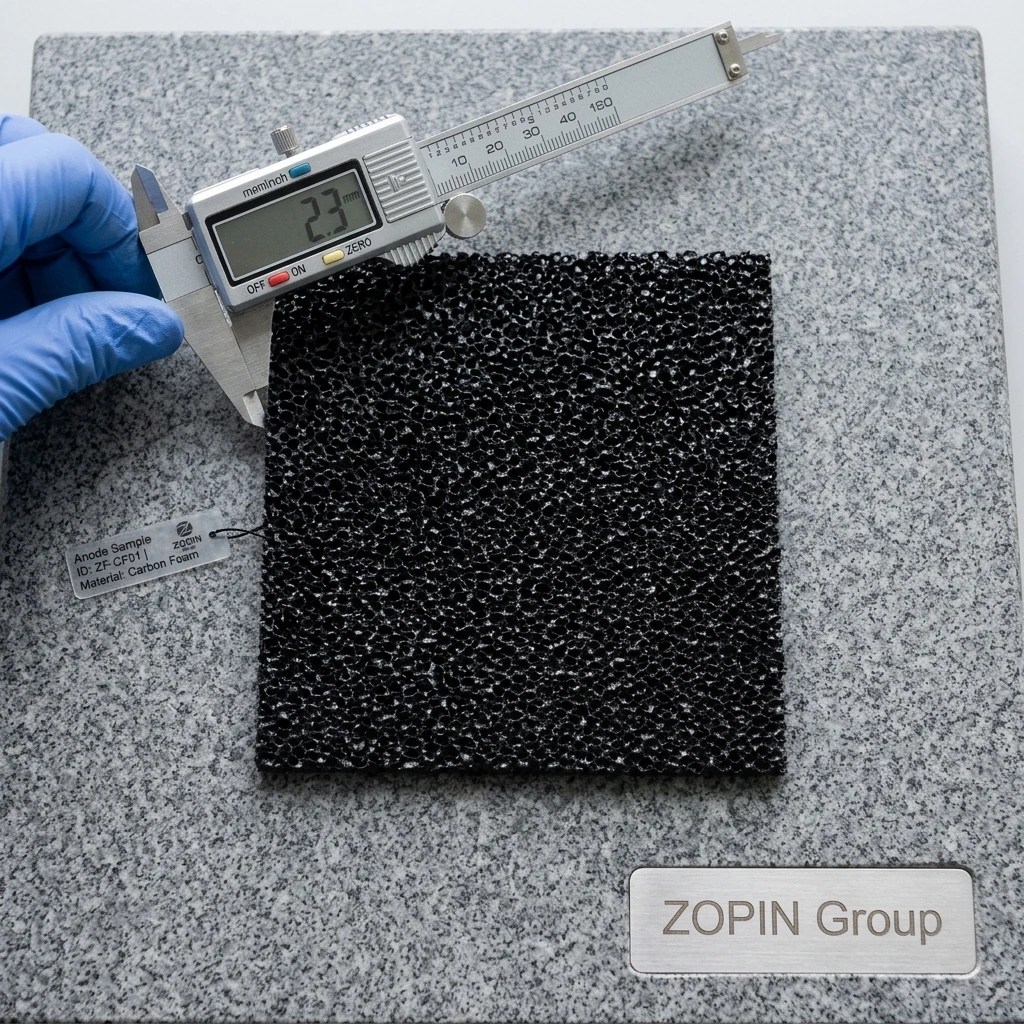
Moving from experimental coin cells to pilot scale stacks requires evaluating raw material suppliers against strict manufacturing criteria. Sourcing evaluations must verify pore consistency, trace ash content, and mechanical integrity during automated slitting.
Key specifications to evaluate include:
• Bulk electrical conductivity and ligament density to minimize ohmic
losses across large formats
• Compression recovery rates to ensure stable contact resistance without crushing inner channels
Batch uniformity directly determines roll-to-roll handling yield. Quality engineering teams should cross-reference raw material specifications against standardized testing protocols before committing to production tooling. For projects testing mixed metal and carbon frameworks, reviewing dedicated can help optimize interfacial resistance between cell layers.
Yes. Commercial porous carbon battery anodes are produced with controlled tensile properties and customizable thicknesses. This allows seamless integration into standard coating, slitting, and automated tab welding processes without substrate tearing.
Unlike conventional metals, corrosion proof battery carbon features chemically inert sp2 carbon bonds. This stable structure prevents oxidation, pinhole corrosion, and metallic contamination even in concentrated sulfuric acid flow media.
Standard evaluation samples operate with a minimum order quantity of one piece. Dispatch typically occurs within 12 to 24 hours from stock, while tailored pore sizing orders usually ship within two weeks under standard quality management.

Copyright © Xiamen Zopin New Material Limited. All Rights Reserved.
the professional team to service !

 Daisy@foam-material.com