Sourcing cellular metals often stalls over rigid factory minimums, inconsistent pore uniformity, or long supplier response times. Procurement teams balance strict lab benchmarks against full production scalability. Buying directly from an established producer cuts out distributor markups and verifies technical data sheets before shipment. This guide clarifies technical checks, custom options, and logistics to streamline your porous metal orders.
Specifying porous structures requires precise open-cell measurements rather than generic sheet descriptions. Pores per inch determine the active surface area for electrochemical cells or fluid filtration. Standard options range from 5 to 1300 PPI, paired with relative densities between 95% and 98%.
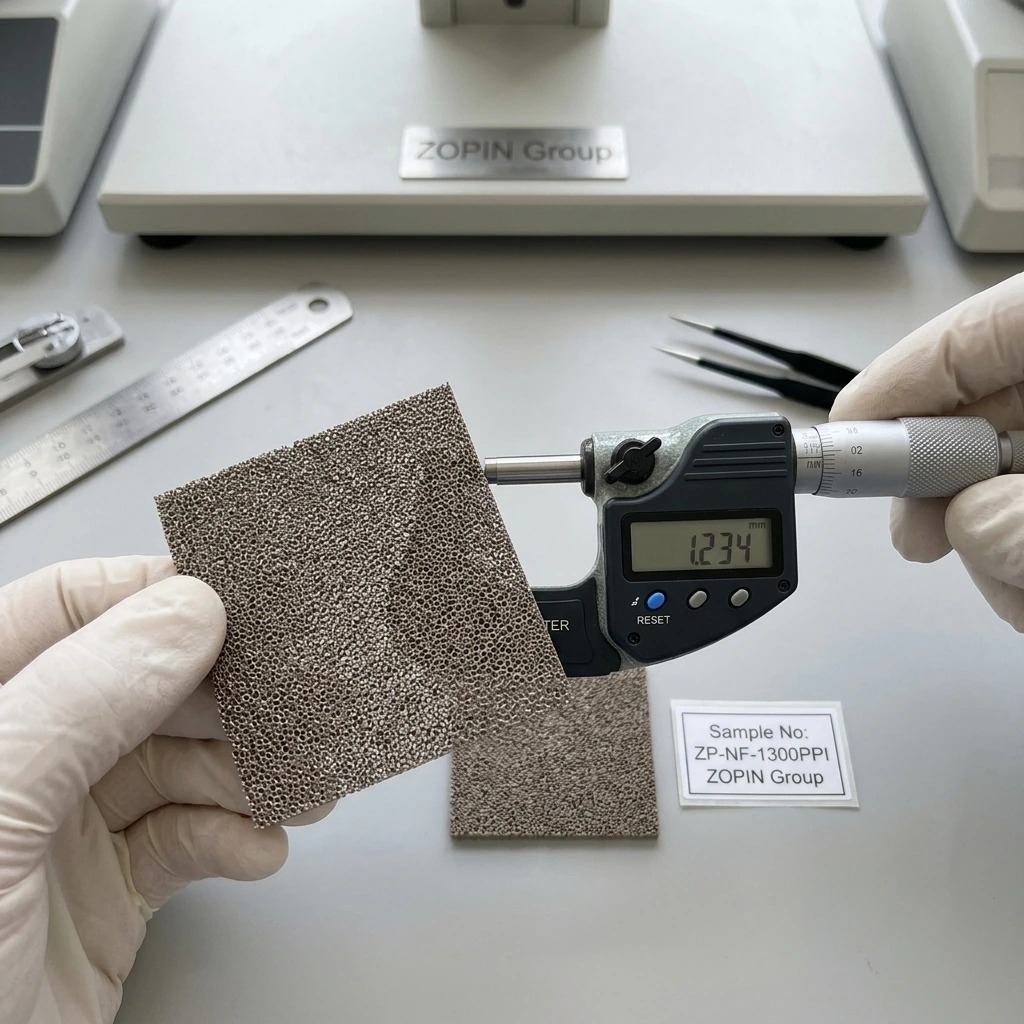
Substrate purity dictates performance under harsh operating conditions. Advanced battery electrodes often demand high-purity with nickel content above 99.5%. Thermal management and heat sink integrations leverage for its high thermal conductivity above 6 W/m.K. Reviewing raw material test reports beforehand prevents structural failures on pilot lines.
Working with a direct metal foam supplier allows procurement teams to order porous metal online according to exact engineering drawings. Standard catalog dimensions like 500x500mm or 200x300mm serve baseline checks, yet continuous rolls or laser-cut discs better fit automated assembly. Direct collaboration helps configure custom thickness steps from 80 microns up to 30 millimeters.
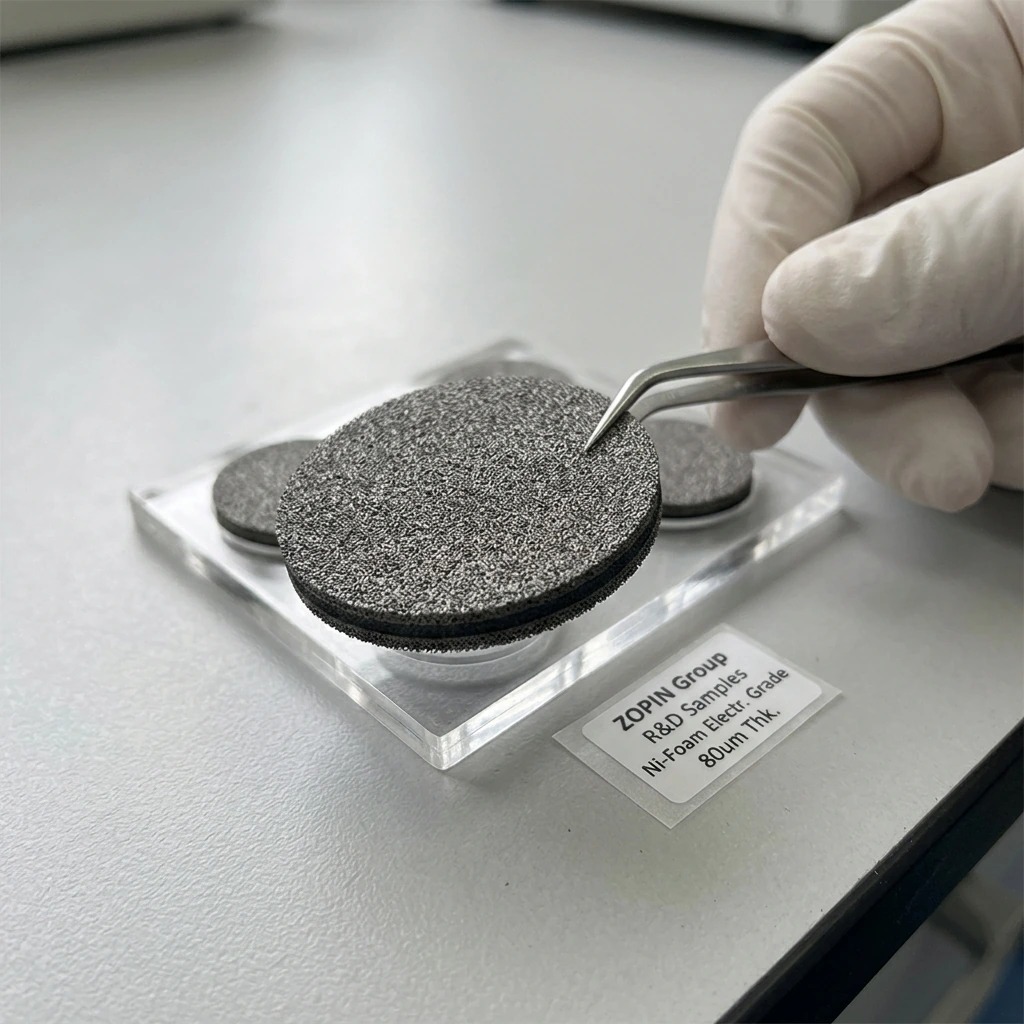
Sample evaluation remains standard before full-scale manufacturing. Researchers frequently source small quantity metal foam to validate compression strength and flow permeability. Early prototyping confirms whether open-cell designs can withstand mechanical rolling without cell collapse.
Reliable processing follows certified quality controls under ISO 9001 standards. Each batch undergoes pore uniformity tests, tensile stress checks, and thorough chemical composition analysis. Consistent ligament thickness across the entire sheet prevents local hot spots in energy storage devices.
Export shipments require rigid wooden crates to prevent edge crushing during handling. Air freight and courier services provide fast shipping metal foam for urgent pilot runs, keeping development on schedule. Overseas support hubs help clear customs documents and offer technical assistance during initial line setup. Explore specialized configurations under to match specific carrier or flow-field requirements.
Yes, standard sheets have a minimum order quantity of 1 piece. R&D centers can order porous metal online to verify flow permeability, electrical conductivity, and compression strength before committing to volume manufacturing.
In-stock catalog specifications usually dispatch within 12 to 24 hours. Custom thickness, tailored PPI configurations, or specialized alloy runs are scheduled within two weeks depending on factory volume.
Every order is packed inside impact-resistant export wooden crates with moisture barriers. If structural deformation happens during international transit, replacement sheets are dispatched under our 12-month post-sale warranty coverage.

Copyright © Xiamen Zopin New Material Limited. All Rights Reserved.
the professional team to service !

 Daisy@foam-material.com