Xiamen Zopin New Material Limited Established in 2011, it is a new material industry with capabilities of independent research & development, production and sales as one. Our ISO9001:2012 factory covers an area of 6 hectares and a building area of 28,000 square meters, with annual production of high-performance metal foams of 250,000 square meters. Our R&D team is composed of academicians and experts from Tsinghua University, Polytechnic University of Hong Kong, Nanyang Technological University, and other domestic and foreign metal foam professionals. After many years’ endeavor, we now own our proprietary intellectual property rights in manufacturing high purity and high porosity metal foams.
Carbon Foam: Advanced Material for High-Performance Applications
Overview
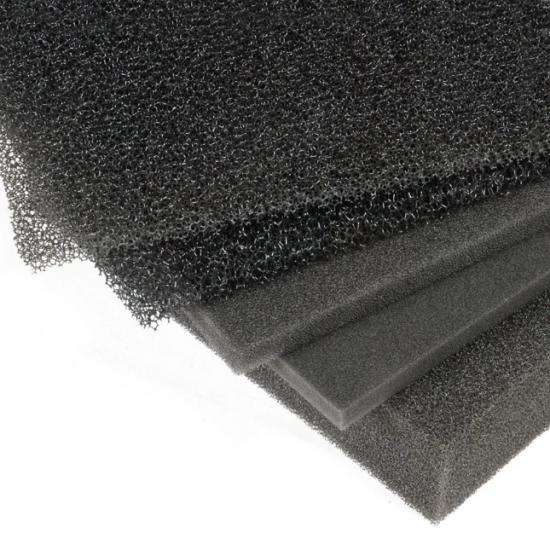
Carbon foam is a highly porous, lightweight material made from carbon with a three-dimensional open-cell structure. Distinguished by its excellent thermal conductivity, chemical stability, and mechanical strength, carbon foam is widely used in applications requiring efficient heat dissipation, structural support, and chemical resistance. Its interconnected pore network provides a large surface area and low density, making it a preferred choice in aerospace, energy storage, thermal management, and chemical industries. Carbon foam bridges the gap between lightweight materials and high-performance functionality, offering a combination of durability, versatility, and efficiency.
Features
Modern carbon foam exhibits several key features that enable its application in demanding industrial and scientific fields:
High Thermal Conductivity: The foam structure allows rapid heat transfer, making it suitable for heat exchangers, thermal management systems, and high-temperature applications.
Lightweight and Porous: Low density combined with open-cell structure reduces weight while maintaining mechanical integrity.
Chemical and Thermal Stability: Resistant to oxidation, corrosion, and high temperatures, carbon foam performs reliably under extreme conditions.
Customizable Pore Structure: Pore size, density, and orientation can be tailored for specific thermal, mechanical, or fluid flow requirements.
Mechanical Strength: Despite its porous nature, carbon foam maintains structural integrity, providing support in composite materials or high-stress environments.
Electrical Conductivity: Carbon foam can conduct electricity, making it useful in electrodes and electrochemical applications.
Manufacturing Process
The production of carbon foam involves a series of controlled steps to ensure optimal structure and properties:
Precursor Preparation: Organic precursors such as resins, polymers, or pitch are selected based on desired foam density and properties.
Foaming: The precursor is expanded via chemical or physical methods to create an open-cell porous network.
Carbonization: The foamed precursor is heated in an inert atmosphere to convert it into carbon while retaining the pore structure.
Graphitization (Optional): High-temperature treatment may be applied to enhance thermal conductivity and structural integrity.
Post-Processing: Machining, surface treatment, or impregnation with other materials may be conducted to customize performance for specific applications.
Laboratory Carbon Foam
Applications
Carbon foam is widely used across industries that demand high performance, durability, and thermal efficiency:
Thermal Management: Heat sinks, heat exchangers, and thermal interface materials in electronics, aerospace, and automotive industries.
Energy Storage: Electrode material for batteries, fuel cells, and supercapacitors due to its electrical conductivity and high surface area.
Aerospace and Lightweight Structures: Lightweight panels, insulation, and structural components for spacecraft, aircraft, and high-performance vehicles.
Chemical and Industrial Processes: Catalyst supports, filtration media, and high-temperature insulation materials.
Research and Development: Experimental materials for energy devices, thermal systems, and advanced composites.
Advantages
Using carbon foam provides several notable benefits over conventional materials:
Superior Thermal Performance: High thermal conductivity and large surface area ensure efficient heat transfer.
Lightweight Design: Reduces weight in aerospace, automotive, and portable energy devices without compromising strength.
Durable and Stable: Chemical inertness and thermal resistance extend service life under extreme conditions.
Customizable Properties: Pore size, density, and electrical or thermal properties can be tailored for specialized applications.
Integration Flexibility: Can be combined with metals, ceramics, or polymers for composite materials and multifunctional applications.
Energy Efficiency: Enhances cooling, energy storage, and catalytic performance, improving system efficiency and reliability.
Conclusion
Carbon foam is a versatile and high-performance material that combines lightweight structure with excellent thermal, mechanical, and chemical properties. Its customizable porous architecture, thermal conductivity, and mechanical strength make it essential for aerospace, energy storage, thermal management, and industrial applications. By offering superior performance in demanding environments, carbon foam provides innovative solutions for modern engineering and scientific challenges, ensuring reliability, efficiency, and adaptability across diverse applications.


 Daisy@foam-material.com