Xiamen Zopin New Material Limited Established in 2011, it is a new material industry with capabilities of independent research & development, production and sales as one. Our ISO9001:2012 factory covers an area of 6 hectares and a building area of 28,000 square meters, with annual production of high-performance metal foams of 250,000 square meters. Our R&D team is composed of academicians and experts from Tsinghua University, Polytechnic University of Hong Kong, Nanyang Technological University, and other domestic and foreign metal foam professionals. After many years’ endeavor, we now own our proprietary intellectual property rights in manufacturing high purity and high porosity metal foams.
Titanium Mesh: High-Performance Material for Industrial and Biomedical Applications
Overview
Titanium mesh is a lightweight, durable material composed of woven or expanded titanium wires. Renowned for its excellent corrosion resistance, biocompatibility, and mechanical strength, titanium mesh is widely used across industries requiring high performance under harsh conditions. Its unique combination of lightweight structure and exceptional durability makes it ideal for applications in aerospace, chemical processing, biomedical implants, and electronics. The porous network of titanium mesh provides a large surface area, uniform stress distribution, and excellent permeability, distinguishing it from other metallic meshes.
Features
Modern titanium mesh exhibits several key features that enhance its applicability:
High Corrosion Resistance: Titanium naturally forms a protective oxide layer, ensuring long-term durability in corrosive and chemical environments.
Lightweight and Strong: Low density combined with high tensile strength allows for structural applications without adding significant weight.
Biocompatibility: Titanium is non-toxic and compatible with human tissue, making the mesh suitable for medical implants and surgical applications.
Uniform Porosity and Permeability: Consistent pore size ensures efficient fluid or gas flow, essential for filtration, catalysis, and biomedical scaffolds.
Thermal and Chemical Stability: Titanium mesh maintains its properties under high temperatures and aggressive chemical exposure.
Customizable Specifications: Wire diameter, mesh size, and sheet dimensions can be tailored to meet specific industrial or biomedical requirements.
Manufacturing Process
The production of titanium mesh involves precise processes to achieve optimal mechanical, chemical, and functional properties:
Wire Drawing: High-purity titanium rods are drawn into fine wires with uniform diameters to ensure consistent mesh quality.
Weaving or Expansion: Wires are woven into meshes with controlled pore sizes or expanded to create continuous, uniform openings.
Annealing and Surface Treatment: Heat treatment improves ductility and mechanical performance, while surface finishing enhances corrosion resistance.
Cutting and Shaping: Mesh sheets are cut to specified dimensions and inspected for uniformity and structural integrity.
Optional Customization: Coating, alloying, or integration into composite structures can be performed for specialized applications.
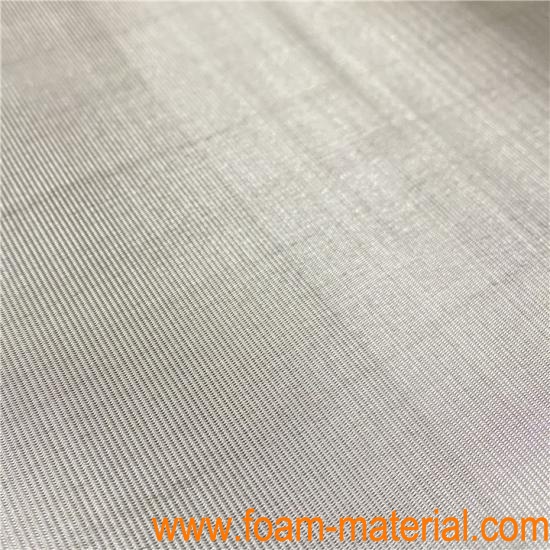
Titanium Metal Mesh
Applications
Titanium mesh is widely employed in industries that demand lightweight, durable, and corrosion-resistant materials:
Aerospace and Automotive: Lightweight structural panels, protective screens, and high-performance components in aircraft and vehicles.
Biomedical Devices: Surgical implants, bone scaffolds, dental frameworks, and tissue engineering applications.
Filtration and Separation: Gas, liquid, and chemical filtration in harsh or corrosive environments.
Chemical Processing: Catalyst supports, reactor components, and corrosion-resistant media in chemical plants.
Electronics and Energy Devices: Current collectors, electrode substrates, and conductive meshes in batteries and fuel cells.
Architectural and Decorative Applications: Lightweight, corrosion-resistant decorative panels and partitions.
Advantages
Using titanium mesh provides several key benefits over other metallic or synthetic meshes:
Durability in Harsh Environments: Excellent corrosion and chemical resistance prolongs service life in aggressive conditions.
Lightweight Strength: Offers high tensile strength without adding excessive weight, ideal for aerospace, automotive, and structural applications.
Biocompatibility: Safe for long-term implantation in medical devices and tissue engineering.
Thermal and Mechanical Stability: Maintains performance under high temperatures, stress, and dynamic loading.
Customizability: Wire diameter, mesh size, and sheet dimensions can be tailored for specific applications.
High Surface Area: Porous structure allows efficient interaction with fluids, gases, or tissue, enhancing filtration, catalysis, and biomedical functionality.
Conclusion
Titanium mesh is a versatile and high-performance material that combines lightweight structure, corrosion resistance, biocompatibility, and mechanical strength. Its customizable pore structure and exceptional durability make it suitable for a broad spectrum of applications, including aerospace, automotive, biomedical implants, chemical processing, and energy devices. By offering superior performance, reliability, and flexibility, titanium mesh continues to be a critical material in industrial, scientific, and medical applications, providing innovative solutions for high-demand environments.


 Daisy@foam-material.com