Xiamen Zopin New Material Limited Established in 2011, it is a new material industry with capabilities of independent research & development, production and sales as one. Our ISO9001:2012 factory covers an area of 6 hectares and a building area of 28,000 square meters, with annual production of high-performance metal foams of 250,000 square meters. Our R&D team is composed of academicians and experts from Tsinghua University, Polytechnic University of Hong Kong, Nanyang Technological University, and other domestic and foreign metal foam professionals. After many years’ endeavor, we now own our proprietary intellectual property rights in manufacturing high purity and high porosity metal foams.
Graphite Felt: Overview, Features, Manufacturing, Applications, Advantages, and Conclusion
Graphite felt is a high-performance carbon-based material widely utilized in energy, chemical, and industrial applications due to its exceptional thermal stability, electrical conductivity, and chemical resistance. It consists of a three-dimensional network of entangled graphite fibers, forming a lightweight, porous, and flexible structure. Graphite felt has become a key material in advanced electrochemical systems, high-temperature insulation, and catalytic processes because it combines mechanical resilience with superior functional properties.
Overview
Graphite felt is typically fabricated from high-purity carbon fibers that are carbonized and graphitized at high temperatures. The resulting felt exhibits excellent electrical conductivity, thermal conductivity, and chemical inertness. With its porous and fibrous structure, graphite felt provides a large surface area, high permeability, and low density, making it an ideal material for applications such as fuel cells, flow batteries, thermal insulation, and gas diffusion layers. Its combination of electrical, thermal, and chemical properties allows for versatile industrial and research applications.
Key Features of Graphite Felt
Graphite felt possesses several distinguishing features that make it a valuable material:
High Electrical Conductivity: Facilitates electron transport in electrochemical applications such as batteries and fuel cells.
Excellent Thermal Conductivity: Efficiently transfers heat, suitable for high-temperature environments.
Chemical and Corrosion Resistance: Resistant to acids, alkalis, and oxidizing agents, extending material lifespan.
Porous and Lightweight: Provides a high surface area and low density for enhanced electrochemical or thermal performance.
Mechanical Flexibility and Strength: Maintains structural integrity under compression and bending, allowing easy handling and installation.
Thermal Stability: Capable of withstanding high temperatures, up to 3000°C in inert atmospheres, without degradation.
Manufacturing Process
The production of graphite felt involves several key steps:
Fiber Preparation: High-purity carbon fibers are selected based on desired electrical and thermal properties.
Mat Formation: Fibers are randomly or orientedly arranged into a mat or felt structure, achieving uniform thickness and porosity.
Carbonization: The fiber mat is heated in an inert atmosphere to remove non-carbon components and stabilize the structure.
Graphitization: High-temperature treatment converts the carbon fibers into graphitic structures, enhancing electrical and thermal conductivity.
Cutting and Surface Treatment: Finished graphite felt is cut to size, and optional surface treatments may be applied to improve wettability or adhesion.
These manufacturing steps allow precise control over porosity, thickness, fiber orientation, and mechanical properties to suit specific applications.
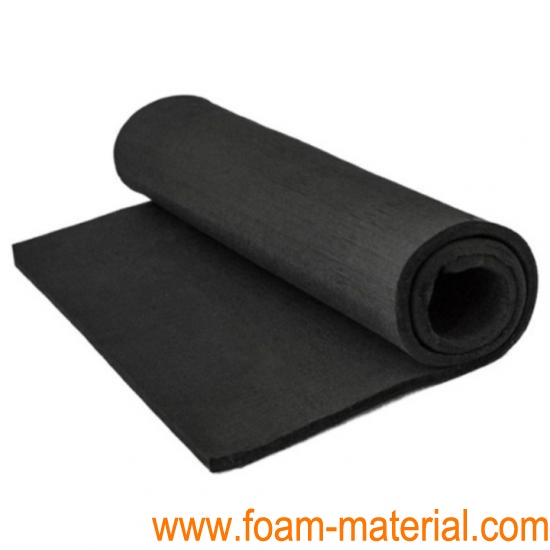
Graphite Carbon Felt
Applications
Graphite felt is employed across a wide range of industrial and research applications:
Electrochemical Energy Storage: Used as electrodes in flow batteries, lithium-ion batteries, and fuel cells due to its high conductivity and surface area.
High-Temperature Insulation: Serves as thermal insulation in furnaces, kilns, and other high-temperature equipment.
Catalyst Support: Provides a high-surface-area support for catalysts in chemical reactors and gas-phase reactions.
Gas Diffusion Layers: Facilitates uniform gas distribution in fuel cells and other electrochemical systems.
Electronics and Sensors: Acts as a conductive, flexible component in specialized electronic devices.
Environmental Applications: Employed in filtration, gas absorption, and chemical processing systems.
Advantages
The main advantages of graphite felt include:
Enhanced Electrical and Thermal Conductivity: Promotes efficient electron and heat transfer in energy and thermal applications.
Lightweight and Porous: Provides high surface area while minimizing material weight.
Chemical and Thermal Stability: Maintains performance in corrosive environments and at elevated temperatures.
Mechanical Flexibility: Easy to handle, cut, and integrate into complex geometries without damage.
Versatility: Suitable for multiple industrial, energy, and environmental applications.
Durability and Longevity: Resistant to wear, corrosion, and high-temperature degradation, ensuring long service life.
Conclusion
In conclusion, graphite felt is a versatile, high-performance material combining electrical conductivity, thermal stability, chemical resistance, and mechanical flexibility. Its unique three-dimensional fibrous structure and high surface area make it ideal for energy storage, high-temperature insulation, catalyst support, and gas diffusion applications. By offering lightweight, durable, and efficient performance across a wide range of conditions, graphite felt continues to be an essential material in modern industrial, scientific, and energy-related applications, supporting advancements in sustainable and high-performance technologies.


 Daisy@foam-material.com