30 PPI Foam Selection Guide for Thermal & Flow Systems
Selecting the right pore density often stalls engineering projects when flow resistance clashes with heat dissipation targets. Choosing 30 ppi foam resolves this bottleneck by balancing fluid permeability with high accessible surface area. Standard fine-pore substrates cause excessive pressure drop in high-velocity streams. In contrast, 30 pores per inch metal foam maintains open channels while delivering up to 98% porosity. This guide examines real parameters, flow characteristics, and alloy properties to streamline your selection process for commercial production.
Pore geometry determines how fluids interact with the conductive metallic skeleton. At 30 pores per inch, average pore diameters measure roughly 0.8 to 1.0 millimeters. This open layout prevents particulate clogging while promoting fluid turbulence across the ligaments.
Standard substrates with higher pore counts restrict high-velocity fluid flow. Coarse open cell nickel foam provides a continuous pathway that minimizes fluid resistance across thick cross sections.
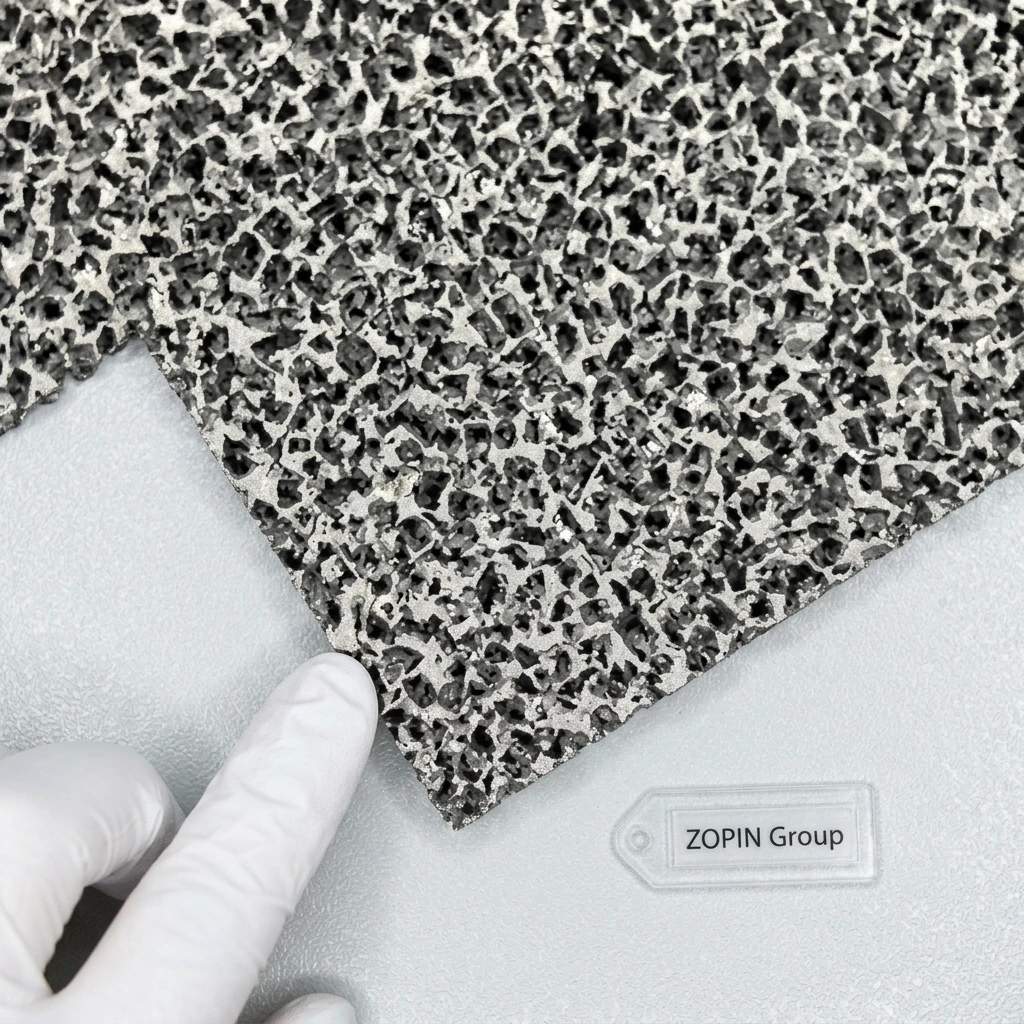
Interconnected voids allow active cooling fluids or exhaust gases to sweep through without backpressure surges. Engineers calculate permeability values using Darcy-Forchheimer models to verify flow behavior. The 30 PPI geometry ensures dependable boundary layer mixing, making it reliable across demanding chemical separation systems.
Thermal management systems frequently require balanced convective and conductive heat transfer. A dense matrix increases solid conductivity but strangles fluid movement, causing pump energy requirements to rise sharply.
Integrating a 30 ppi copper thermal matrix into cold plates solves this dilemma. The ligament network conducts heat away from hot zones, while through-pores generate micro-vortices.
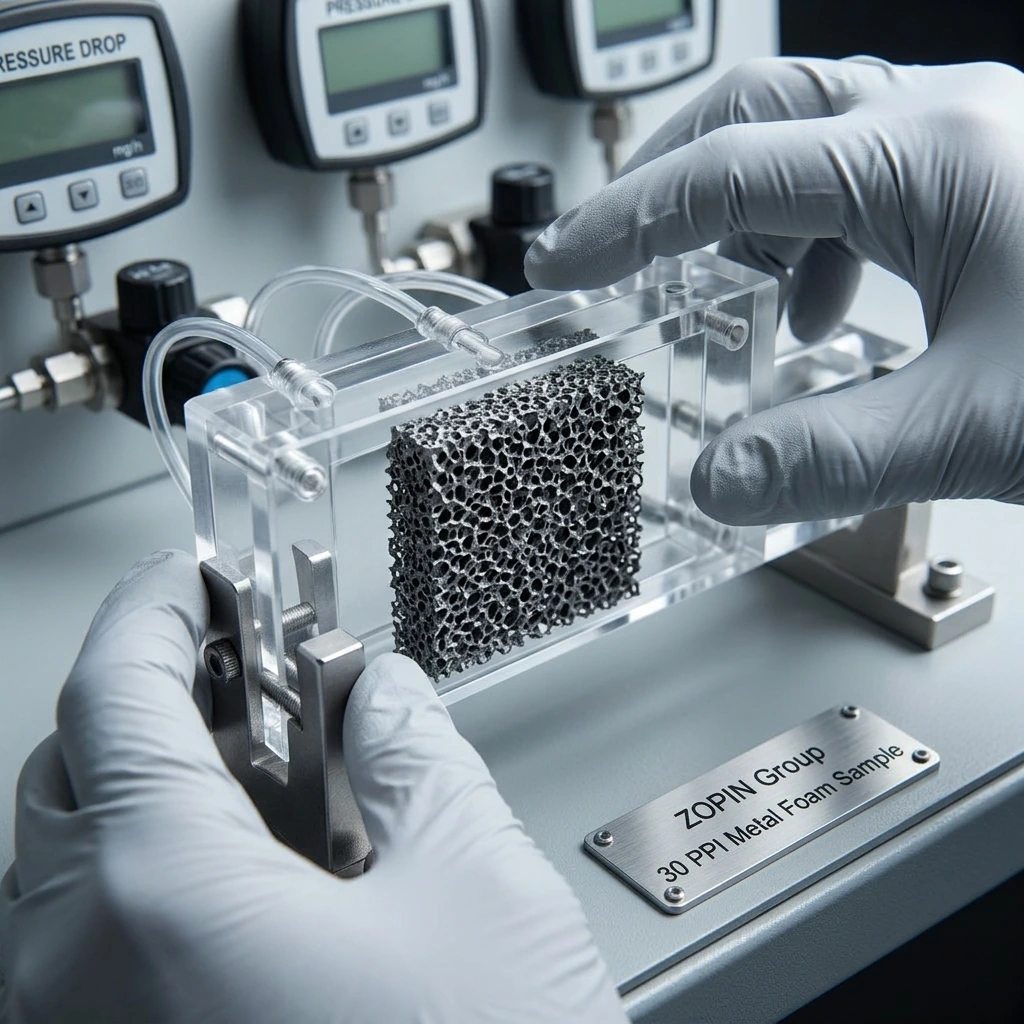
Using with thermal conductivity exceeding 6 W/(m·K) provides solid heat dissipation. Standard thicknesses range from 1 mm to 30 mm, adapting easily into compact heat sinks. The structure absorbs large heat spikes without restricting the coolant path.
Substrate alloy selection depends entirely on chemical compatibility and operating temperatures. Standard manufacturing plants cannot risk media degradation or flaking during continuous operation.
Porous sheets fabricated from maintain high chemical resistance in alkaline electrolytes and elevated temperatures. Purity levels exceed 99.9%, preserving mechanical resilience under recurring cyclic stress. The web maintains integrity during direct wire cutting and automated compression.
For specialized process lines requiring exact dimensional stability, custom sheet formats simplify automated assembly. The cellular structure dampens mechanical vibrations while resisting thermal expansion stress. Selecting the appropriate alloy ensures durability under constant corrosive exposure.
Yes, the open structure exhibits tensile strength between 5 and 18 MPa depending on density and base alloy. Sheets compress cleanly without edge dusting, allowing integration into standard shearing, roll-slitting, and stamping lines.
The high open-cell ratio provides unimpeded pathways, preventing sudden filter fouling during continuous fluid passage. It operates effectively as a low pressure drop porous filter in industrial air purification, catalyst bed recovery, and exhaust scrubbing systems.
Standard prototypes process within 24 hours under factory ISO 9001 quality management standards. Full-scale production lots ship in export-ready wooden crates within two weeks, accompanied by material inspection certificates.

Copyright © Xiamen Zopin New Material Limited. All Rights Reserved.
the professional team to service !

 Daisy@foam-material.com