Al Foam Selection Guide for Acoustic & Impact Core Sourcing
Procurement teams often struggle to balance impact resistance, sound absorption, and payload weight during hardware development. Selecting an industrial al foam supplier requires evaluating cell uniformity, reliable volume capacity, and fabrication tolerances before tooling commitments begin. Mismatched pore geometries can derail crashworthiness tests or thermal dissipation targets. This procurement assessment outlines core structural parameters, testing benchmarks, and fabrication practices to help hardware engineers choose the right cellular aluminum matrix for production.
Engineering teams evaluating metallic foams must distinguish between interconnected pathways and isolated void matrices. The metallic matrix features a cellular network of aluminum ligaments surrounding low-density pores. This specific geometry delivers unique energy dissipation under progressive compression.
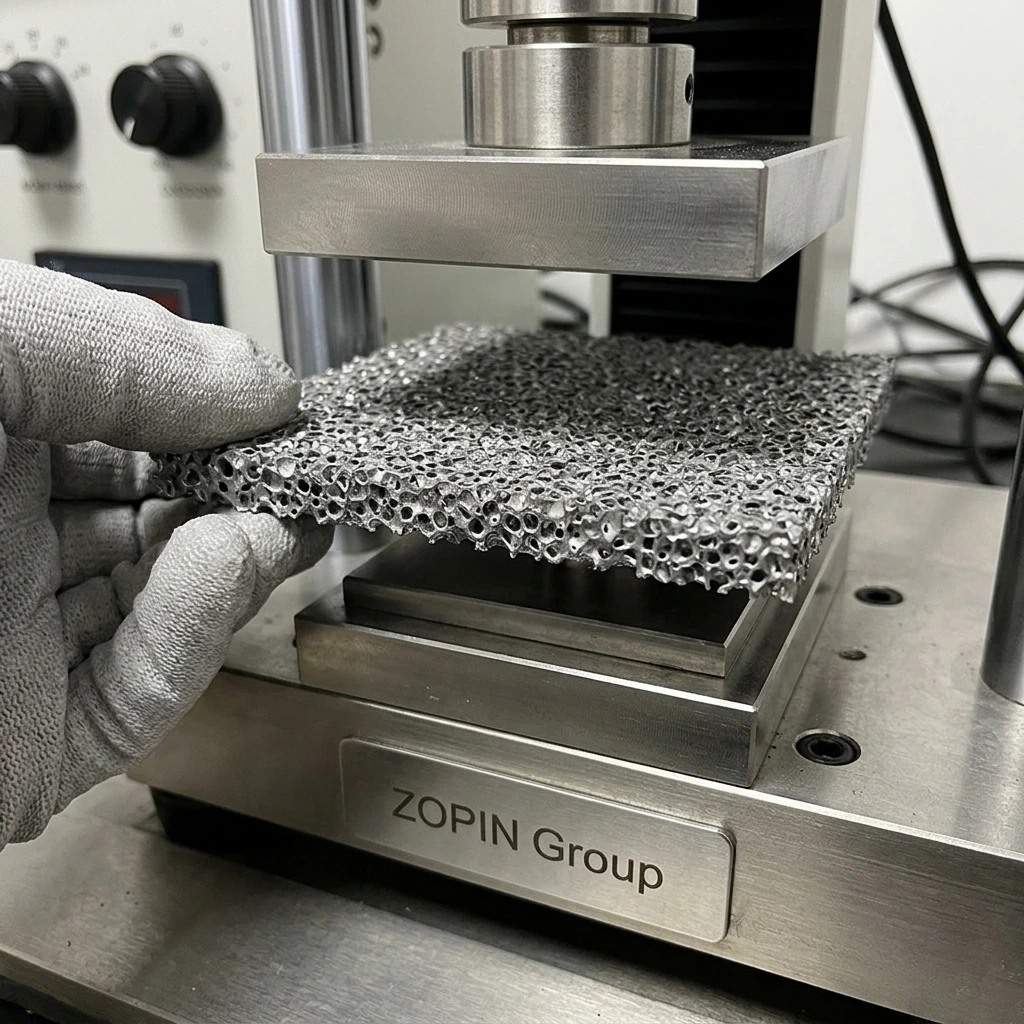
Uniform pore distribution governs energy absorption efficiency. When subjected to dynamic loads, individual cell walls buckle progressively at a predictable plateau stress. Sourcing teams can review specifications on open closed cell aluminum foam to align cell geometries with functional demands. For silencers and acoustic baffles, continuous channels allow sound waves to dissipate through viscous resistance within the porous network.
Physical density directly dictates structural stability. Standard formulations deliver density levels between ten and thirty percent of bulk aluminum. Buyers assessing a porous al sheet should verify bulk density consistency across the entire production lot to eliminate soft spots in large assemblies.
Integrating cellular aluminum into existing manufacturing lines requires strict adherence to fabrication tolerances. Machining cellular materials requires calibrated wire electrical discharge machining or sharp band sawing to avoid smearing the cell walls. Conventional milling can crush external pores and degrade surface porosity.
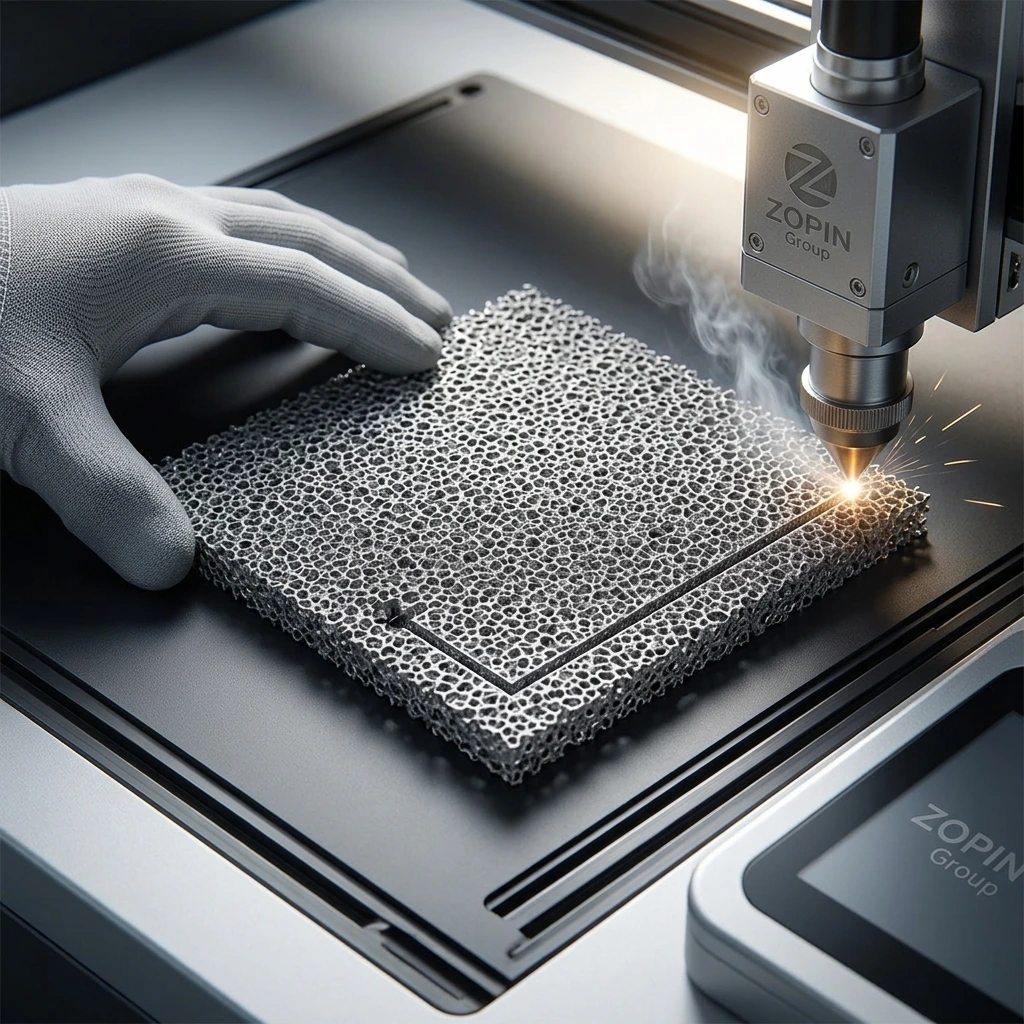
Joining methods present another critical checkpoint during supplier vetting. Mechanical fasteners often require localized core filling to prevent crush failures during installation. For structural integration, evaluate customized foam options that permit custom boundary framing, pre-milled channels, or custom sheet dimensions.
Adhesive bonding remains the standard approach for sandwich panel lamination. High-viscosity epoxy systems wet out the metal surface without excessively draining into internal cavities. A lightweight al core combined with solid aluminum skin plates creates rigid architectural baffles and battery enclosure crush zones without extra weight.
Sourcing reliable porous metals requires verifying production capacity and quality assurance controls. Buyers should examine factory certifications, ISO 9001 quality frameworks, and annual volume throughput. Reviewing factory metal foam offerings helps confirm whether the supplier maintains steady smelting capacity or relies on third-party conversion.
Standardized lot testing must accompany large consignments. Ultrasonic thickness scanning and cross-sectional pore inspections confirm pore diameter distributions across each batch. Standard export packaging using solid wooden framing protects fragile cellular edges from transit deformations.
Open pore structures resist deep stamping because deformation causes local cell crushing rather than plastic stretch. Parts requiring gentle curvature should undergo three-roll bending with protective elastomer backing sheets, or suppliers can cast the shape directly into custom tooling.
Standard stock items usually ship within 24 hours of confirmation. Large production runs or tailored cell densities require roughly two weeks for melt processing, stabilization, and final wire EDM trimming before dispatch.

Copyright © Xiamen Zopin New Material Limited. All Rights Reserved.
the professional team to service !

 Daisy@foam-material.com