Selecting porous lightweight metals often stalls when structural requirements clash with thermal or acoustic targets. Engineers evaluating aluminum foams frequently face mismatched cell pore geometry, inconsistent bulk densities, or unverified batch certifications during pilot production. Sourcing the wrong pore architecture can quickly lead to failed impact absorption tests or clogged filtration manifolds. This guide analyzes structural characteristics, evaluates supplier manufacturing parameters, and provides actionable criteria to help procurement teams qualify advanced materials for automotive, acoustic, and thermal integration projects without costly trial iterations.
Pore architecture dictates the mechanical and physical performance of porous metals. Industrial projects usually specify either open-cell matrices for fluid passage or sealed structures for structural stiffness. A third option uses spherical voids to balance permeability with compressive resistance.
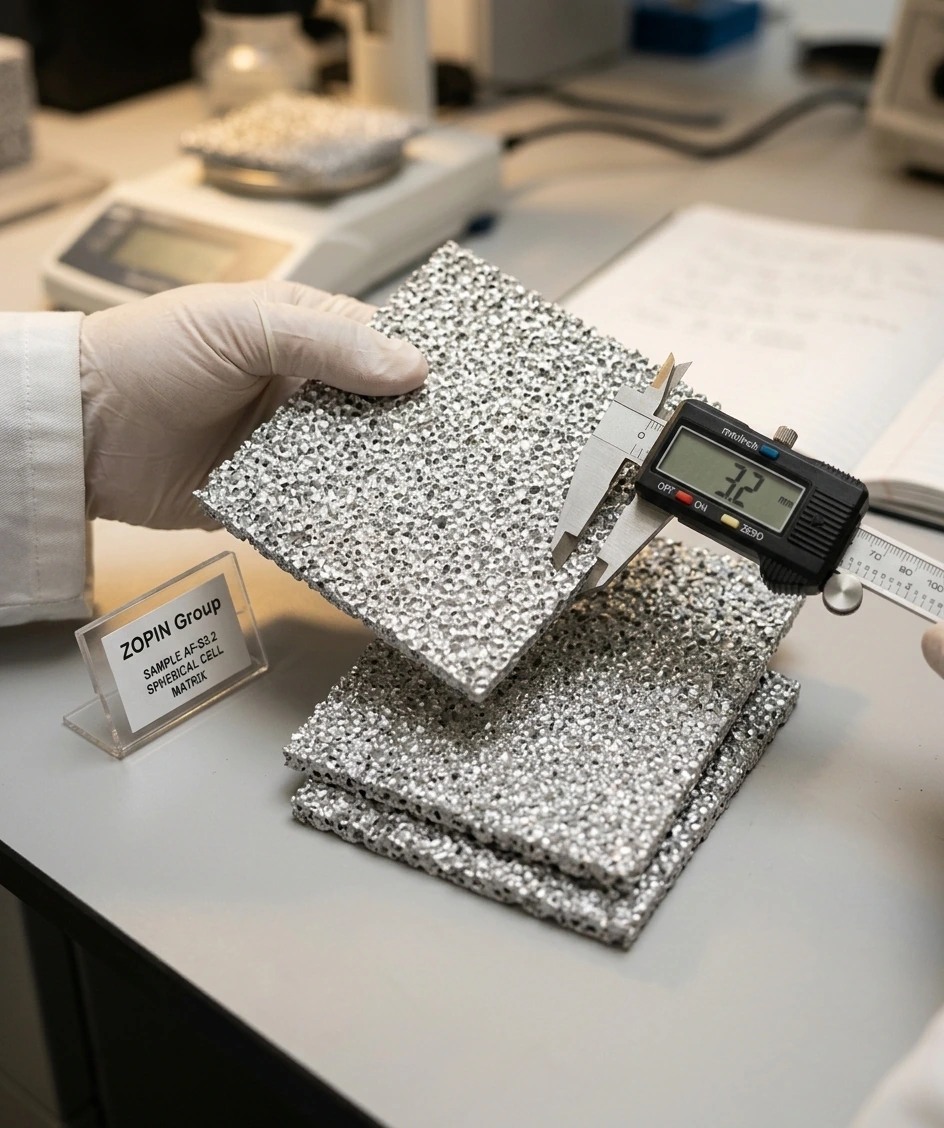
When impact dampening is critical, closed variants deform progressively under compression to absorb kinetic energy without transmitting peak loads. For thermal sinks and silencing baffles, structures provide fluid channels that dissipate heat and acoustic pressure. Selecting the appropriate geometry requires calculating load directions and fluid flow needs early in prototyping.
Consistent pore distribution requires tight control over liquid metallurgy and foaming agents. Batch-to-batch variations in density directly alter tensile limits and acoustic impedance. Sourcing industrial aluminum foams requires reviewing cell uniformity reports across entire production panels.
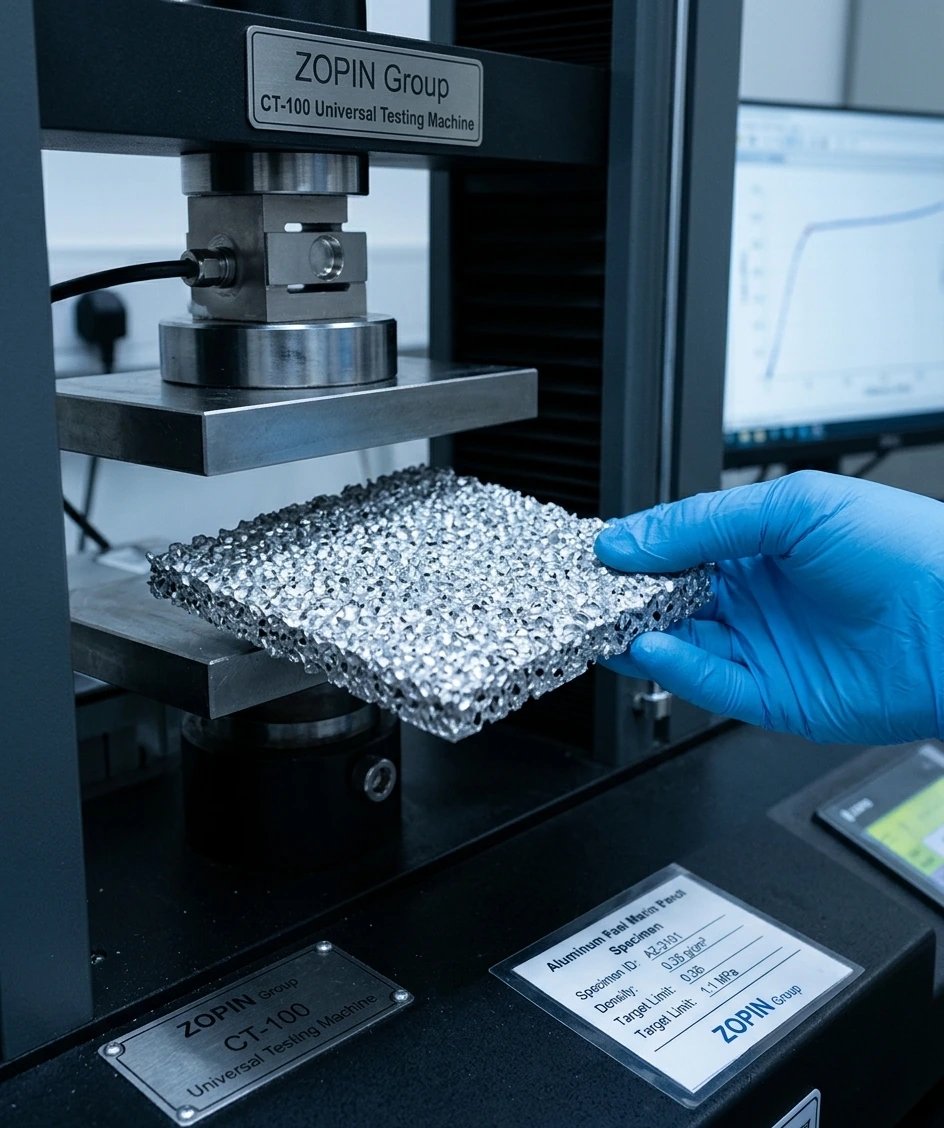
Modern casting techniques enable custom density porous aluminum tailored to exact weight constraints. Procurement teams should verify whether suppliers adjust pore size, relative density, and boundary skin thicknesses for specific project envelopes. To meet exact assembly tolerances, specialized machining routes like wire EDM ensure pore walls remain intact without surface smearing, which you can request through engineering lines.
Validating a supplier involves checking quality audits, testing certifications, and baseline inventory capacities. Reliable suppliers typically maintain ISO 9001 certified facilities and provide full dimensional inspection reports before container dispatch. In-house mechanical testing should confirm energy absorption curves under dynamic loading conditions.
Lead times and small-scale testing flexibility often determine project timelines. Working with suppliers that allow single-unit minimum order quantities helps engineering teams conduct feasibility tests before committing to large volumes. Sourcing high-purity through proven logistics pipelines guarantees fast delivery, standard export wood packaging, and continuous technical support for line assembly.
Direct bonding works well with structural epoxy adhesives or modified polyurethane sealants, while brazing and laser welding require fluxless environments to preserve fragile pore walls.
Suppliers provide static and dynamic compression test curves along with material certificates verifying yield strength and plateau stress parameters.

Copyright © Xiamen Zopin New Material Limited. All Rights Reserved.
the professional team to service !

 Daisy@foam-material.com