Battery development teams often struggle with localized current crowding and heavy foil current collectors during cell cycle evaluation. Traditional planar foils limit mass transport and add inactive weight to test pouches. Developing high-capacity cells requires a stable substrate with open porosity. A carbon foam battery platform solves this dilemma by providing interconnected conductive networks, wide chemical tolerance, and lower material mass. This commercial study reviews how reticulated porous carbon improves next-generation systems and outlines key integration criteria for bench trials.
Planar foils restrict electrolyte movement and create long diffusion pathways in thick electrodes. A porous cellular matrix distributes active material uniformly throughout its depth. This 3D architecture lowers internal resistance across high-load charge cycles.
Electrochemical stability represents another major gain. Porous carbon resists aggressive acid baths and high operating voltages where conventional metals corrode. Using specialized gives testing engineers steady interfacial contact across thousands of test hours.
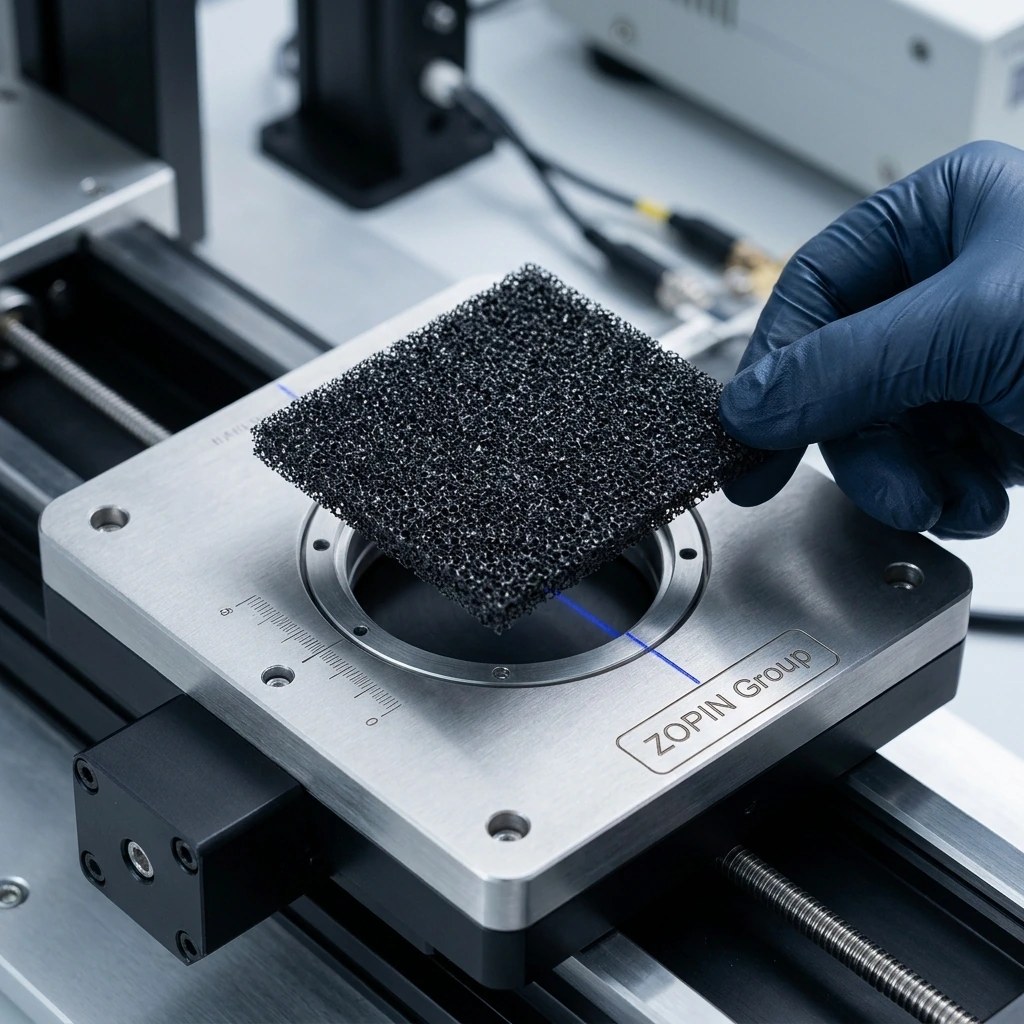
Uniform pore interconnectivity allows dense active slurry penetration. Research teams avoid the delamination common on smooth metallic foils. The rigid strut structure supports heavy active materials without collapse during repeated drying cycles.
Selecting porous substrates depends entirely on the working ions and transport kinetics of the targeted cell. Carbon skeletons adapt to diverse testing mechanisms without demanding custom binders.
In advanced conversion systems, cathode degradation often stems from polysulfide migration. A physically traps active species within microscopic voids while maintaining direct electrical pathways. The high pore volume accommodates sulfur volume shifts during discharge without fracturing.
Liquid storage setups present different interfacial requirements. A matrix provides open pathways for active electrolytes under pump pressure. The conductive strut surfaces supply ample catalytic sites, boosting flow cell operational efficiency.
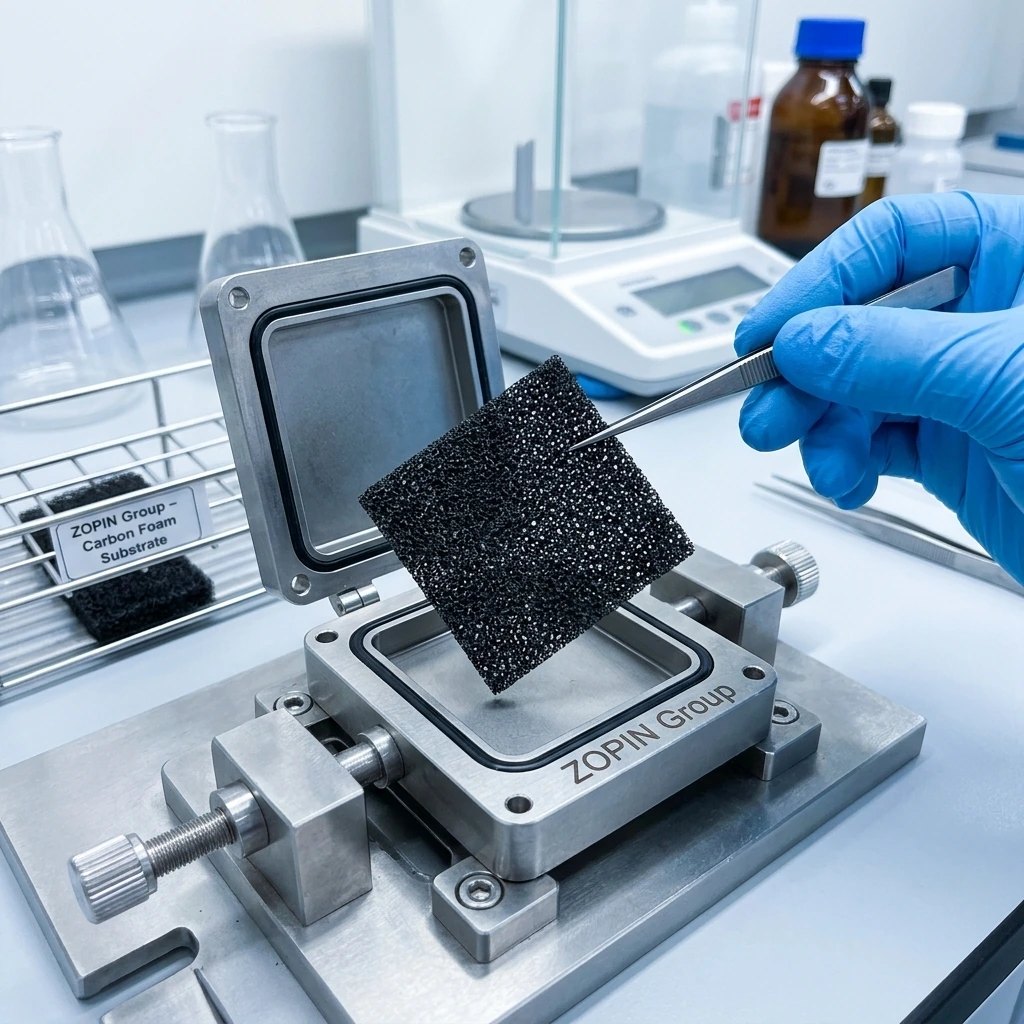
Conventional lead designs also gain from lightweight carbon porous structures. Introducing into negative plates suppresses sulfation during partial-state-of-charge testing. The porous network enhances dynamic charge acceptance without adding dead weight.
Transitioning to a porous skeleton requires subtle process changes on standard pilot coating tables. Viscosity management becomes critical because standard knife-over-roll blades can drag across open surface pores.
Technicians usually employ light vacuum infiltration or ultrasonic dipping to draw active slurries deep into the pore cavities. Gentle calendering follows, compressing the thickness slightly to secure particle cohesion without crushing cellular struts. This approach delivers a high-capacity ready for reliable pouch-cell assembly.
Porous carbon struts tolerate standard moderate roll pressing when active materials fill the void spaces evenly. Excessive nip pressure can crush open cells, so R&D teams adjust roller gaps to preserve conductive pores.
Open cell structures deliver very low flow resistance compared to dense carbon paper. This continuous permeability lowers parasitic pumping loads across industrial-scale flow stacks.
The material consists of pure stable carbon bonds that resist corrosion in sulfuric acid electrolytes. It maintains structural integrity across deep discharge cycles, which extends active service life during high-rate cycling tests.

Copyright © Xiamen Zopin New Material Limited. All Rights Reserved.
the professional team to service !

 Daisy@foam-material.com