Procurement managers often face unpredictable lead times and hidden tooling markups when requesting porous carbon quotes. High-temperature testing requires uniform pore distribution, but small pilot batches often get rejected by large mills. Sourcing porous carbon for battery electrodes or thermal insulation should not strain your prototype budget. This guide breaks down density metrics, cell structures, and production steps so you can budget accurately for your next project.
Cell density and structural uniformness drive the final manufacturing expenses. Reticulated vitreous carbon, known as RVC, begins with precision polymer precursor foaming by controlled carbonization. Adjusting pores per inch directly shifts furnace yield and cycle times. Higher porosity demands stringent atmosphere control inside industrial pyrolysis furnaces to prevent skeletal collapse.
Standard sheets usually cost less due to continuous carbonization runs. Custom thickness slicing or wire EDM cutting adds processing steps that shift your significantly. When projects need tailored conductivity or specific flow dynamics, density changes alter the final bill.
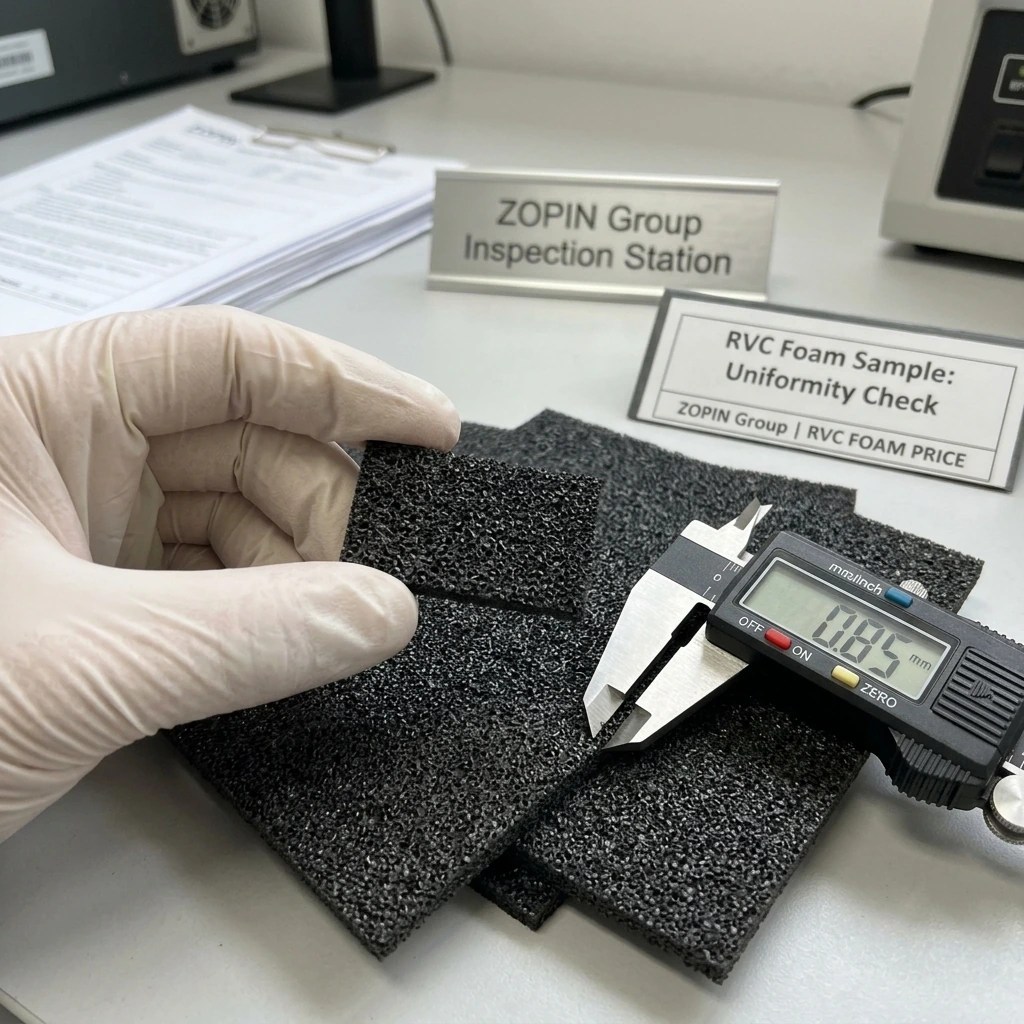
Laboratory trials rarely require full container loads. Ordering one pilot piece for trial validation keeps development agile without burning cash reserves. Full production batches lower the porous carbon cost per sheet by maximizing furnace shelf loading.
We support development programs through an initial minimum order quantity of 1 pc for testing. When you scale toward pilot pack assembly, requesting a wholesale carbon foam quote locks in scheduled deliveries. Bulk feedstock runs reduce overall energy overhead during graphitization.
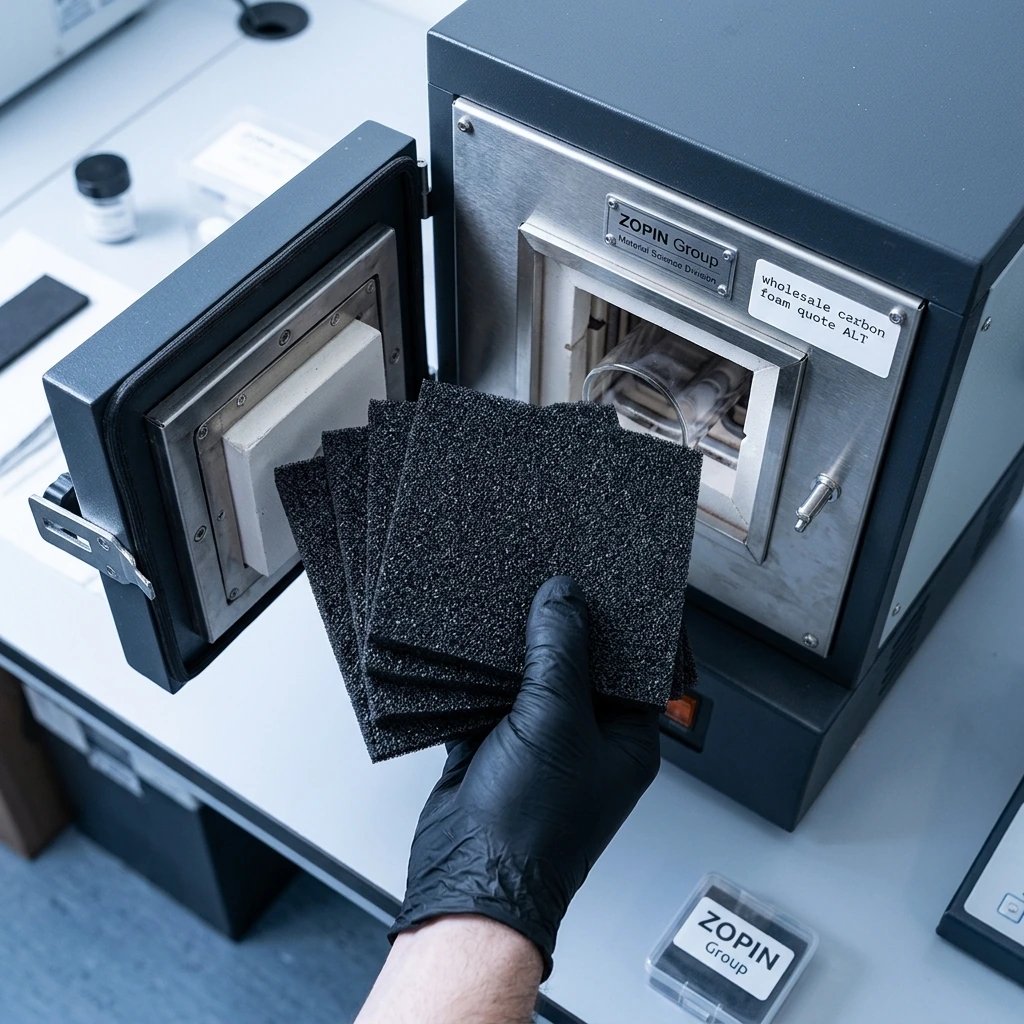
Energy storage components need exact pore networks to balance electrolyte intake against internal resistance. Battery developers choose porous networks to hold slurry, support active materials, or serve as lightweight collector substrates. Selecting standard geometries from inventories prevents specialized tooling charges.
Custom post-treatments adjust surface wettability and electrical contact resistance for extreme battery cycles. If your design couples carbon substrates with conductive foils, combining shipments alongside standard optimizes your freight budget. Balancing volumetric density against current collector resistance ensures your battery carbon foam pricing stays viable through commercialization.
Porous carbon retains high compressive strength along its ligaments, but edges remain brittle during international transit. Reliable export crating prevents breakage before components reach your assembly fixture. We use reinforced export wooden cases and protective cushioning to safeguard open-cell structures.
Production follows ISO 9001 quality management procedures to ensure batch consistency across every run. Every shipment undergoes dimensional verification and density checks. Our technical team processes standard inquiries within 24 hours to keep your line on schedule.
Pore count per inch determines internal surface area, carbonization furnace yields, and subsequent cutting speeds. High PPI ratings require slower slicing passes to avoid ligament fracturing, which moderately increases fabrication hours and baseline material charges.
Pricing depends on bulk sheet dimensions, total volume, target porosity percentage, and whether your assembly requires wire EDM profiling. Purchasing standard slab dimensions in larger lots reduces furnace cycle overhead and yields favorable terms.
We support engineering evaluation by offering a minimum order quantity of one sheet for initial fit checks. This allows your team to verify chemical compatibility and electrical conductivity before committing capital to production volumes.

Copyright © Xiamen Zopin New Material Limited. All Rights Reserved.
the professional team to service !

 Daisy@foam-material.com