Machining custom porous plates for electrochemical testing often leads to edge crumbling and uneven fluid resistance. Researchers and hardware engineers need reliable porous substrates that withstand chemical exposure while retaining structural shape during cell assembly. This technical guide outlines the core properties, sizing considerations, and tooling approaches required to evaluate porous carbon stock accurately. By understanding mechanical limits and pore structures, teams can specify proper components for filtration flow, catalytic support, or cell trials without costly trial iterations.
Selecting the right porous plate requires a close look at the pore network and bulk density. Unlike conventional graphite slabs, an engineered provides a fully open-cell ligament layout. This architecture delivers high accessible surface area while maintaining an interconnected path for fluid or gas diffusion.
The ligaments within the matrix determine both electrical conduction and physical resistance against compression. When evaluating density options, higher bulk mass generally improves current flow across the contact area. Lower density favors permeability in flow-through setups. Engineers often inspect the uniformity of the cell struts under magnification to avoid localized hot spots or channeling defects during active operation.
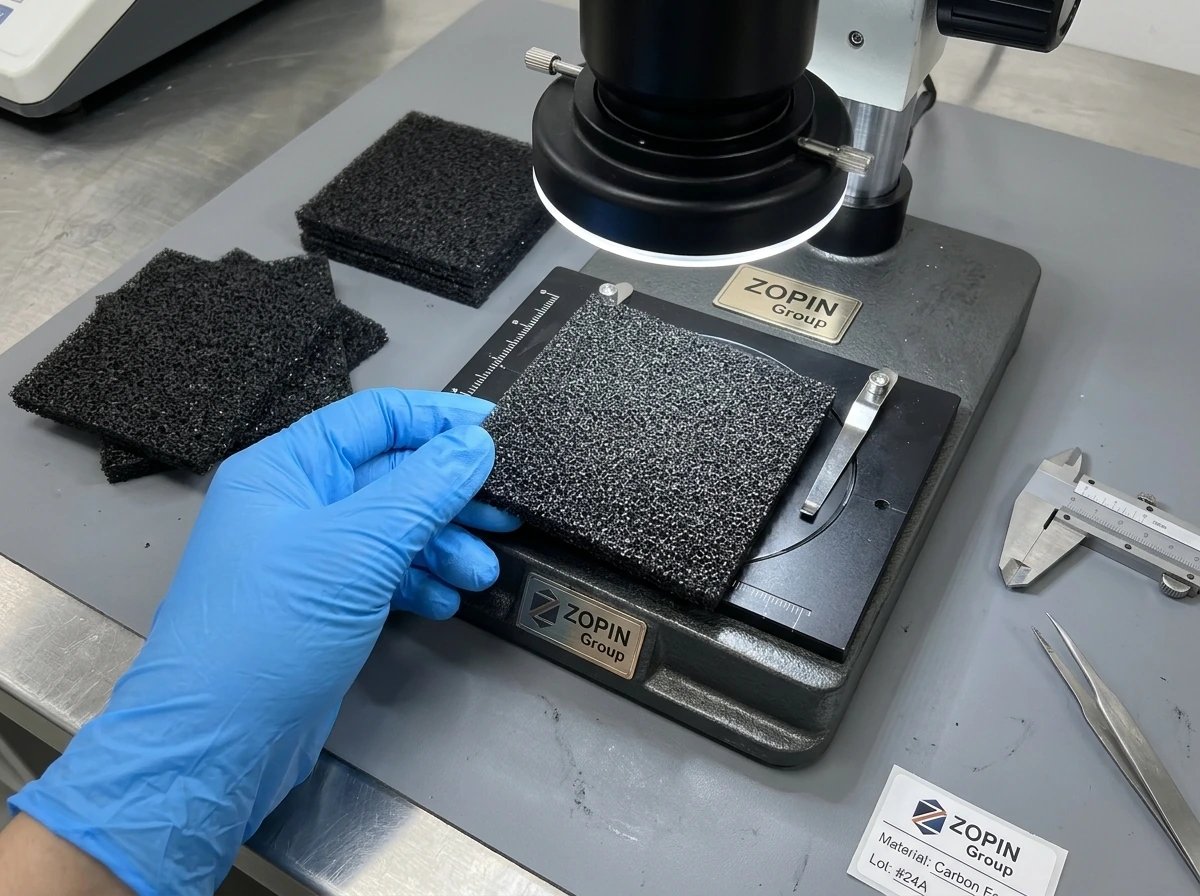
Shaping porous carbon elements into functional hardware demands careful tool selection. A standard porous carbon plate exhibits moderate mechanical strength, which allows precise CNC milling, surface grinding, or punch die cutting. Tool wear occurs rapidly if standard steel bits are used, so carbide or diamond-coated cutters are recommended.
Clean edge profiles prevent internal flow bypass inside testing hardware. Using a machinable carbon substrate allows shops to create intricate flow channels, steps, and perimeter gaskets directly on the blank. Applying light vacuum workholding prevents localized crushing during horizontal passes. Dry cutting or using compatible volatile fluids avoids matrix contamination, ensuring the core remains free of residue before final installation.
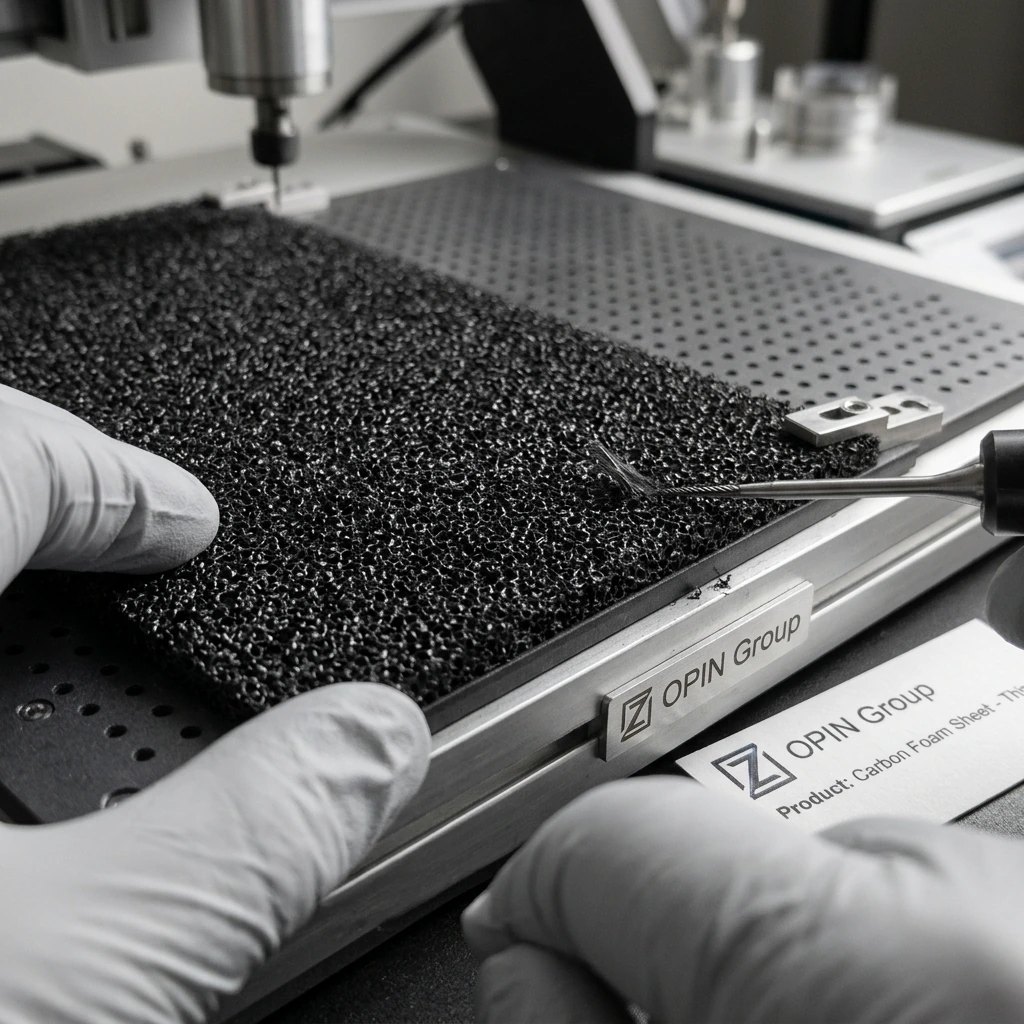
Electrochemical cells, catalytic chambers, and separation stacks rely on consistent thickness across the active window. Utilizing a flat carbon electrode blank ensures uniform contact pressure against current collectors and membrane assemblies. Irregular thickness leads to variable pinch stress, which might fracture the porous network or cause localized leaks.
Many teams cross-reference carbon grades with other porous media such as or specialized nonwoven depending on temperature and corrosion requirements. Evaluating tolerance stack-ups beforehand keeps assembly stress low. Proper thickness control also stabilizes fluid pressure drop across the bed, allowing repeatable mass transport data during multi-stage testing.
Open-cell carbon plates maintain integrity well above room temperature in inert or reducing atmospheres. If exposed to oxygen at elevated heat, oxidation will degrade the porous struts. Always verify operating gas composition prior to thermal cycling.
Uniform thickness allows standard perimeter gaskets to seal without over-compressing the brittle ligaments. Excessive bolt torque can crush the edges, so mechanical stops or rigid frames are suggested to maintain controlled gap clearances.

Copyright © Xiamen Zopin New Material Limited. All Rights Reserved.
the professional team to service !

 Daisy@foam-material.com