Engineers designing next-generation energy storage or thermal management systems often face severe trade-offs between mechanical density, thermal resistance, and electron transport. Selecting unsuitable porous substrates leads to premature cell degradation or inadequate heat dissipation under aggressive operating conditions. Advanced carbon foams resolve these bottlenecks through rigid, interconnected skeletal networks that combine chemical inertness with low mass. This guide provides a practical parameter comparison across conductive and insulation grades, helping engineering teams match pore morphology, bulk density, and surface properties directly to their operational targets.
Selecting porous media begins with quantifying pore metrics. Ligament thickness, cell diameter, and open-cell fraction dictate how fluids permeate and how electrons travel through the bulk material. Standard reticulated architectures provide continuous paths that minimize localized resistance.
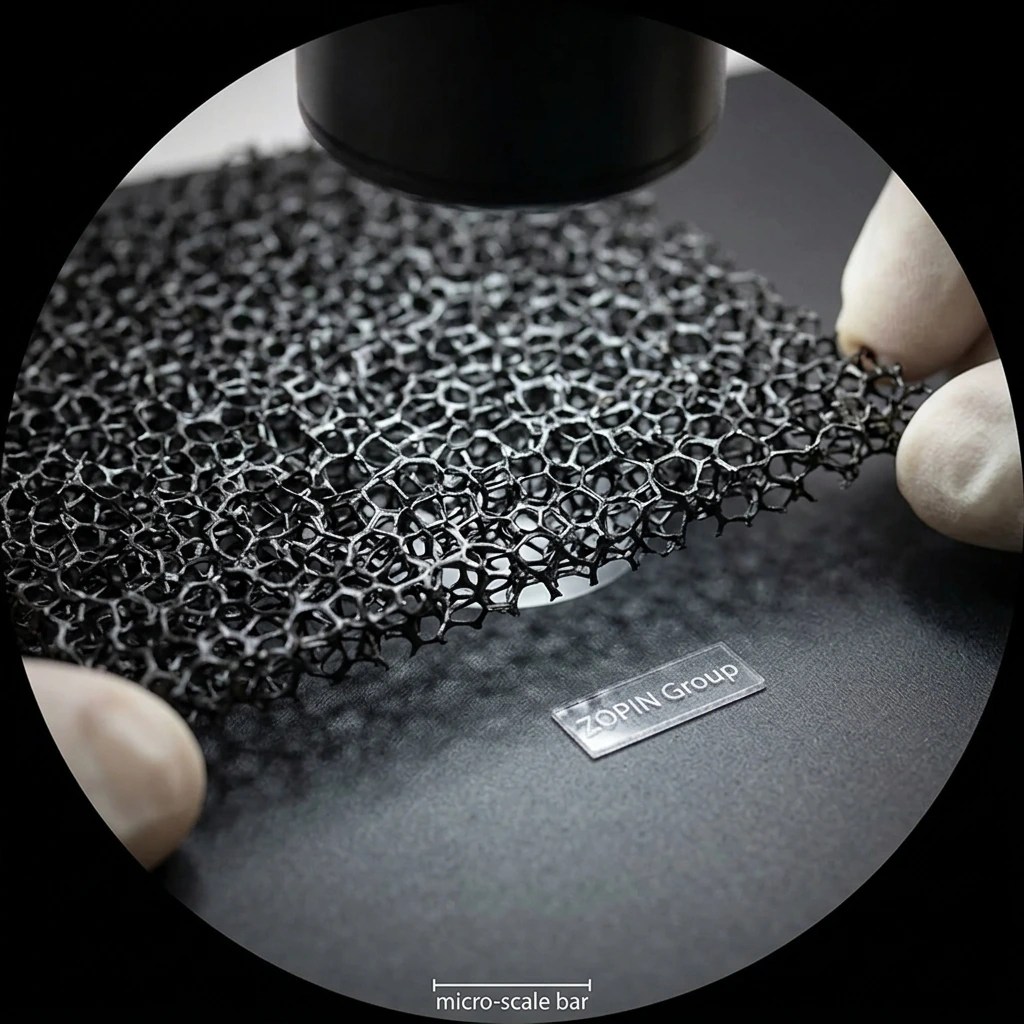
Bulk density directly influences both mechanical resilience and electrical performance. Lower density variants maximize void volume for active material loading, while denser grades deliver superior compressive strength. Engineers evaluating these architectures frequently compare them alongside to balance specific surface area against structural rigidity.
Pore volume and fluid permeability must match your pumping or coating process. When slurry viscosity is high, tight pore windows cause uneven penetration and internal voids. Specifying pore count between 10 and 130 pores per inch ensures uniform infiltration during electrode fabrication.
Electrochemical devices require continuous pathways for rapid electron transfer during cycling. Using conductive carbon matrices as functional current collectors eliminates heavy metal foils, significantly reducing inactive cell mass. The natural chemical inertness of carbon also prevents corrosion in acidic or high-potential environments.
These skeletons serve as rigid host structures for battery electrodes and supercapacitor plates. By integrating these structures into cell designs, developers achieve stable cycling without binder degradation. For specialized designs requiring hybrid metallic conductivity, teams sometimes evaluate before finalizing carbon specifications.
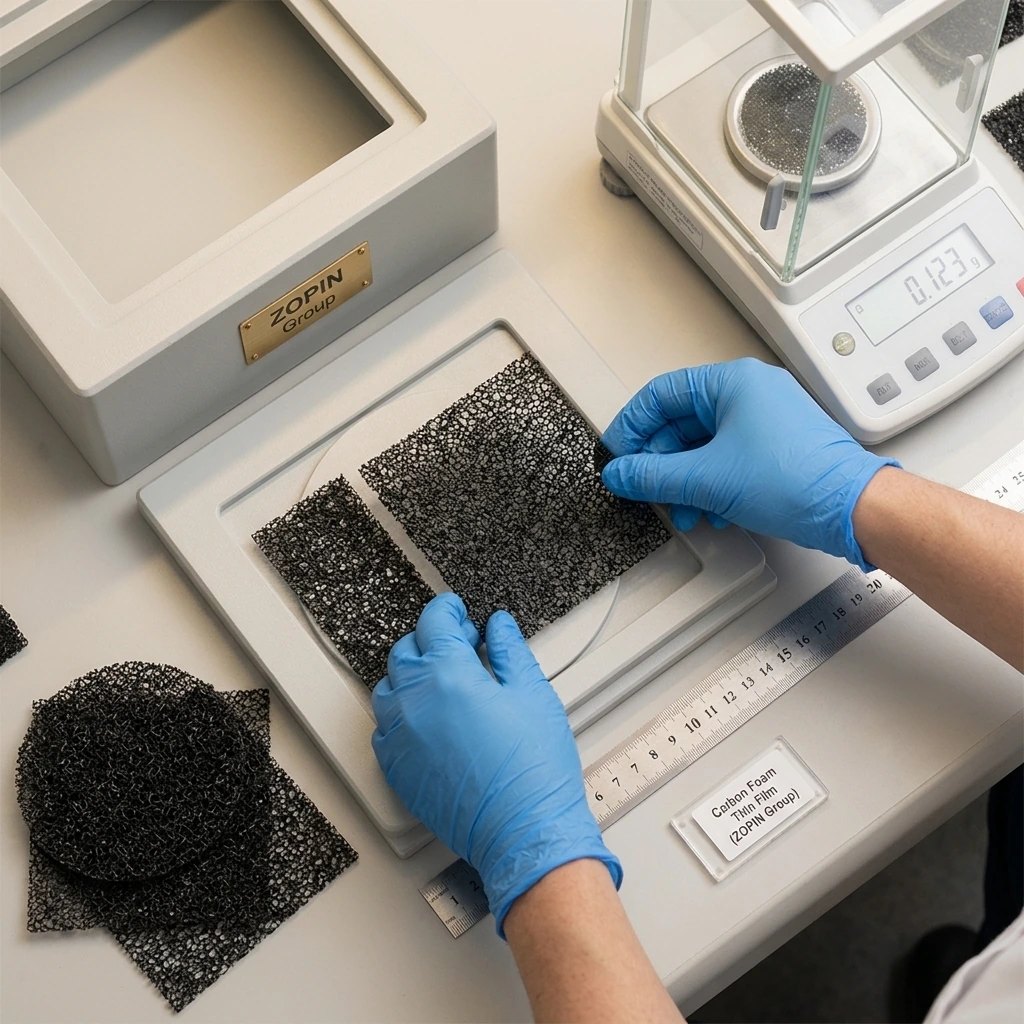
Uniform ligament conductivity ensures homogeneous current density across the entire electrode area. This prevents hot spots and localized lithium plating during high-rate charging. The rigid matrix maintains its dimensional stability across repeated charge and discharge cycles, extending pack longevity.
Thermal control systems operating above 1000°C require materials that resist oxidation while preventing radiant heat transfer. A high-purity thermal insulating carbon foam utilizes closed or semi-reticulated cells to trap inert gases and suppress convective flow. The resulting low bulk thermal conductivity protects structural casings from extreme heat gradients.
Such grades serve as high temp carbon substrates in vacuum furnaces, aerospace heat shields, and molten metal processing units. Unlike standard ceramic boards, these carbon structures show exceptional thermal shock resistance, avoiding catastrophic cracking during rapid heating cycles.
For projects that require custom dimensions, exploring options ensures precise tolerance matching. Tailoring skeleton density directly controls whether the component operates primarily as a heat spreader or a thermal barrier.
Yes, provided the material thickness and compressive modulus match your tension settings. Brittle grades require continuous web support, whereas flexible or reinforced configurations handle standard winding tension without ligament fracture.
Standard evaluation samples ship within 12 to 24 hours from factory inventory. Custom-machined geometries or specialized pore structures typically require up to two weeks for pilot volume dispatch.

Copyright © Xiamen Zopin New Material Limited. All Rights Reserved.
the professional team to service !

 Daisy@foam-material.com