Foundry reject rates climb quickly when non-metallic inclusions bypass standard gating systems in casting runs. Processing molten alloys requires thermal resilience that standard mesh cannot provide under prolonged thermal stress. Integrating an open-cell ceramic foam delivers uniform tortuous paths to trap fine dross without throttling steady volumetric flow rates. This technical overview breaks down mechanical tolerances, pore architecture, and chemical suitability to help engineering teams refine high-temperature filtration pipelines.
Non-metallic inclusions, such as suspended oxides and slag particles, weaken casting tensile properties. Utilizing a porous alumina sic filter within the runner system changes turbulent flows into smooth laminar streams. The continuous cellular matrix provides deep-bed filtration that captures impurities smaller than the primary pore size.

The interconnected dodecahedron cell structure resists dynamic shear forces under intense liquid metal streams. Molten alloy flow rates depend on accurate pores-per-inch ratings to balance throughput and retention. Foundries rely on 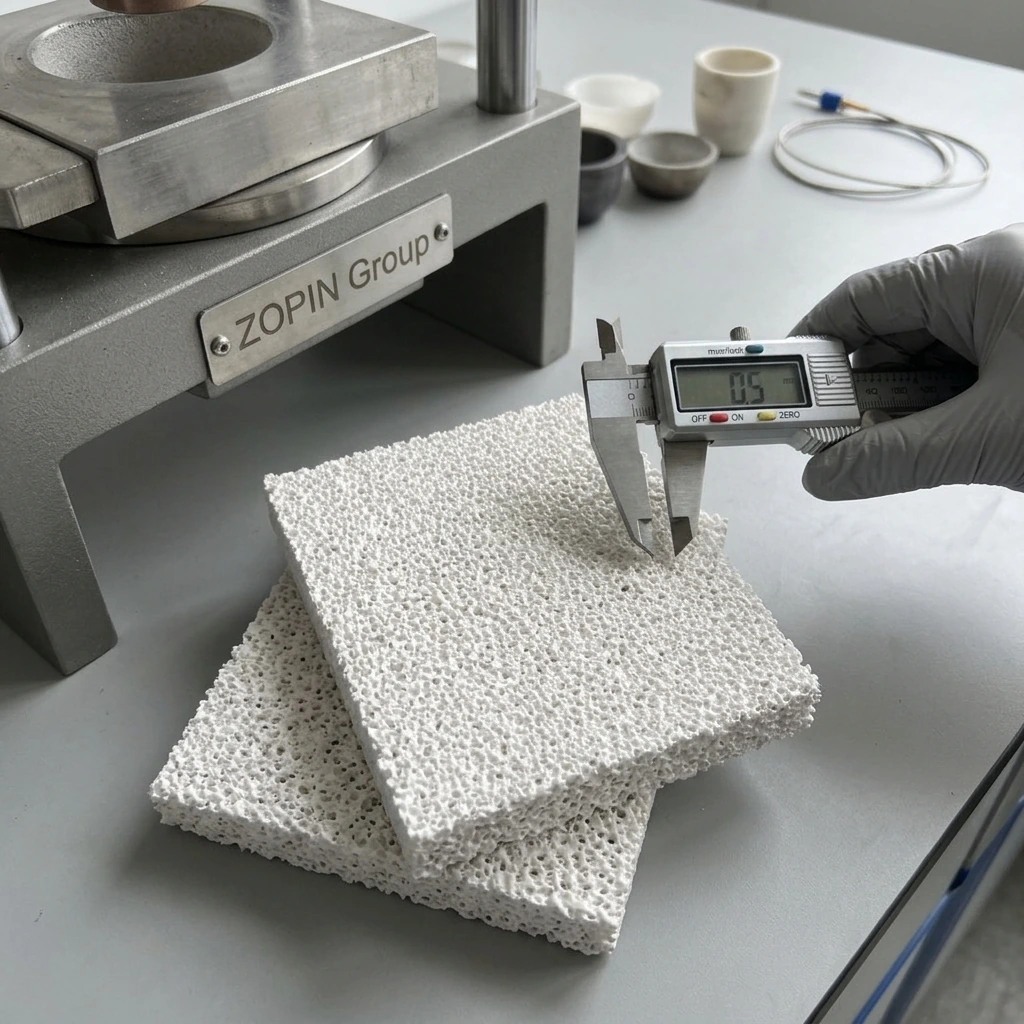 configurations to avoid flow chokes during critical pour sequences. Consistent wall thickness throughout the open cells prevents mechanical spalling and downstream contamination.
Thermal shock resistance defines component survival during rapid heating cycles. Sudden contact with high-temperature alloys causes inferior refractory media to shatter instantly. A properly sintered molten metal ceramic filter withstands immediate exposure to molten iron, aluminum, and copper alloys without structural crumbling.
Low thermal expansion coefficients ensure dimensional stability inside the mold housing. Engineering groups often combine these components alongside custom units when designing tiered filtration systems for specialized metallurgy projects. Minimal heat absorption keeps the melt temperature steady during casting pours.
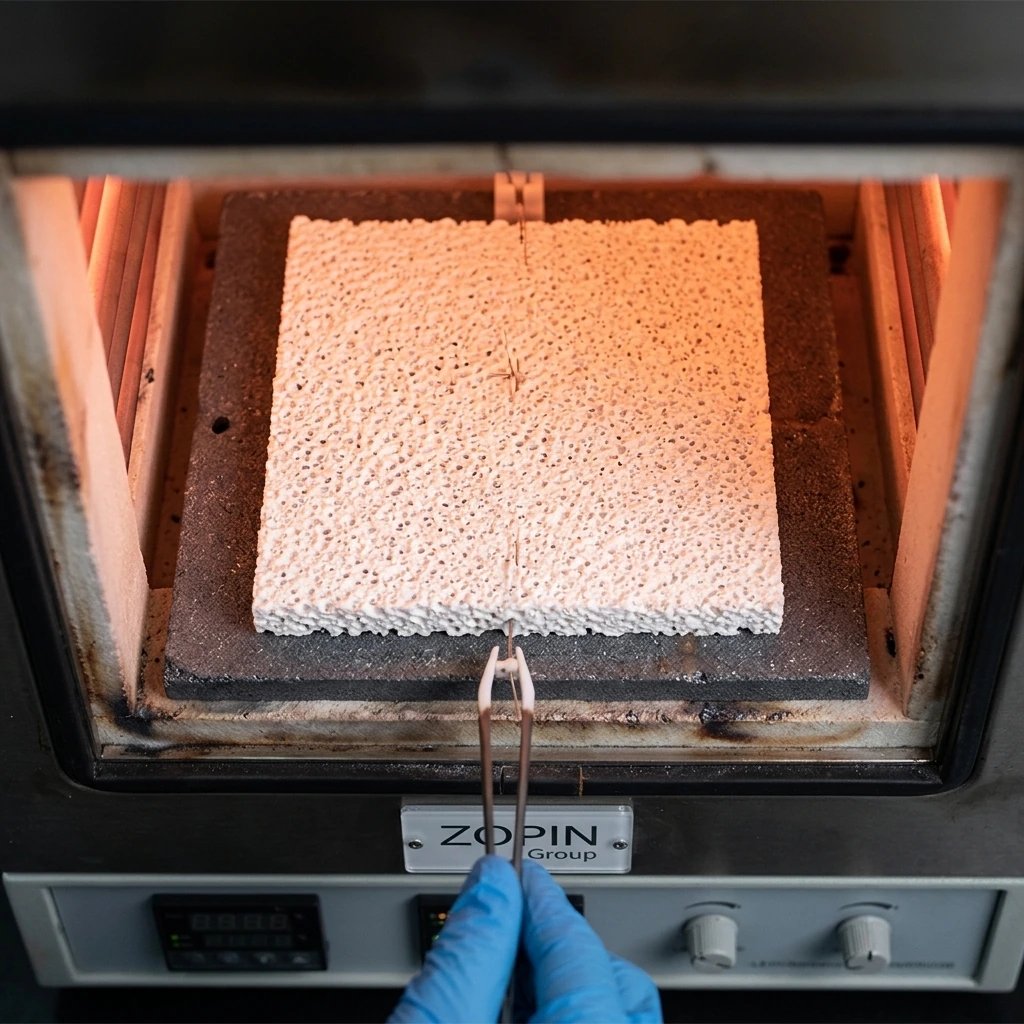
Corrosion resistance against acidic gases and molten flux remains another engineering requirement. The chemically inert white porous body withstands corrosive slag attacks during severe operating conditions. Structural integrity persists across prolonged exposure cycles.
Beyond liquid metal handling, open porous ceramics serve critical functions in thermal management and environmental treatment. Operating as a high temperature refractory foam, the three-dimensional network disrupts hot gas paths to reduce radiant heat transfer inside industrial kilns.
Chemical processing facilities frequently use the continuous open-cell network as a catalytic ceramic matrix. The vast internal surface area maximizes active catalyst contact without creating disruptive system backpressure. Plant designers can explore options to adapt external dimensions, cell density, and base materials for unique reactor housings.
Verifying dimensional tolerances before bulk manufacturing avoids assembly delays on the foundry floor. Tooling engineers specify outer perimeter bevels and gaskets to eliminate peripheral metal bypass inside the runner basin. Sizing must account for mechanical seating tolerances under high head pressures.
Factory quality control requires uniform sintering across every batch to eliminate loose dust. Certified facilities implement standard ISO 9001 procedures to maintain consistent pore distribution and bulk density. Establishing clear pore density criteria upfront guarantees reliable casting yields across consecutive production runs.
Yes, standard gating prints easily accommodate these components using standardized core prints. Tooling teams only need to machine a minor recess in the runner to seat the filter firmly, which prevents molten metal from bypassing the edges during high-volume pouring.
Alumina-based matrices excel in oxidizing environments and withstand strong acid exposure, whereas silicon carbide structures offer superior thermal conductivity. Specifying the gas stream chemistry and maximum operating temperatures determines the optimal material composition for long-term exhaust exposure.
Standard dimensional profiles ship rapidly from inventory stocks, while custom geometry or specialized pore densities typically require one to two weeks for tooling preparation and firing cycles. Early delivery of prototype units allows mechanical validation before full batch production begins.

Copyright © Xiamen Zopin New Material Limited. All Rights Reserved.
the professional team to service !

 Daisy@foam-material.com