Procurement teams and lab managers often struggle to source specialized porous substrates with uniform pore density and reliable purity. Batch-to-batch variation in open-cell structures frequently disrupts delicate electrochemical trials and slows progress. This commercial review examines technical parameters, supplier evaluation points, and practical integration routes for porous cobalt metal. By understanding structural standards and verification methods, buyers can reliably qualify production lots and accelerate advanced material development without risking costly experimental errors.
Evaluating high-porosity metallic media begins with cellular uniformity and surface morphology. The material functions primarily through an open-cell framework where pore size, measured in pores per linear inch, dictates gas permeability and liquid diffusion. A high surface area provides extensive active sites for electrochemical reactions, ensuring high operational efficiency.
Mechanical integrity is equally essential when handling fragile laboratory samples. The framework must withstand continuous electrolyte immersion, mechanical handling, and thermal cycling without structural degradation. Researchers often configure the material as a 3d co electrode substrate, where low electrical resistivity and high physical compliance maintain electrical contact during volume changes.
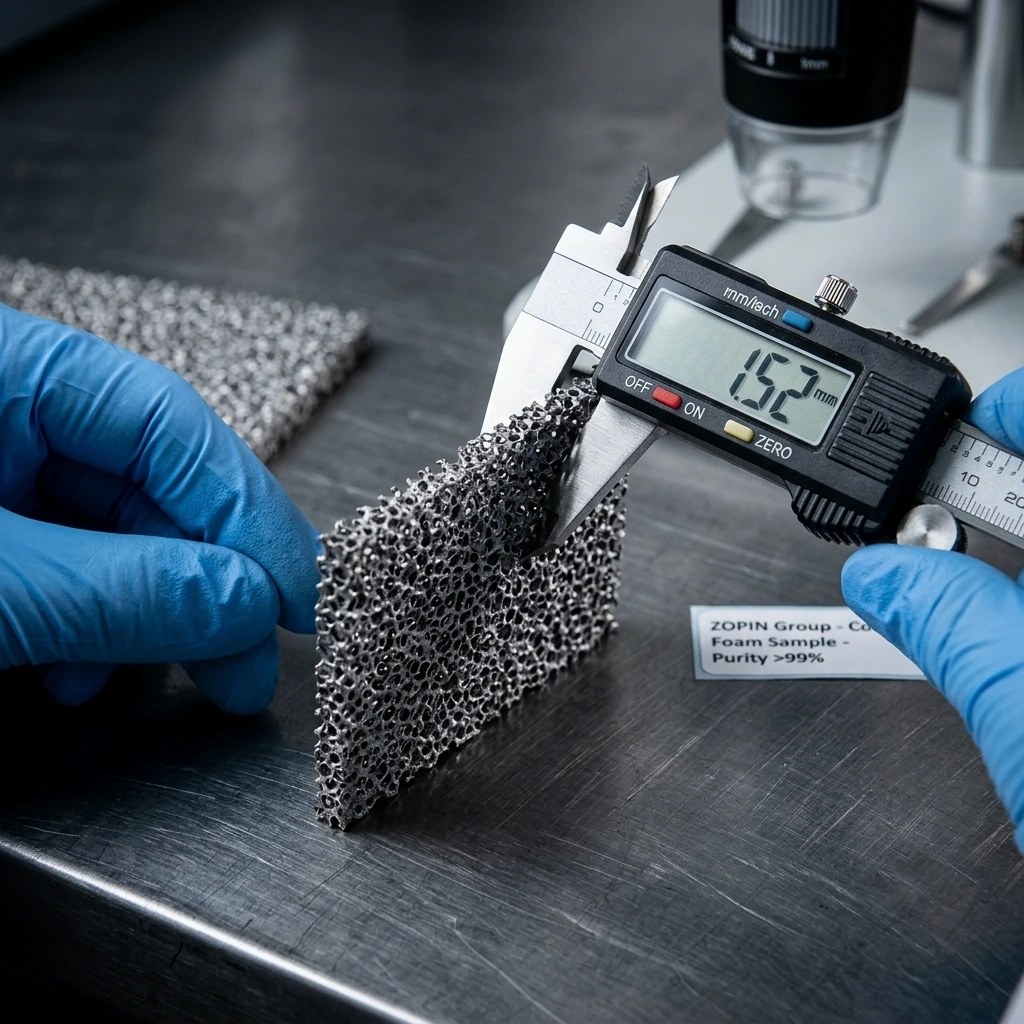
Uniform ligament thickness ensures stable current distribution throughout the cell. When selecting materials, review manufacturer certifications regarding thickness limits, dimensional tolerances, and porosity metrics to ensure reliable experimental baseline conditions across multiple test cycles.
Procuring advanced metal foams requires balancing small testing volumes with production scalability. Most industrial vendors mandate large minimum order quantities, creating unnecessary barriers for preliminary material trials. Working with flexible manufacturers that supply standard sheets alongside options helps engineering teams test prototypes before committing to mass production.
Supply chain reliability relies heavily on certified quality management systems. Suppliers operating under ISO 9001 standards with independent SGS supplier verification demonstrate rigorous control over production workflows and raw material traceability. Sourcing teams can review the broader catalog of advanced materials on the index to verify manufacturing scope and metallurgical depth.
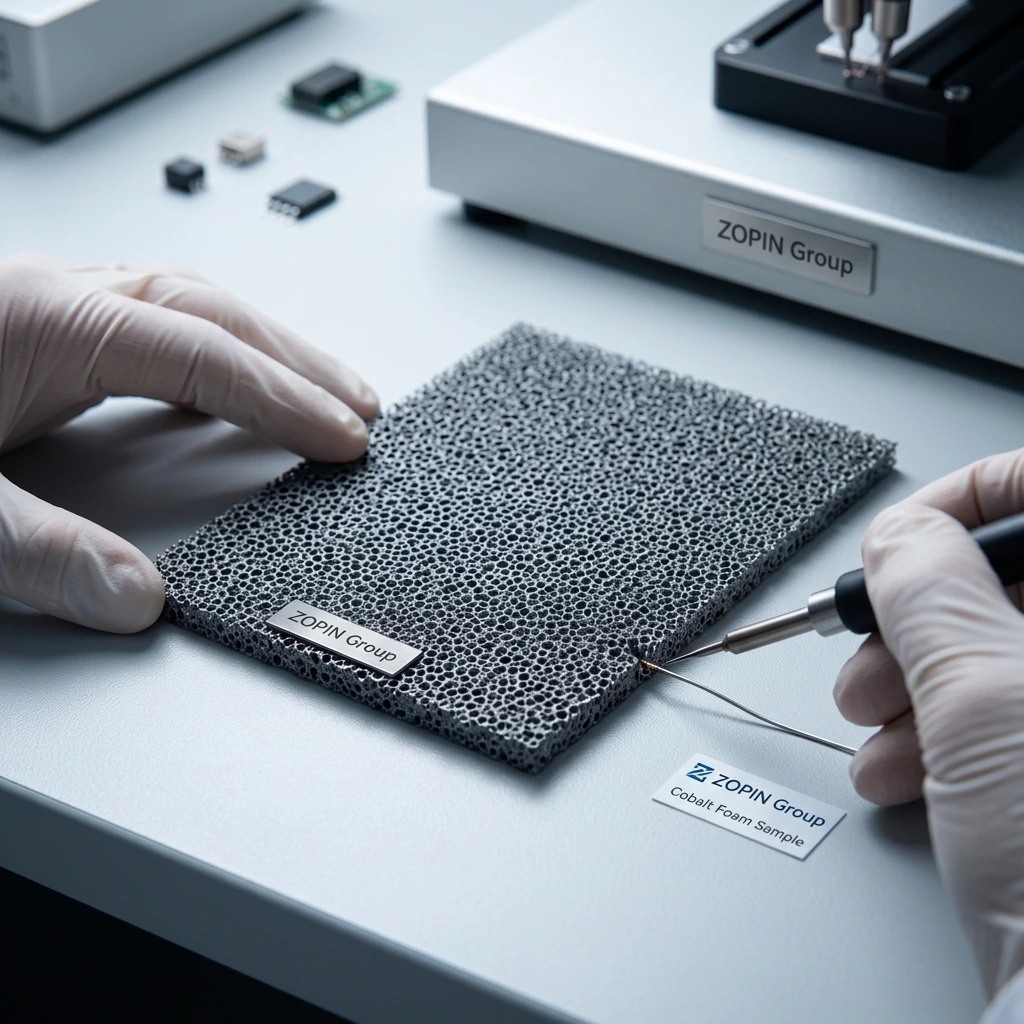
Lead times and packaging protocols demand close attention during supplier onboarding. Delicate open-pore cellular sheets deform easily under impact or improper vacuum packing. Reliable suppliers utilize standard export wooden cases with tailored protective inserts. Rapid dispatch within 12 to 24 hours for stock inventory reduces testing downtime significantly for fast-moving engineering programs.
Open-pore cobalt structures deliver notable catalytic activity and stable electron transport. Integrating a catalytic cobalt matrix into chemical systems improves mass transfer rates compared to standard planar metal foils. Continuous micro-channels permit uninhibited electrolyte flow, minimizing concentration polarization across high current densities.
The material serves as a foundational component in energy storage experiments. Utilizing battery research cobalt foam enables scientists to deposit sulfur, lithium, or active transition metal oxides directly into the conductive network. This architecture avoids excessive polymer binders, directly boosting the active material mass ratio.
Teams exploring complex electrochemical systems often cross-reference performance by testing related substrate compositions. Exploring alternatives on the platform provides valuable comparative insights regarding corrosion resistance and specific conductivity. Proper preparation, including solvent degreasing and mild acid etching, ensures maximum interfacial bonding between the porous substrate and active coatings.
Yes, standard sheets and continuous rolls can undergo light calendering to match your targeted thickness and density requirements. The ductile ligament network allows controlled mechanical compression without collapsing the internal open-pore structure. Most pilot coating equipment processes the substrate cleanly when tension settings accommodate flexible metallic webs.
Suppliers should maintain ISO 9001 quality management systems and provide verified material test reports with every shipment. These reports document chemical composition, porosity rates, and average pore diameters. Independent audits by inspection organizations like SGS further confirm that manufacturing controls and packaging protocols meet international export standards.

Copyright © Xiamen Zopin New Material Limited. All Rights Reserved.
the professional team to service !

 Daisy@foam-material.com