Vehicle armor programs and aerospace structural projects frequently run into dead ends caused by excessive dead weight. Integrating traditional rolled steel or standard alloy plating pushes assemblies beyond target payloads without yielding meaningful blast dispersion. Utilizing composite metal foam cmf enables engineering teams to cut structural mass while gaining remarkable energy attenuation during high-velocity threats. This material data report examines baseline specifications, structural performance, and manufacturing integration paths for your ongoing R&D assessments.
Engineers evaluate composite metal foam cmf specifically for its controlled cell collapse under extreme loads. Conventional solid metal transmits shock waves straight into the protected compartment, but the hollow spheres inside a cellular matrix deform progressively. This uniform deformation turns the material into an exceptional kinetic impact absorbing metal during sudden projectile or blast contacts.
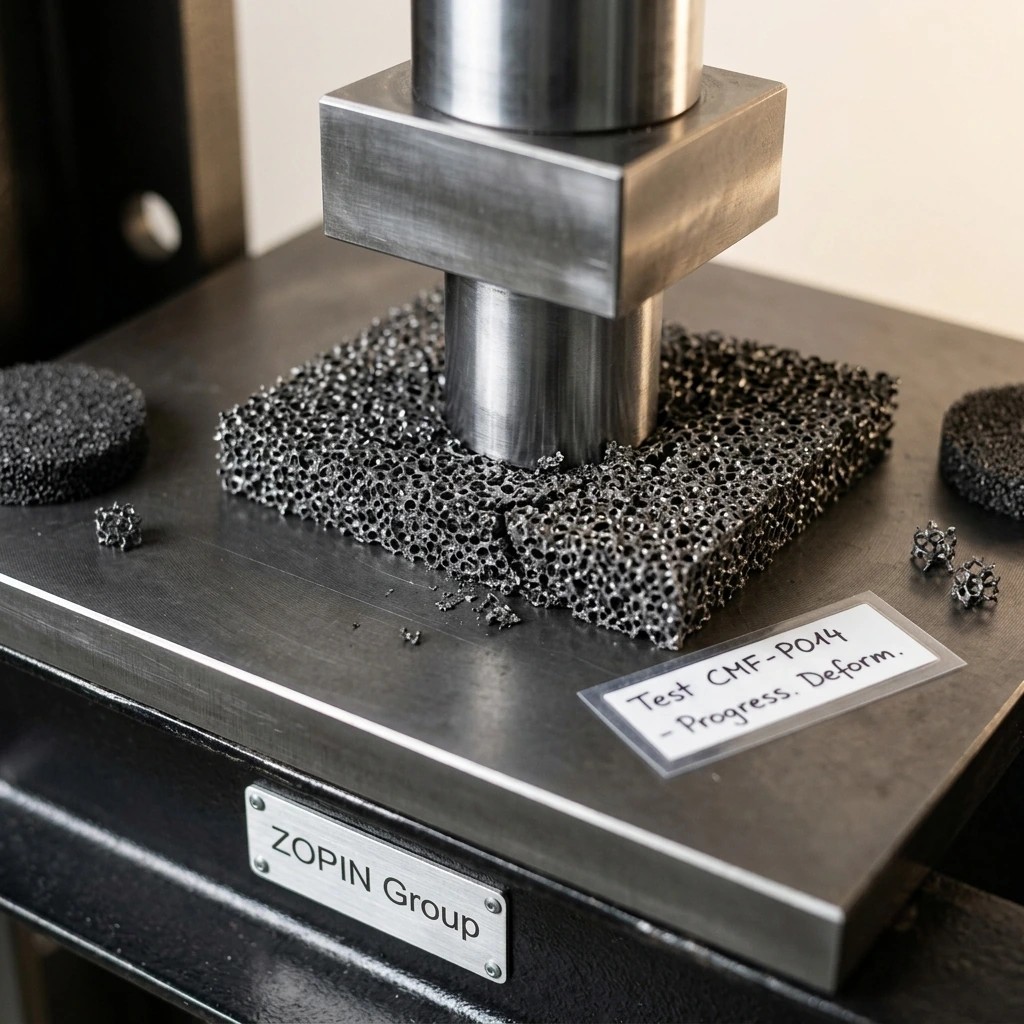
The mechanical layout of a high strength cellular composite isolates stress concentrations across thousands of tiny voids. As the front wall yields, the interior cells crush at steady plateau pressures, soaking up dynamic kinetic energy before failure reaches internal layers. You can explore standard alloy matrix choices across our catalog of solutions tailored for specific yield thresholds.
Armored defense structures and heavy industrial containment units require high rigidity along with fragment capture capability. Combining a lightweight steel cmf plate into composite defense sandwiches limits deflection without dragging down vehicle horsepower or transport capacity.
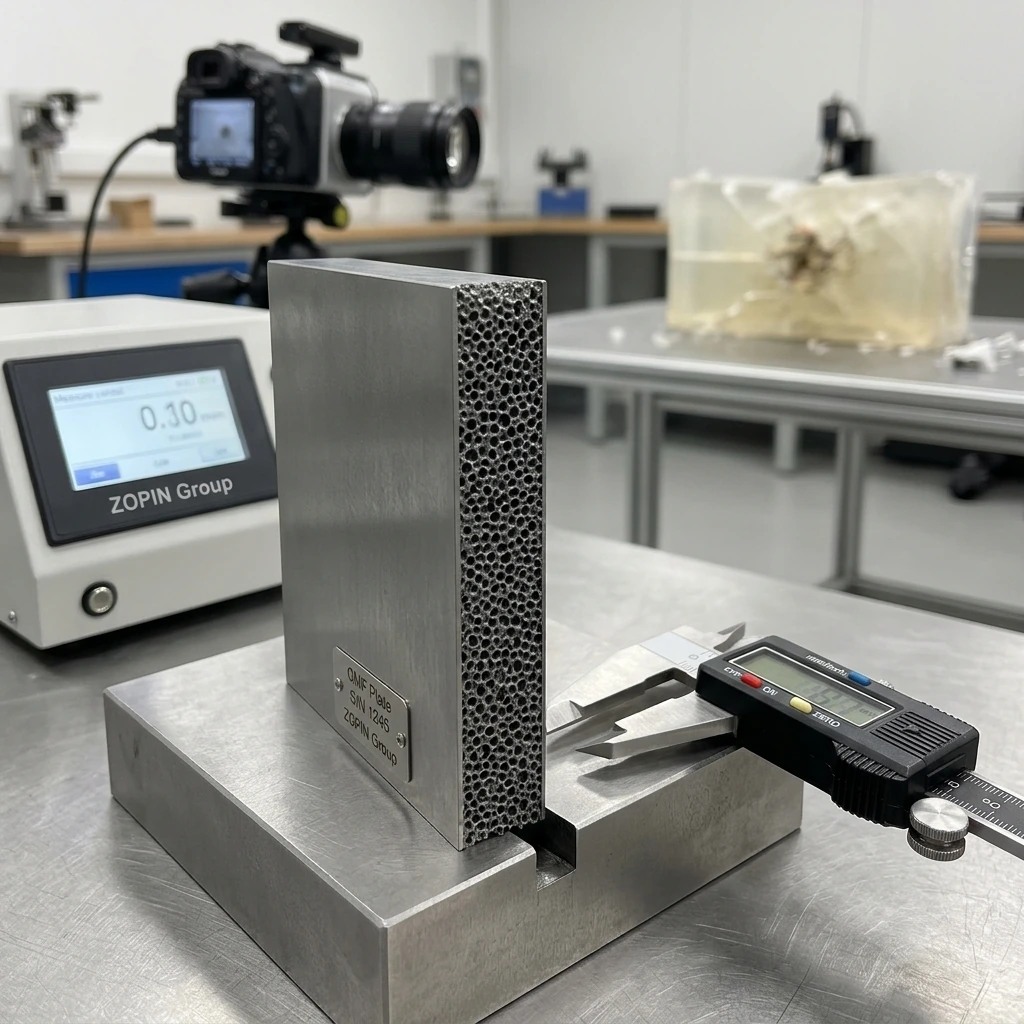
Layering this medium behind a strike face helps dissipate projectile momentum across broad surface areas. Testing indicates that a dedicated cmf ballistic core material traps spall and blunts ballistic threats far better than bulk monolithic alloys. Design teams frequently benchmark these porous panels against hardened plates inside the catalog to balance overall system thickness against gross vehicle weight limits.
Fabricating cellular structural parts requires strict control over cell wall density, outer plate bonding, and overall dimension limits. Production facilities utilize advanced powder sintering, hollow sphere bonding, and hot pressing to maintain uniform cell distribution across every square meter. Our manufacturing setup runs in an ISO 9001 quality-controlled plant spanning 28000 square meters, ensuring that core geometries meet rigid testing tolerances across large delivery lots.
Machining these multi-phase metallic slabs involves specialized cutting techniques. Standard wire electrical discharge machining or abrasive waterjets ensure clean boundary edges without sealing the delicate internal pores. If your assembly requires custom perimeter geometry or specialized backing surfaces, our technical teams review detailed part files under our engineering services to confirm fit before volume runs.
Fabrication lines secure these core panels using structural adhesives, perimeter bolting flanges, or protective outer containment sheets. The porous interior should remain sealed against severe chemical exposure, but standard mechanical retaining channels easily lock the core into existing frame cutouts.
Direct dimensional substitution is feasible when space allowances permit slightly thicker profiles to maximize energy attenuation. The primary gain comes from overall system weight reduction, easing suspension wear without demanding changes to factory robotic arms or welding jigs.
Production batches undergo ultrasonic internal density verification, mechanical compression testing, and dimensional inspection. Verified quality records and standard mill documentation accompany every crated delivery to guarantee batch consistency across your qualification program.

Copyright © Xiamen Zopin New Material Limited. All Rights Reserved.
the professional team to service !

 Daisy@foam-material.com