Procurement managers face tight vehicle weight limits while seeking certified impact protection. Traditional solid armor steel strains chassis components and drives up operational costs. You need materials that cut bulk without lowering protection standards. This guide details technical benchmarks, prototype lead times, and fabrication methods for porous metal matrices. We review current stock options, cell configuration methods, and supply line integration to help streamline your purchasing decisions.
Porous metal structures collapse under extreme dynamic loads to dissipate peak impact energy. The cell walls deform progressively during projectile impact, which spreads localized shear stresses across a wider footprint. Solid plates reflect shockwaves directly back into vehicle frames. Porous metallic cores crush at stable stress plateaus to disperse energy smoothly.
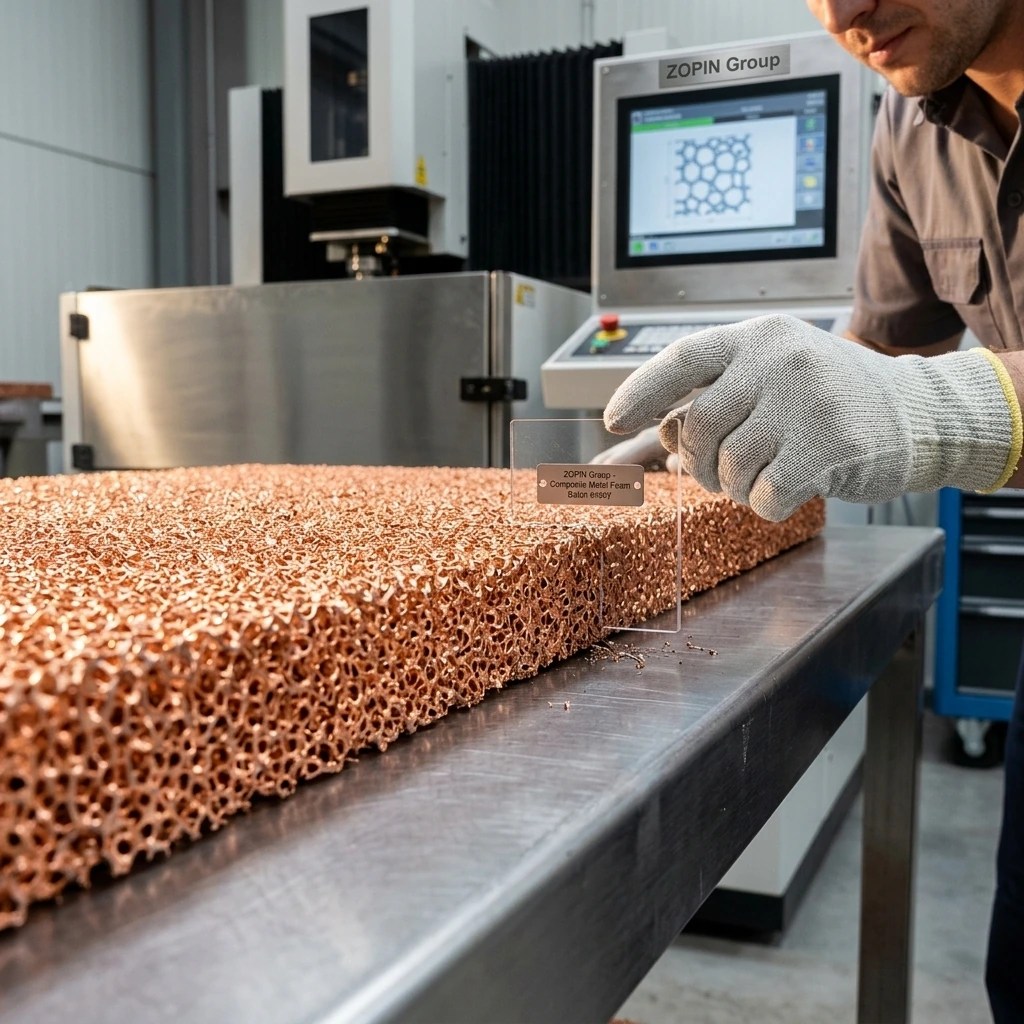
Engineers pair hard strike faces with these cellular matrices to break armor piercing threats. When you buy ballistic metal foam, density control dictates overall weight savings. You can review advanced structural compositions through our options to balance porosity with compressive yield resistance. This combination reduces protective module mass by up to forty percent compared to rolled homogenous armor.
Vehicle floors and blast shields demand predictable deformation during sudden explosive events. A specialized lightweight armor core supplier produces matrices capable of absorbing rapid pressure differentials. The open and closed cell cavities trap blast waves, turning acoustic shocks into internal mechanical work.
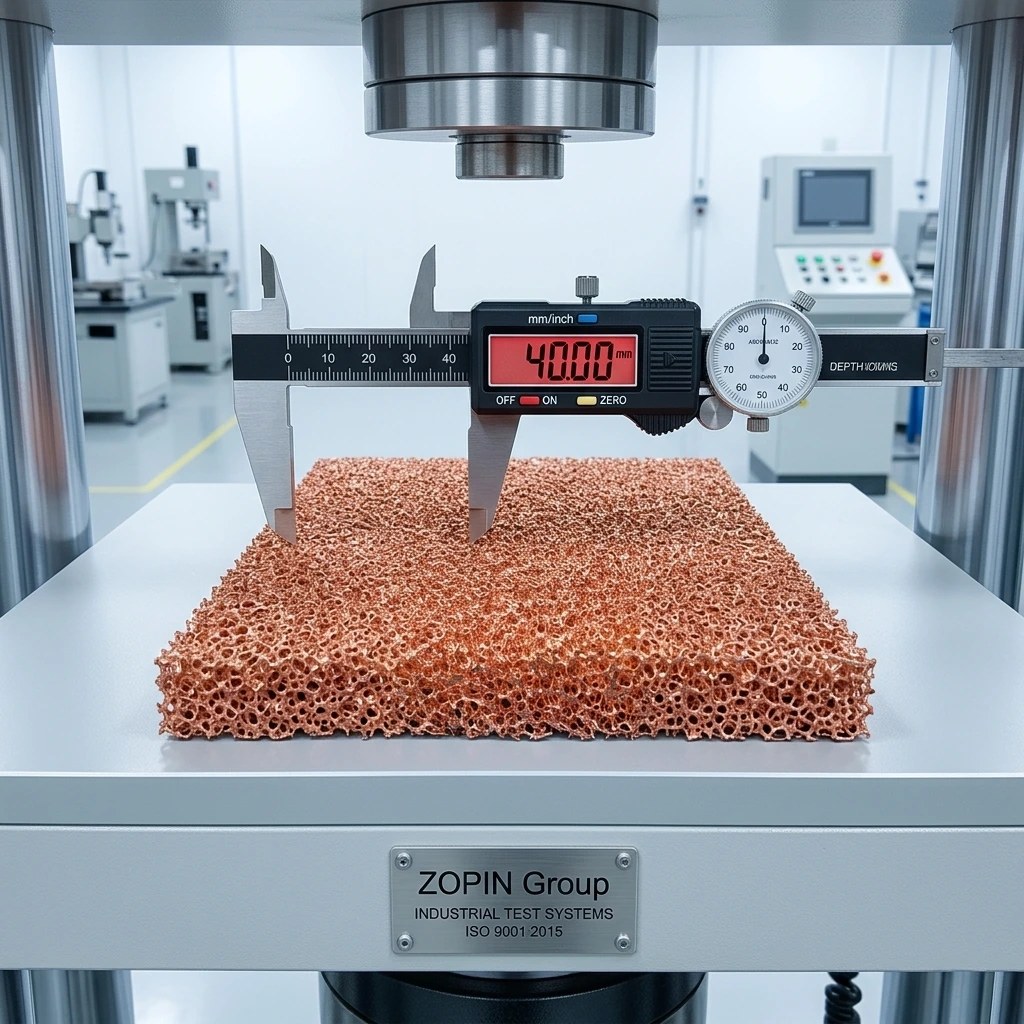
Engineers often sandwich these cellular slabs between high-tensile composite skins or alloy sheets. We recommend reviewing materials from the catalog to match target threat levels. Standard fastening techniques like structural bonding and peripheral clamping maintain panel integrity under cyclic vibration.
Fabrication schedules depend heavily on pore size uniformity and thickness specifications. Standard baseline grades often ship directly from existing factory stock. Tailored alloy blends require dedicated sintering runs, which can extend batch delivery schedules to fourteen business days.
Procurement teams must verify whether existing press-brake or waterjet equipment can cut cellular blanks without pinching porous edges. Working with a dedicated blast resistant composite foam manufacturer avoids costly fabrication retooling. We also supply raw conductive bases, such as porous , for layered electromagnetic and thermal protection systems.
Ordering commercial-grade porous materials requires precise dimensional tolerances. Density profiles generally range between twenty and sixty percent of parent metal mass. Thickness choices span thin blast inserts up to rigid structural plates over thirty millimeters.
Export crates protect the cellular structure from moisture and edge deformation during transit. Standard orders start from a minimum order quantity of one piece for developmental trials. Clear cell size parameters, core alloy requirements, and edge-sealing preferences ensure fast processing across global logistics routes.
You need dimensional blueprints indicating overall length, width, target thickness, and density requirements. Specifying parent metal alloys, face-sheet bonding layers, and anticipated blast load limits helps our engineering team calculate precise pricing and tooling lead times.
Yes, production batches can be tuned between 5 and 1300 pores per inch depending on chosen parent alloys. Our quality management system maintains consistency across thickness profiles, providing full testing documentation for both standard inventory and custom structural batches.

Copyright © Xiamen Zopin New Material Limited. All Rights Reserved.
the professional team to service !

 Daisy@foam-material.com