Xiamen Zopin New Material Limited Established in 2011, it is a new material industry with capabilities of independent research & development, production and sales as one. Our ISO9001:2012 factory covers an area of 6 hectares and a building area of 28,000 square meters, with annual production of high-performance metal foams of 250,000 square meters. Our R&D team is composed of academicians and experts from Tsinghua University, Polytechnic University of Hong Kong, Nanyang Technological University, and other domestic and foreign metal foam professionals. After many years’ endeavor, we now own our proprietary intellectual property rights in manufacturing high purity and high porosity metal foams.
Graphene Foam: Overview, Features, Manufacturing, Applications, Advantages, and Conclusion
Graphene foam is an advanced three-dimensional carbon-based material known for its exceptional electrical conductivity, mechanical strength, and lightweight porous structure. It is composed of interconnected graphene sheets forming a foam-like network, which combines the superior properties of graphene with a high surface area and structural flexibility. Graphene foam has emerged as a key material in energy storage, electronics, catalysis, and sensor applications, providing innovative solutions in both research and industrial fields.
Overview
Graphene foam is typically fabricated from high-quality graphene oxide or chemical vapor deposition (CVD) grown graphene, assembled into a three-dimensional porous network. The material offers low density, large surface area, and excellent electron transport pathways, making it ideal for applications where high conductivity and structural integrity are required. Its combination of lightweight, flexibility, and functional performance has made graphene foam a promising material for batteries, supercapacitors, sensors, and flexible electronics.
Key Features of Graphene Foam
Graphene foam exhibits several distinguishing features:
High Electrical Conductivity: Enables efficient electron transport, essential for energy storage and electronic applications.
Exceptional Mechanical Strength: Despite its lightweight structure, it possesses high tensile strength and flexibility.
High Surface Area: Provides abundant active sites for chemical reactions, energy storage, and catalysis.
Lightweight and Porous: Low density and open-cell structure allow fluid penetration, mass transport, and mechanical energy absorption.
Chemical and Thermal Stability: Resistant to chemical corrosion and stable under high temperatures in inert atmospheres.
Flexible and Compressible: Can be shaped or compressed without losing structural integrity, suitable for flexible devices.
Manufacturing Process
Graphene foam can be produced through various advanced methods:
Chemical Vapor Deposition (CVD): Graphene is grown on a metal foam template, such as nickel or copper, by etching of the template to obtain a freestanding graphene foam.
Hydrothermal or Solvothermal Reduction: Graphene oxide is reduced in a hydrothermal or solvothermal process to form a three-dimensional foam structure.
Freeze-Drying Method: A graphene oxide solution is frozen and lyophilized to form a porous, interconnected graphene network.
Template-Assisted Assembly: Graphene sheets are deposited onto a sacrificial template, which is removed to leave a porous graphene foam with controlled structure.
These techniques allow control over pore size, density, thickness, and mechanical properties for customized applications.
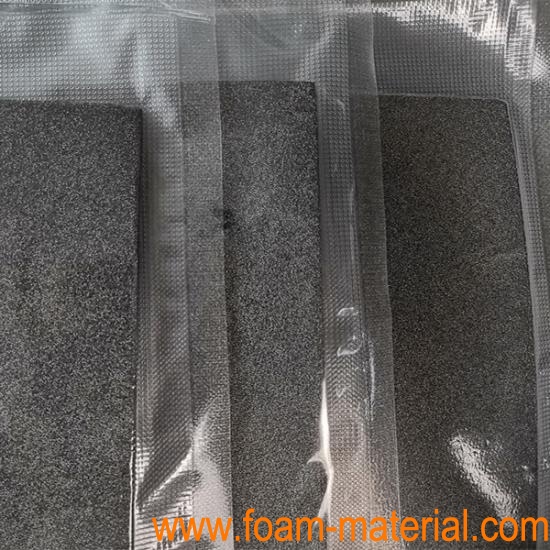
3D Graphene Foam Price
Applications
Graphene foam is applied across various industries due to its multifunctional properties:
Energy Storage Devices: Serves as electrodes for lithium-ion batteries, supercapacitors, and other high-performance energy storage systems.
Electronics and Sensors: Used in flexible electronics, strain sensors, and conductive components.
Catalysis: Provides a high-surface-area support for catalysts in fuel cells, hydrogen generation, and chemical reactions.
Thermal Management: Acts as a heat spreader or conductive filler in thermal management systems.
Biomedical Applications: Serves as scaffolds for tissue engineering and biosensors due to biocompatibility and high surface area.
Environmental Applications: Used in filtration, pollutant absorption, and energy-efficient membranes.
Advantages
Graphene foam offers numerous advantages:
Superior Conductivity: Excellent electrical and thermal transport for advanced devices.
High Surface Area: Maximizes active sites for energy, catalytic, and sensing applications.
Lightweight and Porous: Reduces weight while enhancing fluid and gas permeability.
Mechanical Flexibility and Strength: Maintains structural integrity under deformation.
Chemical and Thermal Stability: Suitable for harsh chemical and high-temperature environments.
Customizability: Pore size, thickness, and density can be tailored for specific applications.
Conclusion
In conclusion, graphene foam is a versatile, high-performance material combining lightweight, high conductivity, mechanical strength, and large surface area. Its porous, three-dimensional structure enables innovative applications in energy storage, catalysis, electronics, biomedical engineering, and environmental technologies. With advanced manufacturing techniques allowing precise control over structure and properties, graphene foam continues to be a cutting-edge material supporting next-generation technologies, offering efficient, durable, and multifunctional solutions across diverse fields.


 Daisy@foam-material.com