Xiamen Zopin New Material Limited Established in 2011, it is a new material industry with capabilities of independent research & development, production and sales as one. Our ISO9001:2012 factory covers an area of 6 hectares and a building area of 28,000 square meters, with annual production of high-performance metal foams of 250,000 square meters. Our R&D team is composed of academicians and experts from Tsinghua University, Polytechnic University of Hong Kong, Nanyang Technological University, and other domestic and foreign metal foam professionals. After many years’ endeavor, we now own our proprietary intellectual property rights in manufacturing high purity and high porosity metal foams.
MgO Substrate: High-Performance Material for Advanced Thin Film and Electronic Applications
Overview
Magnesium oxide (MgO) substrate is a widely used experimental and industrial material known for its excellent thermal, chemical, and electrical properties. As a crystalline oxide substrate, MgO provides a stable and lattice-matched surface for the deposition of thin films, epitaxial growth, and various advanced electronic and optical devices. Its high melting point, mechanical strength, and chemical inertness make it suitable for high-temperature processes, including thin film deposition via techniques such as pulsed laser deposition (PLD), molecular beam epitaxy (MBE), and physical vapor deposition (PVD).
In research and experimental applications, MgO substrates are favored for their ability to provide high-quality epitaxial layers with minimal defects. They are particularly important in the fabrication of functional oxides, superconductors, magnetic thin films, and other advanced materials where crystallographic orientation and surface quality critically impact device performance.
Characteristics
MgO substrates possess several unique physical, chemical, and structural properties that make them ideal for experimental and industrial applications:
1. High Thermal Stability
MgO has a melting point of approximately 2852°C, enabling its use in high-temperature deposition and annealing processes without structural degradation.
2. Mechanical Strength and Hardness
The material exhibits high hardness and mechanical strength, ensuring stability during handling, processing, and high-temperature treatments.
3. Chemical Inertness
MgO is chemically resistant to most acids and bases, making it suitable for aggressive deposition environments or chemical processing steps.
4. Electrical Insulation
With a wide bandgap (~7.8 eV), MgO is an excellent electrical insulator, which is crucial for thin film devices requiring minimal substrate conductivity.
5. Crystallographic Quality
Single-crystal MgO substrates provide well-defined lattice structures, allowing epitaxial growth of thin films with minimal defects and high crystallinity.
6. Surface Smoothness
High-quality MgO substrates can achieve atomically flat surfaces, facilitating uniform film growth and optimal adhesion for various deposition techniques.
Fabrication and Preparation Process
The preparation of MgO substrates for experimental use involves several critical steps to ensure surface quality and compatibility with thin film deposition:
1. Crystal Growth
High-purity MgO crystals are typically grown using methods such as the Verneuil process, flux growth, or Czochralski pulling, producing single-crystal substrates with precise orientation.
2. Cutting and Polishing
Substrates are cut along specific crystallographic planes (commonly (100) or (110)) and polished to achieve smooth, defect-free surfaces. Advanced polishing techniques reduce surface roughness to the nanometer scale, enhancing film adhesion and uniformity.
3. Cleaning and Surface Treatment
Substrates undergo ultrasonic cleaning, chemical etching, or thermal annealing to remove contaminants, adsorbed gases, or surface defects before thin film deposition.
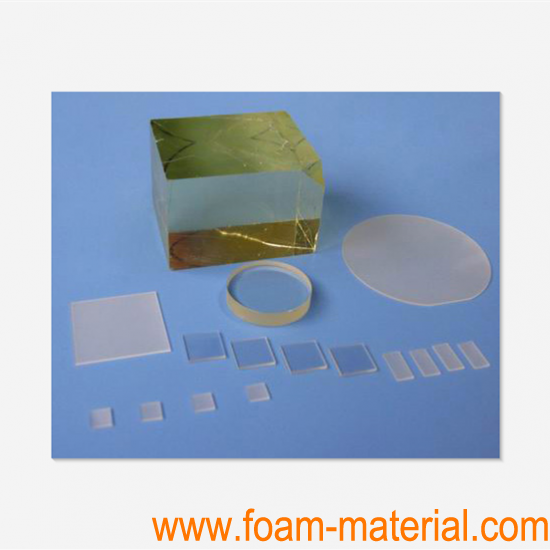
MgO Crystal Substrate
Applications
MgO substrates are extensively used in both experimental research and industrial applications:
* Thin Film Deposition
MgO is a preferred substrate for epitaxial growth of functional oxides, superconducting materials, and magnetic films due to its lattice compatibility and surface quality.
* Superconductors
High-temperature superconducting films, such as YBa₂Cu₃O₇₋δ (YBCO), are often grown on MgO substrates for research and prototype devices.
* Magnetic Thin Films
MgO supports the deposition of ferromagnetic or spintronic thin films used in magnetic tunnel junctions and memory devices.
* Optoelectronics
Transparent and insulating properties make MgO substrates suitable for optical coatings, waveguides, and photonic devices.
* Catalysis and Sensor Research
MgO substrates provide a chemically inert platform for catalytic thin films or sensor material deposition.
Advantages
MgO substrates offer numerous benefits for experimental materials research and device fabrication:
1. High-Temperature Tolerance: Suitable for high-temperature thin film deposition and annealing processes.
2. Excellent Crystallinity: Supports epitaxial growth with minimal defects, critical for advanced device performance.
3. Chemical Stability: Resistant to corrosion and reactive environments, ensuring substrate integrity.
4. Electrical Insulation: Ideal for devices requiring minimal substrate conductivity.
5. Mechanical Strength: Durable during handling, processing, and thermal cycling.
6. Surface Smoothness: Atomically flat surfaces enable uniform thin film growth and excellent adhesion.
Conclusion
MgO substrates are a cornerstone material in experimental research and advanced device fabrication due to their exceptional thermal stability, mechanical strength, chemical inertness, and crystallographic quality. They provide a reliable platform for thin film deposition, epitaxial growth, and high-performance electronic, magnetic, and optical devices.
By combining high-quality surface preparation with precise crystallographic orientation, MgO substrates enable researchers to achieve uniform, defect-free thin films with superior functional properties. Their versatility, reliability, and robustness make them indispensable in laboratories and high-tech applications, supporting advancements in superconductivity, spintronics, optoelectronics, and materials science.


 Daisy@foam-material.com