Xiamen Zopin New Material Limited Established in 2011, it is a new material industry with capabilities of independent research & development, production and sales as one. Our ISO9001:2012 factory covers an area of 6 hectares and a building area of 28,000 square meters, with annual production of high-performance metal foams of 250,000 square meters. Our R&D team is composed of academicians and experts from Tsinghua University, Polytechnic University of Hong Kong, Nanyang Technological University, and other domestic and foreign metal foam professionals. After many years’ endeavor, we now own our proprietary intellectual property rights in manufacturing high purity and high porosity metal foams.
Stainless Steel Foam: Overview, Features, Manufacturing, Applications, Advantages, and Conclusion
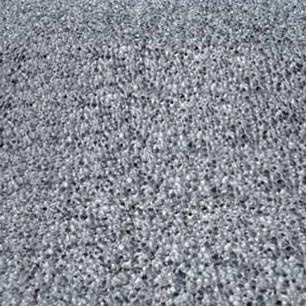
Stainless steel foam is an advanced metallic material characterized by a lightweight, porous structure and exceptional mechanical, thermal, and chemical properties. It combines the inherent strength, corrosion resistance, and durability of stainless steel with a three-dimensional foam architecture, creating a material that is highly versatile and suitable for diverse industrial, environmental, and engineering applications.
Overview
Stainless steel foam is typically produced from high-quality stainless steel alloys, forming a network of interconnected pores that reduce material density while maintaining structural integrity. Its combination of lightweight construction, high surface area, and mechanical robustness makes it an ideal material for applications requiring energy absorption, filtration, thermal management, and chemical resistance. The unique properties of stainless steel foam enable it to function effectively in harsh environments, making it a valuable material in aerospace, automotive, chemical processing, and energy industries.
Key Features of Stainless Steel Foam
Stainless steel foam exhibits several notable characteristics:
High Strength-to-Weight Ratio: Lightweight yet mechanically robust, suitable for structural applications.
Corrosion and Chemical Resistance: Resistant to acids, bases, and oxidative environments, ensuring long-term durability.
High Surface Area: Open-cell structure provides extensive active sites for chemical reactions and fluid interaction.
Thermal and Acoustic Performance: Porous architecture facilitates heat dissipation and sound absorption.
Energy Absorption: Excellent capability to absorb shocks, vibrations, and mechanical impact.
Customizable Structure: Pore size, density, and foam thickness can be tailored for specific applications.
Manufacturing Process
Several advanced methods are used to fabricate stainless steel foam:
Powder Metallurgy with Space Holders: Stainless steel powder is mixed with removable space-holder particles, compacted, and sintered. The space-holder is then removed to form a porous foam.
Foaming of Molten Metal: Gas injection or chemical foaming agents are used to create bubbles in molten stainless steel, forming an open-cell structure upon solidification.
Template Replication: A polymer or ceramic template is coated with stainless steel, which is subsequently removed to create a foam with controlled pore size and distribution.
Additive Manufacturing (3D Printing): Laser or electron beam melting allows precise control over pore geometry, density, and structural configuration.
These methods provide control over porosity, mechanical properties, and surface area, allowing stainless steel foam to be optimized for specific industrial needs.
SS Foam Sheet Supplier
Applications
Stainless steel foam is utilized in various industries due to its multifunctional properties:
Filtration and Separation: Effective in gas and liquid filtration, pollutant removal, and chemical processing.
Energy Absorption and Shock Protection: Used in automotive crash absorbers, protective panels, and vibration-damping structures.
Thermal Management: Heat exchangers, conductive components, and thermal insulation utilize the foam’s porosity and thermal conductivity.
Catalysis: Acts as a high-surface-area support for catalysts in chemical reactions and fuel processing.
Acoustic Applications: Noise reduction panels in industrial and construction environments.
Lightweight Structural Components: Aerospace, automotive, and marine industries benefit from weight reduction without compromising strength.
Advantages
The main advantages of stainless steel foam include:
Lightweight and Strong: Reduces component weight while maintaining high mechanical performance.
Corrosion and Chemical Resistance: Ensures long-term reliability in harsh environments.
High Surface Area: Enhances chemical, catalytic, and filtration efficiency.
Energy Absorption: Protects structures from impact and vibration.
Customizable: Pore size, density, and foam thickness can be tailored for different applications.
Versatility: Suitable for aerospace, automotive, chemical, environmental, and energy industries.
Conclusion
In conclusion, stainless steel foam is a multifunctional, high-performance material that combines lightweight, mechanical strength, corrosion resistance, and high surface area. Its porous three-dimensional structure enables applications in filtration, energy absorption, thermal management, catalysis, and structural components. Advanced manufacturing techniques allow precise control over porosity, density, and mechanical properties, making stainless steel foam an ideal solution for modern engineering and industrial challenges. As industries increasingly demand durable, lightweight, and multifunctional materials, stainless steel foam continues to provide innovative solutions across diverse sectors.


 Daisy@foam-material.com