Xiamen Zopin New Material Limited Established in 2011, it is a new material industry with capabilities of independent research & development, production and sales as one. Our ISO9001:2012 factory covers an area of 6 hectares and a building area of 28,000 square meters, with annual production of high-performance metal foams of 250,000 square meters. Our R&D team is composed of academicians and experts from Tsinghua University, Polytechnic University of Hong Kong, Nanyang Technological University, and other domestic and foreign metal foam professionals. After many years’ endeavor, we now own our proprietary intellectual property rights in manufacturing high purity and high porosity metal foams.
Nickel Mesh: Overview, Features, Manufacturing, Applications, Advantages, and Conclusion
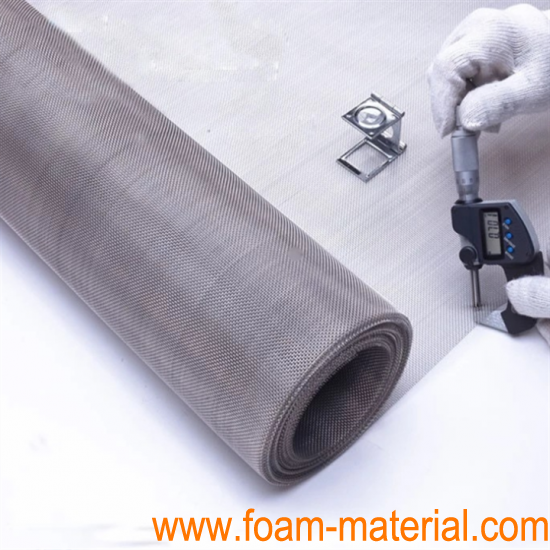
Nickel mesh is a versatile metallic material known for its excellent corrosion resistance, high electrical conductivity, and mechanical strength. It consists of woven, knitted, or expanded nickel wires forming a porous, grid-like structure that provides both structural integrity and functional performance. Nickel mesh has become essential in industries such as electrochemistry, filtration, catalysis, and electronics, due to its unique combination of physical, chemical, and mechanical properties.
Overview
Nickel mesh is typically fabricated from high-purity nickel, and is available in various wire diameters, mesh sizes, and weave patterns. Its open structure allows for efficient fluid flow, high surface area, and excellent electron or heat conduction. Nickel mesh can withstand harsh chemical environments, high temperatures, and mechanical stress, making it ideal for demanding industrial applications. Depending on the manufacturing method, nickel mesh can be customized to meet specific requirements for porosity, tensile strength, and flexibility.
Key Features of Nickel Mesh
Nickel mesh exhibits several distinctive characteristics:
Corrosion and Chemical Resistance: Performs reliably in acidic, alkaline, and oxidizing environments.
High Electrical and Thermal Conductivity: Facilitates electron transport in electrochemical and electronic applications.
Mechanical Strength: Durable and resistant to deformation under stress.
Porous and Lightweight Structure: Offers high surface area while minimizing material weight.
Temperature Stability: Maintains integrity under high-temperature conditions.
Customizable Structure: Wire diameter, mesh count, and weave patterns can be tailored for specific applications.
Manufacturing Process
Nickel mesh can be produced through several key processes:
Weaving: Nickel wires are woven into plain, twill, or dutch weave patterns, providing uniform pore size and high mechanical stability.
Knitting or Braiding: Produces flexible mesh suitable for curved surfaces or dynamic applications.
Expanded Mesh: Nickel sheets are perforated and stretched to form a mesh, offering open areas without reducing structural strength.
Etching or Electroforming: High-precision techniques create fine mesh structures with controlled thickness and porosity.
These manufacturing methods ensure the nickel mesh meets performance standards for conductivity, corrosion resistance, and mechanical properties.
Nickel Mesh for Battery Electrode
Applications
Nickel mesh finds wide-ranging applications across multiple industries:
Electrochemical Devices: Used as electrodes, current collectors, and conductive substrates in batteries, fuel cells, and supercapacitors.
Filtration and Separation: Employed in chemical and industrial filtration, gas diffusion layers, and particle separation due to its porous structure.
Catalysis: Acts as a high-surface-area support for catalysts in chemical reactions, hydrogen production, and fuel processing.
Electronics: Serves in shielding, conductive grids, and heat dissipation components.
Energy and Environmental Applications: Applied in electrodes for electrolysis, wastewater treatment, and environmental remediation.
Mechanical and Structural Components: Lightweight, strong, and flexible mesh used in reinforcement or protective applications.
Advantages
The key advantages of nickel mesh include:
Corrosion and Chemical Resistance: Suitable for harsh environments, ensuring long-term performance.
High Conductivity: Excellent electrical and thermal transport for energy and electronic applications.
Mechanical Robustness: Maintains shape and performance under stress.
Porosity and Surface Area: Enhances catalytic activity, filtration efficiency, and electrochemical performance.
Lightweight and Flexible: Easy to handle and integrate into complex systems.
Versatility: Can be customized in size, weave, and wire diameter to meet specific industrial or research requirements.
Conclusion
In conclusion, nickel mesh is a high-performance, multifunctional metallic material combining corrosion resistance, conductivity, mechanical strength, and porosity. Its flexible and customizable structure makes it ideal for electrochemical devices, filtration systems, catalysis, electronics, and industrial applications. Advanced manufacturing techniques ensure consistent quality, high durability, and precise control over mesh properties. As industries continue to demand reliable, lightweight, and multifunctional materials, nickel mesh remains an indispensable solution for modern engineering, energy, and scientific applications.


 Daisy@foam-material.com