Xiamen Zopin New Material Limited Established in 2011, it is a new material industry with capabilities of independent research & development, production and sales as one. Our ISO9001:2012 factory covers an area of 6 hectares and a building area of 28,000 square meters, with annual production of high-performance metal foams of 250,000 square meters. Our R&D team is composed of academicians and experts from Tsinghua University, Polytechnic University of Hong Kong, Nanyang Technological University, and other domestic and foreign metal foam professionals. After many years’ endeavor, we now own our proprietary intellectual property rights in manufacturing high purity and high porosity metal foams.
Silicon Wafers: An Overview of Metal Material Applications
Overview
Silicon wafers, or wafer de silicio, are thin slices of crystalline silicon that serve as the foundational substrate in the electronics and semiconductor industry. Despite silicon being a metalloid rather than a pure metal, its application in metal-related technologies is substantial due to its exceptional semiconductor properties and compatibility with metallic interconnections. These wafers act as the structural platform for integrated circuits (ICs), microelectromechanical systems (MEMS), and photovoltaic cells. The quality, purity, and surface characteristics of silicon wafers are critical factors that directly influence the performance and reliability of advanced electronic devices.
Properties
Silicon wafers exhibit a unique combination of physical, chemical, and electrical properties that make them indispensable in modern technology:
1. Mechanical Strength and Hardness: Silicon is rigid and has a high Young’s modulus, which allows wafers to withstand mechanical stress during fabrication and handling.
2. Thermal Conductivity: Its moderate thermal conductivity ensures efficient heat dissipation, crucial for high-power devices and integrated circuits.
3. Electrical Semiconductivity: Intrinsic silicon can be precisely doped with metals such as boron or phosphorus to modulate its conductivity, enabling complex electronic functions.
4. Chemical Stability: Silicon wafers resist oxidation and corrosion under controlled conditions, making them suitable for long-term device reliability.
5. Surface Uniformity: Advanced polishing and etching techniques yield atomically flat surfaces, which are essential for thin-film metal deposition and photolithography.
Fabrication Process
The production of high-quality silicon wafers involves a series of meticulous processes:
1. Crystal Growth: High-purity silicon is melted and drawn into a single crystal using the Czochralski (CZ) or Float Zone (FZ) method. Single-crystal wafers are preferred for their uniform electronic properties.
2. Ingot Slicing: The cylindrical silicon ingots are sliced into thin wafers using diamond wire saws, achieving thicknesses from 150 to 800 micrometers.
3. Surface Polishing: Wafers undergo chemical-mechanical polishing (CMP) to achieve nanometer-level smoothness, preparing them for subsequent metallization.
4. Doping and Oxidation: Controlled introduction of metallic impurities and oxidation layers tailors the wafer’s electronic characteristics for device integration.
5. Inspection and Sorting: Advanced optical and electronic inspection ensures the absence of defects such as dislocations, particles, or surface irregularities.
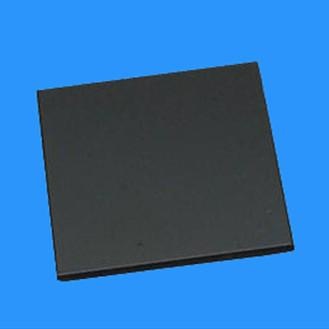
Gallium Nitride on Silicon wafer
Applications
Silicon wafers play a pivotal role in industries where metal-material integration is critical:
1. Semiconductor Devices: Serving as a substrate, silicon wafers support metallic interconnects in microchips, enabling high-speed computing and communication.
2. Photovoltaics: In solar cells, silicon wafers act as the foundation for metallic contacts, facilitating efficient electron transport and energy conversion.
3. MEMS and Sensors: Silicon wafers support metallic electrodes and conductive traces for sensors, accelerometers, and microactuators.
4. Power Electronics: Wafers doped with metallic elements enable devices that handle high currents and voltages while maintaining thermal stability.
Advantages
Silicon wafers offer several advantages over alternative substrates and materials:
1. High Purity and Uniformity: Ensures consistent electrical behavior across large-scale production.
2. Compatibility with Metals: Facilitates robust metallization processes such as sputtering, evaporation, and electroplating.
3. Mechanical Reliability: Resistant to deformation and cracking during device assembly and operation.
4. Thermal and Electrical Optimization: Supports efficient heat management and electrical conduction, critical in miniaturized electronic systems.
5. Scalability: Standard wafer sizes (e.g., 150 mm, 200 mm, 300 mm) allow seamless integration into automated fabrication lines.
Conclusion
In conclusion, wafer de silicio represents a cornerstone material in the intersection of semiconductor and metal-based technologies. Its unique combination of mechanical robustness, electrical tunability, and chemical stability makes it indispensable in modern electronics, energy systems, and microengineering applications. Continuous innovations in wafer fabrication, doping techniques, and metallization processes are pushing the boundaries of device performance, energy efficiency, and miniaturization. As industries increasingly rely on high-performance electronics and energy solutions, silicon wafers will remain a fundamental enabler of technological advancement.


 Daisy@foam-material.com