Xiamen Zopin New Material Limited Established in 2011, it is a new material industry with capabilities of independent research & development, production and sales as one. Our ISO9001:2012 factory covers an area of 6 hectares and a building area of 28,000 square meters, with annual production of high-performance metal foams of 250,000 square meters. Our R&D team is composed of academicians and experts from Tsinghua University, Polytechnic University of Hong Kong, Nanyang Technological University, and other domestic and foreign metal foam professionals. After many years’ endeavor, we now own our proprietary intellectual property rights in manufacturing high purity and high porosity metal foams.
CaCO3 (Calcium Carbonate): A Versatile Laboratory Material for Research and Industrial Applications
Overview
CaCO3, commonly known as calcium carbonate, is one of the most abundant and widely used inorganic compounds in both laboratory research and industrial manufacturing. Naturally occurring in minerals such as limestone, marble, and chalk, calcium carbonate has the chemical formula CaCO3 and is valued for its excellent chemical stability, high purity, low cost, and broad range of applications.
In scientific laboratories, CaCO3 is frequently used as a reference material, pH buffering agent, catalyst support, precursor for advanced ceramic materials, and an essential reagent in chemical synthesis. Industrially, it serves as a filler, reinforcing additive, coating pigment, and raw material in sectors including plastics, paper, rubber, paints, pharmaceuticals, food processing, environmental engineering, and battery research.
Depending on the intended application, calcium carbonate is available in several forms, including ground calcium carbonate (GCC), precipitated calcium carbonate (PCC), nano calcium carbonate, and ultrafine calcium carbonate. Each type offers unique particle characteristics and performance advantages, allowing researchers and manufacturers to select the most suitable grade for their specific requirements.
Key Characteristics
The popularity of CaCO3 stems from its combination of chemical, physical, and mechanical properties that make it suitable for a wide range of laboratory and industrial applications.
High Chemical Purity
Laboratorygrade calcium carbonate is manufactured with exceptionally high purity, typically exceeding 99%, ensuring reliable and reproducible experimental results. Low impurity levels minimize unwanted side reactions during chemical processes.
Excellent Chemical Stability
Under normal environmental conditions, CaCO3 exhibits excellent stability. It is resistant to oxidation and remains chemically inert in neutral environments. However, it reacts readily with acids to release carbon dioxide, making it valuable for analytical chemistry and controlled reaction studies.
Controlled Particle Size
Modern manufacturing technology allows calcium carbonate to be produced with precisely controlled particle sizes ranging from several micrometers down to nanometer scale. Fine particle size contributes to improved dispersion, larger specific surface area, and enhanced reaction efficiency.
High Whiteness
Highquality calcium carbonate possesses excellent whiteness and brightness, making it an ideal pigment and filler for coatings, paper, plastics, and cosmetic products.
Good Thermal Stability
Although calcium carbonate decomposes into calcium oxide (CaO) and carbon dioxide (CO₂) at temperatures above approximately 840°C, it maintains excellent structural stability under normal laboratory and industrial operating conditions.
Environmental Compatibility
As a naturally occurring mineral, CaCO3 is environmentally friendly, nontoxic, odorless, and recyclable, making it suitable for sustainable manufacturing processes.
Manufacturing Process
The production of laboratorygrade and industrialgrade CaCO3 involves several carefully controlled manufacturing stages.
Raw Material Selection
Production begins with the selection of highquality limestone or marble deposits that contain high concentrations of calcium carbonate and minimal impurities such as iron, silica, and magnesium compounds.
Crushing and Grinding
The raw stone is crushed into smaller particles before undergoing fine grinding using advanced milling equipment such as:
* Ball mills
* Raymond mills
* Vertical roller mills
* Jet mills
These systems achieve the required particle size distribution according to customer specifications.
Classification
Air classifiers separate particles based on size, ensuring consistent product quality and narrow particle size distribution.
Precipitation Process (PCC Production)
For precipitated calcium carbonate (PCC), limestone is first calcined to produce calcium oxide, which is then hydrated into calcium hydroxide. Carbon dioxide is introduced to precipitate ultrapure calcium carbonate crystals under controlled conditions.
This process allows manufacturers to tailor:
* Particle morphology
* Crystal structure
* Surface area
* Particle size
* Bulk density
Surface Modification
For polymer and composite applications, calcium carbonate particles may undergo surface treatment using coupling agents or fatty acids to improve compatibility with organic materials and enhance dispersion.
Quality Control
Each production batch undergoes rigorous testing, including:
* Chemical purity
* Particle size analysis
* Whiteness measurement
* Moisture content
* Specific surface area
* Bulk density
* pH value
These quality assurance procedures ensure compliance with laboratory and industrial standards.
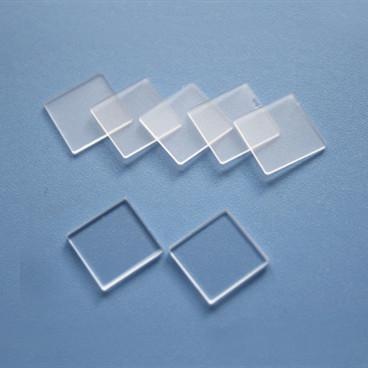
CaCO3 crystal
Applications
The versatility of CaCO3 makes it indispensable across numerous scientific and industrial fields.
Laboratory Research
Calcium carbonate is extensively used in laboratories for:
* Analytical chemistry
* Acidbase titration
* pH buffering experiments
* Catalyst development
* Ceramic precursor synthesis
* Materials science research
* Environmental analysis
Battery Research
In advanced battery technology, calcium carbonate is investigated as:
* Functional filler
* Ceramic precursor
* Electrolyte additive precursor
* Separator modification material
* Composite material component
Researchers continue exploring nanosized CaCO3 for improving battery safety and mechanical stability.
Plastics Industry
Calcium carbonate is widely incorporated into plastic products to:
* Increase stiffness
* Improve dimensional stability
* Reduce material cost
* Enhance surface finish
* Improve processing performance
Paper Manufacturing
The paper industry uses calcium carbonate as both a coating pigment and filler to improve:
* Brightness
* Opacity
* Printability
* Surface smoothness
* Ink absorption
Paints and Coatings
Highpurity CaCO3 enhances coating performance by improving:
* Coverage
* Durability
* Weather resistance
* Gloss control
* Cost efficiency
Environmental Engineering
Environmental applications include:
* Flue gas desulfurization
* Wastewater neutralization
* Heavy metal removal
* Water treatment
* Soil stabilization
Pharmaceutical and Food Industries
Foodgrade calcium carbonate serves as:
* Calcium supplement
* Food additive
* Pharmaceutical excipient
* Antacid ingredient
* Tablet filler
Its safety and biocompatibility make it suitable for regulated applications.
Advantages
Compared with many alternative inorganic materials, CaCO3 offers numerous technical and economic advantages.
CostEffective
Calcium carbonate is abundant worldwide, making it one of the most economical functional materials available.
Excellent Processability
It disperses easily in liquids, polymers, and composite systems, enabling efficient manufacturing and consistent product quality.
High Purity
Laboratorygrade calcium carbonate ensures reliable experimental performance with minimal contamination.
Versatile Performance
Different particle sizes, crystal structures, and surface treatments allow customization for highly specialized applications.
Environmentally Friendly
As a naturally occurring mineral, CaCO3 supports environmentally responsible manufacturing and can often replace less sustainable synthetic fillers.
Safe Handling
Calcium carbonate is generally nontoxic, nonflammable, and chemically stable under normal handling conditions, making it easy to store, transport, and use in laboratory environments.
Improved Product Performance
When incorporated into composites and industrial products, calcium carbonate enhances mechanical strength, dimensional stability, surface quality, and overall durability while reducing production costs.
Conclusion
CaCO3 (calcium carbonate) is one of the most versatile and valuable inorganic materials used in modern laboratory research and industrial production. Its combination of high purity, excellent chemical stability, controlled particle size, environmental compatibility, and costeffectiveness has established it as an essential material in fields ranging from analytical chemistry and materials science to plastics, paper, coatings, pharmaceuticals, environmental engineering, and emerging battery technologies.
Continuous advancements in particle engineering, nanoscale production, and surface modification technologies are expanding the capabilities of calcium carbonate beyond its traditional roles. As research into advanced functional materials and sustainable manufacturing continues to grow, CaCO3 will remain a critical laboratory material, providing dependable performance, outstanding versatility, and significant economic value for researchers, engineers, and manufacturers worldwide.


 Daisy@foam-material.com