Xiamen Zopin New Material Limited Established in 2011, it is a new material industry with capabilities of independent research & development, production and sales as one. Our ISO9001:2012 factory covers an area of 6 hectares and a building area of 28,000 square meters, with annual production of high-performance metal foams of 250,000 square meters. Our R&D team is composed of academicians and experts from Tsinghua University, Polytechnic University of Hong Kong, Nanyang Technological University, and other domestic and foreign metal foam professionals. After many years’ endeavor, we now own our proprietary intellectual property rights in manufacturing high purity and high porosity metal foams.
Composite Metal Foam: Overview, Features, Manufacturing, Applications, Advantages, and Conclusion
Composite metal foam (CMF) is an advanced engineered material consisting of a metal matrix combined with one or more reinforcing materials, forming a lightweight, porous structure with enhanced mechanical, thermal, and energy-absorbing properties. This innovative material integrates the intrinsic strength and durability of metals with the multifunctional benefits of porosity and reinforcement, making it highly suitable for aerospace, defense, automotive, and energy applications.
Overview
Composite metal foam is typically produced by embedding ceramic particles, polymers, or secondary metallic phases into a primary metal matrix, such as aluminum, titanium, or nickel, by creating a controlled porous structure. The resulting material combines the benefits of lightweight design, high stiffness, and energy absorption. Composite metal foam exhibits superior performance under mechanical impact, thermal exposure, and corrosive environments, making it an ideal solution for protective structures, vibration damping, and high-performance engineering components.
Key Features of Composite Metal Foam
Composite metal foam exhibits several distinct characteristics:
High Strength-to-Weight Ratio: Combines the mechanical strength of metals with low density, optimizing performance and reducing structural weight.
Energy Absorption: The porous architecture enables excellent impact resistance and damping capabilities.
Thermal and Acoustic Insulation: Porosity and reinforcement provide thermal management and sound absorption benefits.
Corrosion and Chemical Resistance: Enhanced durability when reinforced with ceramic or polymer components.
Customizable Structure: Pore size, density, and composition can be tailored for specific applications.
Mechanical Stability: Maintains structural integrity under compressive and tensile loads.
Manufacturing Process
The production of composite metal foam involves several advanced techniques:
Powder Metallurgy with Space Holders: Metal powders are mixed with reinforcing particles and space-holder materials, compacted, and sintered. The space-holder is removed to generate controlled porosity.
Foaming of Molten Metal: Gas injection or chemical blowing agents create bubbles in a molten metal-reinforcement mixture, producing a porous structure upon solidification.
Casting with Reinforcements: Reinforcing particles are embedded into a metal melt, which is cast into molds and subsequently foamed.
Additive Manufacturing: Selective laser melting or 3D printing techniques allow precise control over foam geometry, porosity, and reinforcement distribution.
These methods enable customization of foam density, pore morphology, mechanical strength, and thermal performance for targeted applications.
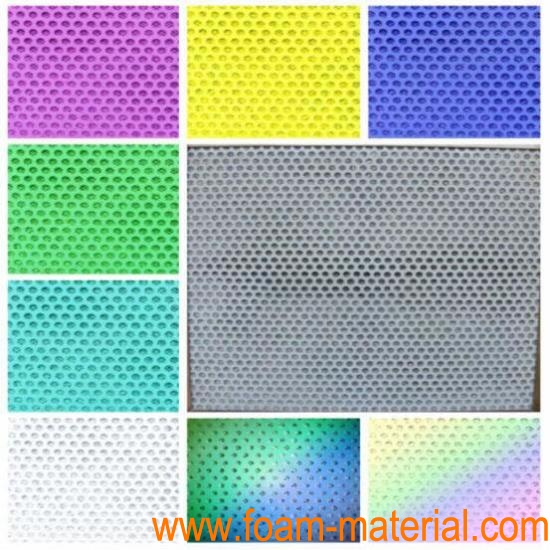
Open-Cell Aluminum Foam
Applications
Composite metal foam is used across diverse industries due to its multifunctional properties:
Defense and Protective Structures: Used in blast-resistant panels, armor, and impact-absorbing barriers.
Aerospace and Automotive: Lightweight structural components, crash absorbers, and vibration-damping materials.
Energy Systems: Heat exchangers, battery casings, and conductive foams for energy storage applications.
Acoustic and Thermal Insulation: Soundproofing panels, thermal barriers, and fire-resistant components.
Filtration and Separation: Porous structure enables gas or liquid filtration in chemical and industrial processes.
Structural Engineering: Reinforced panels and components in buildings and machinery for load-bearing and energy absorption.
Advantages
Composite metal foam offers numerous benefits:
Lightweight with High Strength: Reduces overall weight without compromising mechanical performance.
Impact and Energy Absorption: Excellent shock and vibration damping for safety-critical applications.
Thermal and Acoustic Insulation: Multifunctional performance in extreme environments.
Corrosion and Wear Resistance: Extended service life in harsh operating conditions.
Customizability: Pore size, density, and material composition can be engineered for specific needs.
Versatility: Suitable for aerospace, automotive, defense, energy, and structural engineering applications.
Conclusion
In conclusion, composite metal foam is a cutting-edge material combining the benefits of metals and engineered porosity with reinforced functionality. Its lightweight, high-strength, energy-absorbing, and multifunctional characteristics make it ideal for aerospace, defense, automotive, energy, and structural applications. Advanced manufacturing techniques allow precise tailoring of pore structure, reinforcement, and mechanical properties, ensuring optimal performance for targeted uses. As modern engineering increasingly demands materials that are strong, lightweight, and multifunctional, composite metal foam continues to provide innovative solutions for high-performance applications across a wide range of industries.


 Daisy@foam-material.com