Xiamen Zopin New Material Limited Established in 2011, it is a new material industry with capabilities of independent research & development, production and sales as one. Our ISO9001:2012 factory covers an area of 6 hectares and a building area of 28,000 square meters, with annual production of high-performance metal foams of 250,000 square meters. Our R&D team is composed of academicians and experts from Tsinghua University, Polytechnic University of Hong Kong, Nanyang Technological University, and other domestic and foreign metal foam professionals. After many years’ endeavor, we now own our proprietary intellectual property rights in manufacturing high purity and high porosity metal foams.
Silicon Wafer Price: Overview, Features, Manufacturing, Applications, Advantages, and Conclusion
Silicon wafers are the foundational material for modern semiconductor devices, solar cells, and electronic components. The silicon wafer price is influenced by factors such as wafer diameter, thickness, crystal quality, and surface finish. Understanding these aspects is essential for manufacturers, researchers, and industry stakeholders seeking to optimize production costs while ensuring high-performance devices.
Overview
Silicon wafers are thin, flat slices of highly purified silicon, typically ranging from 100 mm to 300 mm in diameter, and are produced from monocrystalline or polycrystalline silicon ingots. The quality of the wafer, including its resistivity, crystal orientation, and surface flatness, directly affects device performance and therefore the overall value. The silicon wafer price varies depending on these specifications, as well as global supply-demand dynamics, raw material costs, and technological complexity in manufacturing.
Key Features of Silicon Wafers
Silicon wafers possess several important characteristics that determine their suitability for electronic and photovoltaic applications:
High Purity: Ultra-pure silicon (>99.9999%) ensures minimal defects in semiconductor devices.
Uniform Thickness: Provides consistent electrical and mechanical properties across the wafer.
Flat and Smooth Surface: Polished surfaces reduce scattering and defects, essential for photolithography.
Crystalline Structure: Monocrystalline wafers offer superior electronic properties, while polycrystalline wafers are cost-effective for solar cells.
Mechanical Strength: Despite their thin profile, wafers maintain structural integrity during processing.
Thermal Stability: Suitable for high-temperature processes during device fabrication.
Manufacturing Process
The production of silicon wafers involves several critical steps, each impacting the silicon wafer price:
Purification: Silicon is extracted from quartz and purified to semiconductor-grade silicon (Si) using chemical processes.
Crystal Growth: Monocrystalline silicon is grown using the Czochralski (CZ) or Float-Zone (FZ) methods, while polycrystalline silicon is cast into ingots.
Wafer Slicing: Silicon ingots are sliced into thin wafers using precision wire saws.
Edge and Surface Treatment: Wafers are ground, lapped, and polished to achieve uniform thickness, smooth surfaces, and required crystal orientation.
Cleaning and Inspection: Wafers are cleaned, chemically treated, and inspected for defects to meet industry standards.
The complexity of these steps and the precision required for high-quality wafers contribute significantly to the silicon wafer price.
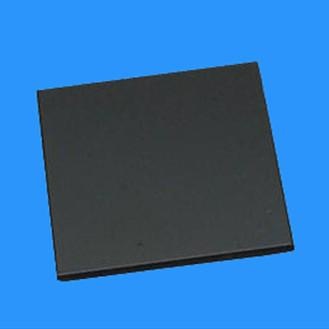
Gallium Nitride on Silicon Crystal Substrate
Applications
Silicon wafers are a core component in various industries:
Semiconductor Devices: Integrated circuits, microprocessors, memory chips, and sensors.
Photovoltaic Industry: Solar cells, solar modules, and photovoltaic panels.
Microelectromechanical Systems (MEMS): Sensors, actuators, and microfluidic devices.
LEDs and Optoelectronics: Light-emitting diodes, photodetectors, and optical devices.
Power Electronics: High-voltage and high-frequency components in energy and automotive systems.
Advantages
The main advantages of using high-quality silicon wafers include:
Superior Electronic Performance: Supports reliable, high-speed, and energy-efficient devices.
Standardized Specifications: Consistency in wafer size, thickness, and crystal quality ensures reproducibility.
Versatility: Compatible with a wide range of electronic, photovoltaic, and MEMS applications.
Long-Term Stability: Provides durable performance under high temperature and voltage conditions.
Customizable Options: Wafers can be produced in different diameters, thicknesses, and doping levels to meet application-specific requirements.
While higher quality wafers command a higher silicon wafer price, the improved device performance and yield justify the investment in advanced electronics and solar technologies.
Conclusion
In conclusion, silicon wafers are indispensable in modern electronics, energy, and microdevice applications. The silicon wafer price reflects the wafer’s diameter, purity, crystal type, surface finish, and production complexity. High-quality wafers enable superior device performance, reliability, and long-term stability, making them essential for semiconductors, solar cells, MEMS, and optoelectronics. As technology advances and wafer diameters increase, the market continues to balance cost efficiency with performance requirements, underscoring the critical importance of understanding wafer pricing in material selection and device manufacturing.


 Daisy@foam-material.com